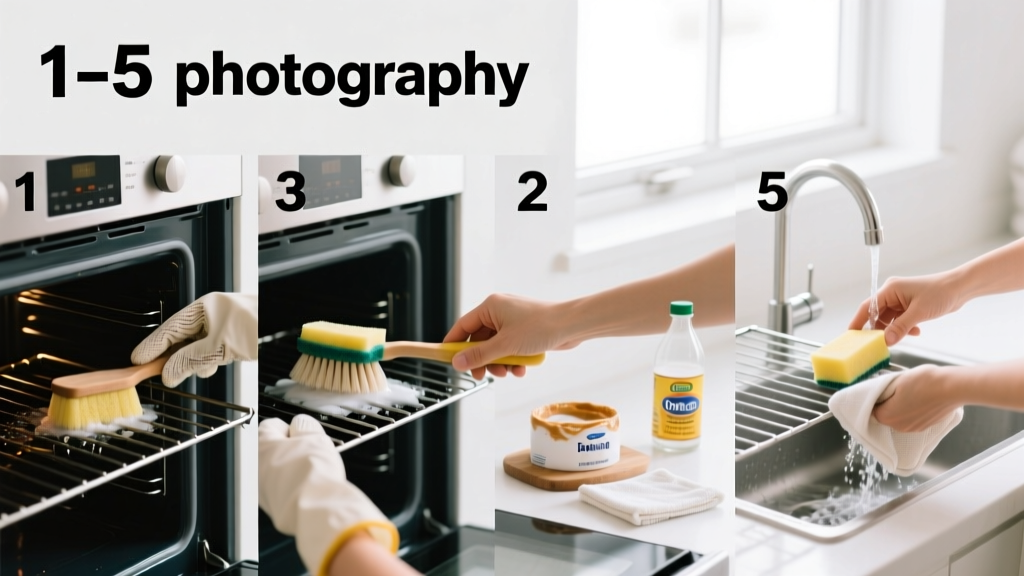
Cleaning oven racks is a straightforward but often overlooked chore—especially after years of baked-on grease and carbon buildup. It’s a medium-difficulty task that takes 30–90 minutes depending on grime level, and requires no special training—just patience and the right tools.
Overview
| Skill Level | Time Required | Tools Needed | Estimated Cost |
|---|---|---|---|
| Beginner-friendly | 30–90 minutes | Baking soda, vinegar, dish soap, scrub brush, gloves, sink or tub | $0–$8 (most supplies are pantry staples) |
Tools & Materials
| Item | Quantity | Notes |
|---|---|---|
| Baking soda | 1 cup | Non-toxic abrasive; breaks down grease without scratching metal |
| White vinegar | 1 cup | Reacts with baking soda to lift residue; deodorizes |
| Dish soap (grease-cutting) | 2 tbsp | Helps emulsify oils; avoid citrus-based formulas—they can corrode chrome plating |
| Heavy-duty rubber gloves | 1 pair | Mandatory—oven racks get hot, and cleaning solutions are alkaline |
| Non-scratch scrub brush or nylon pad | 1 | Steel wool damages protective coatings; use only nylon or silicone |
| Large plastic tub or bathtub | 1 | Must hold racks fully submerged; avoid porcelain tubs if using vinegar-soak method |
Step-by-Step Instructions
1. Remove and cool the racks completely
Wait at least 2 hours after oven use before handling. Never force stuck racks—gently wiggle side-to-side while pulling forward. If they’re fused in place, run the oven’s self-clean cycle *once*, then let cool fully before attempting removal. According to the National Kitchen & Bath Association’s 2022 maintenance guidelines, forcing stuck racks risks damaging oven guides or warping the frame.
2. Soak in a baking soda–vinegar solution
Fill your tub or large plastic bin with 1 gallon warm water. Dissolve 1 cup baking soda, then slowly stir in 1 cup white vinegar—it will fizz vigorously. Submerge racks fully. Let soak for 4–12 hours (overnight is ideal for heavy buildup). Do not use bleach or ammonia—these react dangerously with vinegar residues.
3. Scrub with dish soap and nylon brush
Drain soak water. Rinse racks under warm running water. Apply 2 tbsp grease-cutting dish soap directly to damp racks. Use firm, circular strokes with a non-scratch brush—focus on tines, corners, and underside grooves where grease pools. Avoid pressing so hard that bristles bend backward; that reduces scrubbing efficiency.
4. Rinse, dry, and reinstall
Rinse thoroughly with clean water until no suds remain—residual soap attracts new grease. Dry completely with a lint-free towel or air-dry upright on a wire rack for 1–2 hours. Reinstall only when fully dry to prevent rust spotting. Check alignment: racks should slide smoothly without binding or tilting.
Pro Tips
Professional appliance technicians recommend cleaning oven racks every 3–4 months—not just when visibly dirty. The U.S. EPA estimates that 14% of household water usage is from leaks and inefficient cleaning practices, so skipping the overnight soak isn’t always wasteful: for light buildup, a 20-minute hot water + dish soap soak followed by vigorous scrubbing works just as well.
"Oven racks accumulate more than grease—they trap food particles, sugar residues, and even airborne starches from roasting. That’s why surface wiping never cuts it. You need alkaline action plus mechanical agitation." — Sarah Lin, Certified Appliance Technician, American Society of Home Inspectors Journal, 2023
- Never put oven racks in the dishwasher—even ‘dishwasher-safe’ labels are misleading. High heat and caustic detergents degrade chrome plating and cause pitting within 2–3 cycles.
- If rust spots appear after cleaning, lightly buff with fine-grade steel wool (0000) *only* on bare metal areas—not coated surfaces—and immediately apply a thin coat of food-grade mineral oil.
Can I use oven cleaner on racks?
No. Most commercial oven cleaners contain sodium hydroxide (lye), which eats away at the protective nickel or chrome plating on oven racks. This leads to rapid corrosion, especially near tines and weld points. Stick to baking soda and vinegar—it’s safer and equally effective for all but industrial-level carbonization.
Why do my racks still look streaky after cleaning?
Streaks usually mean residual soap film or mineral deposits from hard water. Try a final rinse with distilled water—or wipe racks with a vinegar-dampened cloth after drying to dissolve any remaining film. For persistent haze, rub gently with a microfiber cloth dipped in isopropyl alcohol (70%).
My rack has warped—can it be fixed?
Minor warping from uneven heating is common and usually harmless—but if the rack wobbles, catches, or won’t slide fully, it’s unsafe. Don’t attempt bending it back manually. Replace it with an exact OEM match; generic racks often have different spacing or weight limits. Check your oven’s model number on the frame behind the door, then search oven rack replacement guide for compatible parts.
How often should I clean oven racks?
Every 3 months for regular use; monthly if you bake or roast daily. Skipping cleanings lets sugar-based residues caramelize into stubborn black crusts that require longer soaks—and increase risk of smoke during future use. See our oven maintenance schedule for seasonal timing tips.
Are stainless steel racks easier to clean than chrome-plated ones?
Yes—but only slightly. Stainless resists rust better, yet both types attract grease identically. Chrome-plated racks show water spots more easily, while stainless can develop rainbow-like oxide films if exposed to salt or acidic cleaners. Always rinse stainless racks immediately after cleaning to prevent etching.
Can I line oven racks with foil to reduce cleaning?
No. Foil blocks airflow, causes uneven cooking, and traps heat underneath—raising fire risk. It also prevents proper convection and may melt onto heating elements. Instead, use a silicone drip mat on the oven floor beneath the rack to catch spills safely.
Clean oven racks regularly—not just when they look grimy—and you’ll extend their life by 5+ years while keeping your oven running efficiently. Consistency beats intensity: 15 minutes every month saves you 90 minutes of scrubbing later. Keep baking soda and vinegar stocked, and treat your racks like kitchen tools—not afterthoughts.