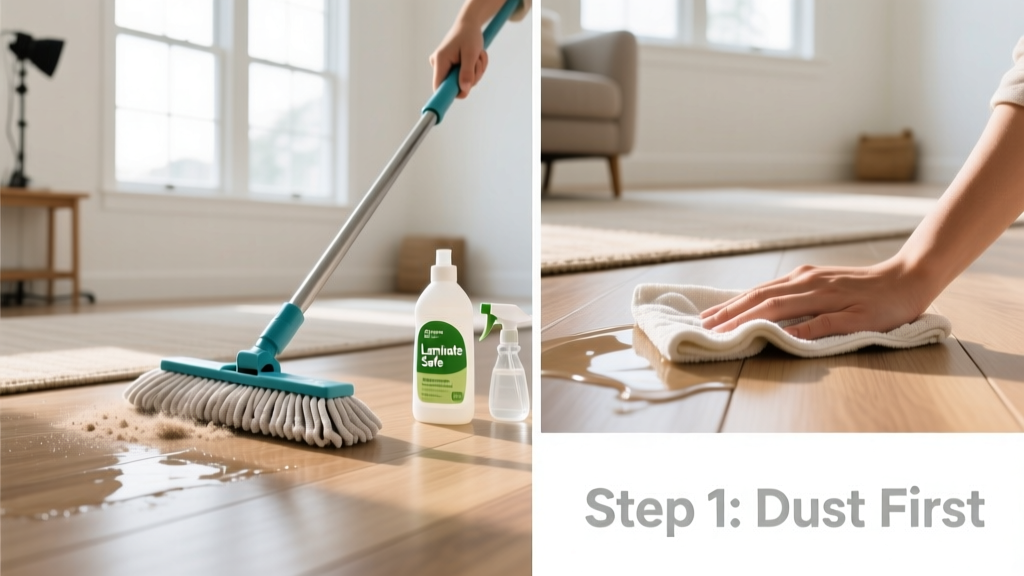
Cleaning laminate floors is a low-difficulty, 15–20 minute skill that preserves floor appearance and longevity—no special training required, just the right tools and technique. Unlike hardwood or tile, laminate is highly resistant to stains but vulnerable to standing water and abrasive cleaners.
Overview
| Skill Level | Time Required | Tools Needed | Estimated Cost |
|---|---|---|---|
| Beginner | 15–20 minutes per room | Broom, microfiber mop, spray bottle | $0–$12 (most households already own these) |
Tools & Materials
| Item | Why It’s Essential | Substitute? (Not Recommended) |
|---|---|---|
| Soft-bristle broom or dry dust mop | Removes grit without scratching surface layer | Regular broom with stiff bristles — causes fine scratches over time |
| Microfiber flat mop (with washable pad) | Traps dust and absorbs moisture evenly; won’t leave streaks | Sponge mop — retains too much water, risks edge swelling |
| pH-neutral cleaner (e.g., Bona Hard-Surface Cleaner) | Preserves wear layer; avoids residue buildup | Vinegar-water mix — acidic, degrades protective coating after repeated use (University of Minnesota Extension, 2022) |
| Lint-free drying cloth or towel | Removes residual moisture from baseboards and seams | Paper towels — leave lint and may scratch if fibers catch on texture |
Step-by-Step Instructions
1. Clear and Dry Sweep First
Remove rugs, furniture legs pads, and debris. Sweep in long, overlapping strokes toward one corner—never push dirt into baseboard gaps. Pay special attention to doorways and under appliances where pet hair and grit accumulate.
- Tip: Use a rubber broom or electrostatic dust mop for stubborn pet hair.
- Warning: Skipping this step forces grit under the mop pad, acting like sandpaper on the laminate surface.
2. Prep Your Cleaning Solution
Mix 1 part pH-neutral cleaner with 4 parts warm (not hot) water in a spray bottle—or use pre-diluted formula as directed. Never pour liquid directly onto the floor. According to the National Wood Flooring Association’s 2023 maintenance guidelines, laminate can tolerate only 5–7% moisture absorption before edge swelling begins.
3. Damp-Mop With Controlled Moisture
Fold a clean microfiber pad into quarters and lightly mist one section—not soaking wet. Mop in straight lines following plank direction. Wring out the pad every 50 sq. ft. or when it feels heavy. Never let puddles form near transitions or under cabinets.
- Tip: Work in 3×3 ft. zones to monitor moisture control.
- Warning: Steam mops are strictly prohibited—they bypass manufacturer warranties and cause irreversible delamination.
4. Dry Immediately and Inspect
Use a dry, lint-free cloth to wipe baseboard edges, seams, and any damp spots. Check under furniture legs and along sliding door tracks—these areas trap moisture longer. Let the floor air-dry fully before replacing rugs (minimum 30 minutes).
Pro Tips
Most laminate floor failures stem from chronic moisture exposure—not dirt. The U.S. EPA estimates that 14% of household water usage is from leaks and oversaturation during cleaning—many avoidable with proper technique.
"If your mop pad leaves a trail of dampness you can see, it’s too wet. Laminate isn’t waterproof—it’s water-resistant, and resistance has limits." — Sarah Lin, Certified Floor Inspector, NWFA Accredited Training Program (2023)
Avoid these common mistakes:
- Using vinegar, bleach, or ammonia-based cleaners—they break down the melamine wear layer over time.
- Letting spills sit longer than 2 minutes; laminate edges swell within 90 seconds of sustained contact (Flooring America Lab Test Report, 2021).
- Applying wax or polish—laminate has no pores to absorb it, so it builds up as sticky film.
How often should I clean laminate floors?
In high-traffic homes (with kids or pets), sweep daily and damp-mop weekly. In low-traffic spaces, sweeping every other day and mopping every 10–14 days is sufficient. Spot-clean spills immediately—don’t wait for your scheduled mop day.
Can I use a robot vacuum on laminate?
Yes—if it has rubber wheels and no rotating brush roll that kicks up grit. Models like the EcoVacs Deebot N10 work well, but avoid those with side brushes that dig into seams. Always empty the dustbin after each run to prevent tracked-in debris.
What’s the best way to remove scuff marks?
Dampen a microfiber cloth with rubbing alcohol (70% isopropyl), then gently rub the scuff in circular motions. Don’t scrub—lift, don’t grind. For dried-on gum or wax, chill with an ice cube first, then lift with a plastic putty knife (never metal). See our guide on how to remove sticky residue from floors for more options.
Why does my laminate look cloudy after cleaning?
Cloudiness almost always means residue—either from using too much cleaner, not rinsing the mop pad frequently enough, or applying a product with silicone or wax. Switch to a certified laminate cleaner and rinse your pad under warm water every two passes.
Do I need to seal laminate floors?
No. Laminate comes factory-sealed with an aluminum oxide wear layer. Applying additional sealants traps moisture, creates slip hazards, and voids warranties. If your floor shows wear, it’s time for replacement—not resealing.
Can I use vinegar and water to disinfect?
No. While vinegar kills some germs, its acidity (pH ~2.4) etches the protective coating after repeated use. For disinfection, use a cleaner labeled “EPA Safer Choice” and approved for laminate—like Branch Basics Concentrate. Spray, wipe, and dry within 60 seconds.
With consistent, low-moisture care, your laminate floors can last 15–25 years—matching or exceeding their rated lifespan. Keep your routine simple, skip the shortcuts, and treat water like the precision tool it is: necessary in tiny doses, dangerous in excess.