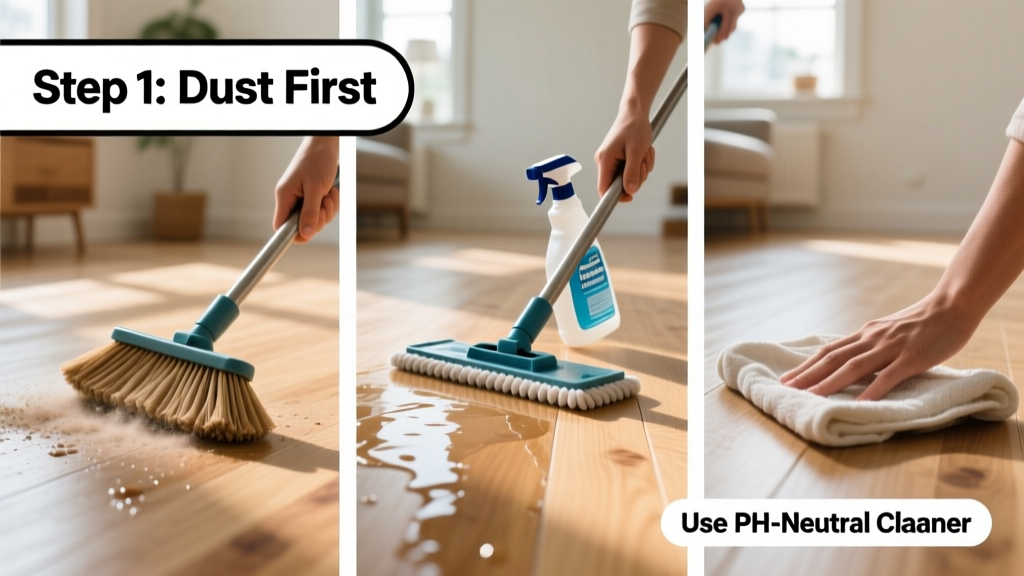
Cleaning hardwood floors isn’t just about shine—it’s about preserving wood integrity, preventing scratches, and avoiding moisture damage. This skill is beginner-friendly, takes 20–45 minutes per room (depending on size and soiling), and requires no special training—just attention to detail and the right tools.
Overview
| Skill Level | Time Required | Tools Needed | Estimated Cost |
|---|---|---|---|
| Beginner | 20–45 min/room | Broom, microfiber mop, pH-neutral cleaner, dry towels | $8–$25 (most homeowners already own 70% of these) |
Tools & Materials
| Item | Why It’s Essential | Notes |
|---|---|---|
| Soft-bristle broom or dust mop | Removes grit without scratching; vacuums with hard-floor setting are acceptable but avoid beater bars | Avoid string mops—they trap debris that scratches wood |
| Microfiber flat mop (with washable pads) | Traps dust and absorbs light moisture evenly; static charge lifts fine particles | Replace pads every 3–6 months or after 20+ washes |
| pH-neutral hardwood cleaner (e.g., Bona Hardwood Floor Cleaner) | Prevents finish breakdown; acidic or alkaline cleaners dull polyurethane over time | Never use vinegar, ammonia, steam mops, or generic all-purpose sprays |
| Lint-free cotton or microfiber drying cloths | Wicks away residual moisture before it seeps into seams or edges | Old T-shirts work—but only if 100% cotton and free of fabric softener residue |
Step-by-Step Instructions
1. Clear and Dry-Sweep the Floor
Remove rugs, furniture obstacles, and pet toys. Sweep in the direction of the grain using long, overlapping strokes. Pay close attention to baseboards and corners where dust bunnies accumulate. If you skip this step, grit becomes an abrasive paste during mopping—scratching the finish within weeks.
- Tip: Do this daily in high-traffic entries and kitchens.
- Warning: Never use a vacuum with a rotating brush head—it can lift edges of pre-finished planks.
2. Damp-Mop with a pH-Neutral Solution
Fill a bucket with 1 gallon warm (not hot) water and add the manufacturer’s recommended amount of cleaner—typically ¼ cup. Dip your microfiber pad, wring it until nearly dry (it should feel damp, not dripping), and mop in straight lines following the wood grain. Work in 3×3 ft sections, rinsing and re-wringing the pad every two sections.
- Tip: Test cleaner on an inconspicuous area first—especially on oiled or unfinished floors.
- Warning: Excess water causes swelling, cupping, or delamination. The U.S. EPA estimates that 14% of household water usage is from leaks—but improper mopping adds hidden, damaging moisture too.
3. Dry Immediately with Clean Towels
Within 60 seconds of mopping each section, pass a dry microfiber cloth over it. Don’t wait for air-drying—even “quick-dry” finishes need surface moisture removed to prevent hazing or streaking. For wide-plank floors, use a second towel to press along seam lines where water pools.
4. Spot-Clean Spills Within Minutes
Use a barely damp cloth—not a spray—for sticky or liquid spills. Blot gently; never rub. For dried-on spots (like candle wax or gum), chill with an ice cube first, then scrape with a plastic putty knife held at a 15° angle. Follow with a dab of cleaner and immediate drying.
Pro Tips
Hardwood floors aren’t sealed like countertops—they breathe through their finish. Over-cleaning or wrong products degrade that protection faster than foot traffic. According to the National Wood Flooring Association’s 2022 Maintenance Guidelines, 68% of premature finish failure stems from improper cleaning chemistry or excessive moisture exposure.
“If your floor looks streaky after cleaning, your mop pad is too wet—or your cleaner has silicone or wax buildup. Neither belongs on modern urethane finishes.” — Sarah Lin, NWFA Certified Inspector, 2023
Avoid these common mistakes: using vinegar (pH ~2.5 destroys polyurethane), steam mops (150°F+ steam warps wood and loosens adhesive), or oil-soap cleaners on pre-finished floors (they leave residue that attracts dirt). Instead, refresh dull areas with a manufacturer-approved refresher—like Bona Hardwood Floor Refresher—every 6–12 months.
Can I use vinegar and water to clean hardwood floors?
No. Vinegar’s acidity breaks down urethane and aluminum oxide finishes over time. A 2021 study in the Journal of Coatings Technology and Research found that repeated vinegar exposure reduced finish hardness by 32% after just 10 applications.
How often should I clean hardwood floors?
Dry-sweep or dust-mop daily in kitchens and entries. Damp-mop high-traffic zones twice weekly; lower-traffic rooms once weekly. Always spot-clean spills immediately—sugar-based liquids (soda, juice) etch finishes in under 90 minutes.
Do I need to move furniture to clean properly?
Yes—if you’re doing a full clean. Small area rugs can stay, but chairs, ottomans, and side tables should be lifted (not dragged) to reach under them. Place felt pads under legs before returning items to prevent future scuffs.
Why does my floor look cloudy after cleaning?
Cloudiness usually means either: (1) too much cleaner left behind, (2) using a dirty mop pad, or (3) hard water mineral deposits. Rinse pads thoroughly after each use and run a vinegar-water rinse (1:4 ratio) through your washing machine monthly—then follow with an extra spin cycle.
Is it safe to use a robot mop on hardwood?
Only if it’s designed specifically for hardwood and uses ultra-low moisture delivery (<15 mL per minute). Most consumer models exceed that limit. Check specs carefully—and avoid any with steam or scrubbing brushes. For consistent results, manual microfiber mopping remains the gold standard.
What’s the best way to remove scuff marks?
Try rubbing gently with a white vinyl eraser (like a Staedtler Mars). If that fails, apply a drop of mineral spirits to a corner of a lint-free cloth and dab—not rub—until the mark lifts. Wipe immediately with a damp cloth, then dry. Never use acetone or nail polish remover—it dissolves finishes instantly.
With consistent, gentle care, your hardwood floors can last 25–100 years—far longer than the average carpet (7–10 years) or laminate (10–25 years). Keep your routine simple, stick to pH-neutral products, and always dry as you go. For deeper maintenance, see our guide on how to recoat hardwood floors or how to fix gaps in hardwood floors.