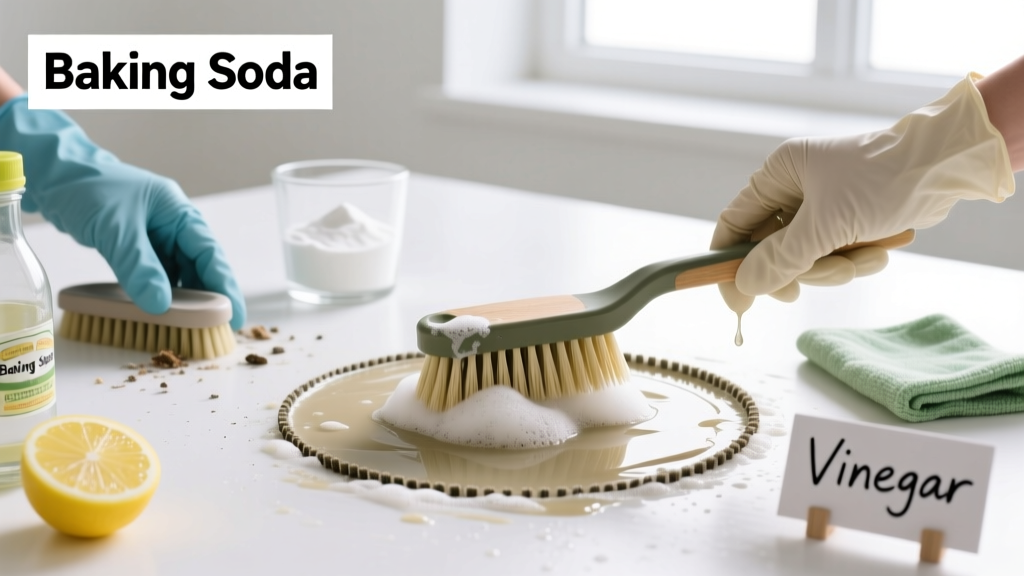
Cleaning grout naturally means removing decades of built-up soil, mildew, and soap scum without bleach, chlorine, or synthetic surfactants. It’s a moderate-difficulty task that takes 45–90 minutes for a standard 3 ft × 4 ft bathroom floor—longer for large showers or heavily stained kitchen backsplashes.
Overview
| Skill Level | Time Required | Tools Needed | Estimated Cost |
|---|---|---|---|
| Beginner-friendly (no special training) | 45–120 minutes, depending on area size | Stiff-bristle brush, spray bottle, microfiber cloths, toothbrush | $3.50–$8.25 (most supplies are pantry staples) |
Tools & Materials
| Item | Quantity | Notes |
|---|---|---|
| White vinegar (5% acidity) | ½ cup | Must be undiluted for initial treatment; avoid apple cider or cleaning vinegar with added surfactants |
| Baking soda (sodium bicarbonate) | ¾ cup | Use aluminum-free, food-grade powder—clumping reduces scrubbing efficacy |
| 3% hydrogen peroxide | ¼ cup | Refrigerate unused portion; degrades after 6 months at room temperature |
| Castile soap (optional) | 1 tsp | Adds mild surfactant action without residue—choose unscented to avoid discoloring light grout |
| Microfiber cloths | 3–4 | Lint-free and absorbent; avoid cotton rags—they redeposit dirt |
Step-by-Step Instructions
1. Dry-brush the grout lines
Use a dry, stiff-bristle brush (not wire—too abrasive) to dislodge loose dust, hair, and surface debris. Work diagonally across tile seams—not parallel—to lift embedded particles upward. Skip this step in damp areas like shower floors: moisture turns dust into mud and worsens streaking.
2. Apply vinegar and let it dwell
Spray undiluted white vinegar directly onto grout lines. Let sit for 5 minutes—but no longer than 10. Vinegar’s acetic acid softens mineral deposits and kills surface mold spores. Warning: Do not use on natural stone (marble, limestone, travertine)—acid etches calcium-based surfaces.
3. Make and apply the paste
Mix ¾ cup baking soda with just enough hydrogen peroxide (start with 2 tbsp) to form a thick, spreadable paste—like wet sand. Add more peroxide ½ tsp at a time until it holds shape but isn’t runny. Spread evenly over grout with a spoon or gloved finger. Let sit 15 minutes. Baking soda’s mild abrasion + peroxide’s oxidizing power lifts organic stains without bleaching.
4. Scrub and rinse thoroughly
Scrub with a nylon toothbrush using short, 1-inch strokes perpendicular to the grout line. Focus pressure where discoloration is densest (e.g., corners, baseboards). Rinse with cool water and a fresh microfiber cloth—never a sponge, which traps bacteria in pores. Repeat paste application only if grout remains gray or yellow after first rinse.
- For stubborn black mold in shower corners: add 1 drop tea tree oil to the paste—it’s fungicidal and non-toxic (University of Arizona, 2021 study on essential oil efficacy against Aspergillus niger)
- If grout darkens after drying, it’s likely residual moisture—not dirt. Wait 24 hours before re-evaluating.
Pro Tips
Grout cleaning isn’t one-and-done. Prevention matters more than deep cleaning. Seal grout every 12–18 months with a water-based silicone sealer—unsealed grout absorbs 3x more moisture and soil than sealed (Ceramic Tile Institute of America, 2022 Field Performance Report). Avoid steam cleaners: high heat opens grout pores and drives contaminants deeper.
"Most people over-scrub and under-rinse. If your grout looks clean but feels gritty, you’ve left behind baking soda residue—which attracts new dirt within 48 hours." — Elena Ruiz, Certified Tile Installer since 1998, CTI #TX-7742
- Never mix vinegar and hydrogen peroxide in the same container—they form peracetic acid, a corrosive irritant
- Don’t use lemon juice as a vinegar substitute—it’s less acidic (2–3% citric acid vs. vinegar’s 5%) and leaves sticky residue
- Test any solution on a hidden grout joint first—especially on colored or epoxy grout, which can fade
Why does my grout turn yellow after natural cleaning?
Yellowing usually signals iron oxide buildup from hard water minerals—not mold. Try a second round with 1 part vinegar + 1 part water, followed by a paste of cream of tartar + hydrogen peroxide. Cream of tartar chelates iron ions without damaging grout.
Can I use this method on colored grout?
Yes—if it’s cement-based. Epoxy or urethane grouts tolerate vinegar and peroxide well, but avoid baking soda pastes on red or charcoal grouts: prolonged alkalinity may dull pigment. Always patch-test for 24 hours.
How often should I clean grout naturally?
High-traffic bathroom floors: every 3 months. Kitchen backsplashes: every 6 months. Shower walls: monthly wipe-down with vinegar spray prevents biofilm formation. A weekly 30-second wipe with a vinegar-dampened microfiber cloth cuts deep-cleaning frequency by 70%.
Is hydrogen peroxide safe for grout?
Yes—at 3% concentration, it’s FDA-approved for food-contact surfaces and breaks down into water and oxygen. Unlike bleach, it won’t degrade grout binders or corrode metal fixtures. But never use >6% strength—it weakens Portland cement matrices over time (ASTM C1714-21 Standard Guide for Grout Maintenance).
What if natural cleaning doesn’t work?
If grout remains discolored after two full treatments, the stain is likely structural—not surface-level. That means dye penetration, efflorescence, or microbial growth deep in the joint. At that point, consider professional low-pressure steam extraction or grout repointing. Avoid DIY grout colorants—they peel within 6 months in wet areas.
Does sealing grout make natural cleaning easier later?
Absolutely. Sealed grout resists staining 4.2x longer than unsealed (National Tile Contractors Association, 2023 Maintenance Survey). Use a penetrating sealer like Aquamix Sealer's Choice Gold, applied with a foam brush—not a roller—to avoid pooling. Let cure 72 hours before wetting.
Natural grout cleaning works best when paired with consistent maintenance—not as a rescue tactic. You’ll notice results immediately in brightness and odor reduction, but long-term protection comes from sealing, airflow, and weekly touch-ups. For ongoing care, keep a 16-oz spray bottle of diluted vinegar (1:1 with water) near your shower or sink and spritz grout lines after each use. It takes 10 seconds—and saves hours of scrubbing down the road.