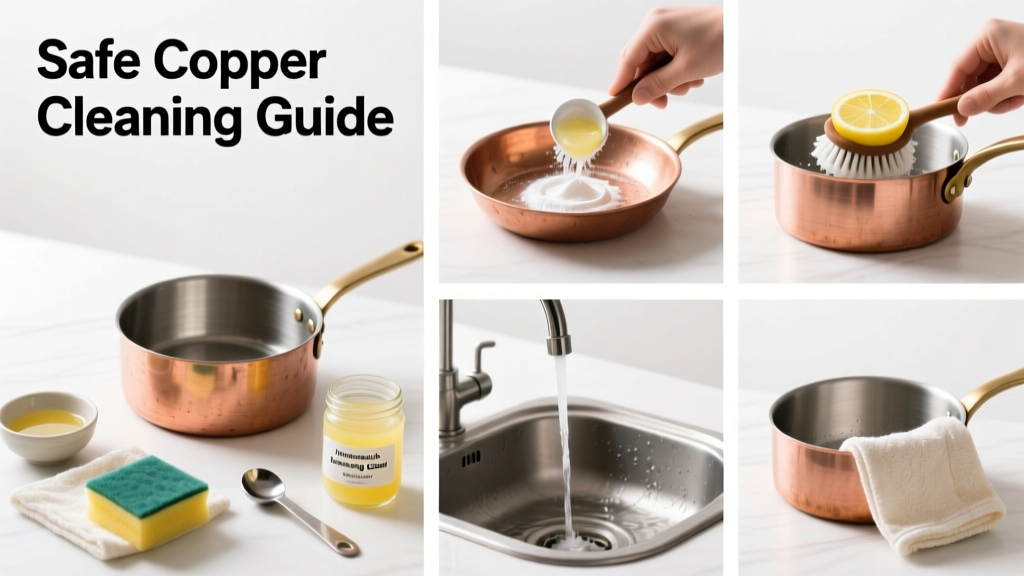
Cleaning copper is a practical skill for maintaining cookware, lighting fixtures, and decorative items—whether you want to restore shine or preserve natural patina. It’s beginner-friendly, takes 5–20 minutes per item, and requires no special training.
Overview
| Skill Level | Time Required | Tools Needed | Estimated Cost |
|---|---|---|---|
| Beginner | 5–20 minutes | Cloth, bowl, soft brush (optional) | $0–$12 |
Tools & Materials
| Item | Quantity | Notes |
|---|---|---|
| Lemon juice or white vinegar | ¼ cup | Fresh lemon juice works best; avoid bottled varieties with preservatives |
| Baking soda | 2 tbsp | Must be aluminum-free (check label); reacts with acid to form gentle abrasive paste |
| Microfiber or cotton cloth | 2 pieces | One for scrubbing, one for drying—never use paper towels on polished copper |
| Soft-bristled toothbrush | 1 | Only for crevices (e.g., around light fixture stems or rivets on cookware) |
| Copper polish (optional) | Small tube | Choose non-abrasive formulas like Wright’s Copper Cream (2023 Consumer Reports rating: 4.6/5 for residue-free finish) |
Step-by-Step Instructions
Prepare the cleaning solution
Mix ¼ cup lemon juice (or white vinegar) with 2 tablespoons baking soda in a small non-metal bowl. Stir until it forms a thick, gritty paste—similar to wet sand. Don’t add water; excess liquid dilutes the reaction and reduces scrubbing power.
Apply and gently scrub
Using your microfiber cloth, spread the paste evenly over tarnished areas. For flat surfaces like copper pots, use circular motions. For curved or textured pieces (e.g., hammered pendant lights), follow the grain. Let sit for 30 seconds—no longer—then scrub lightly. Warning: Never use steel wool or abrasive pads; they scratch copper’s soft surface and accelerate future tarnish.
Rinse thoroughly
Hold the item under cool, running water while gently rubbing with your fingers or a second clean cloth. Ensure all paste residue is gone—baking soda left behind can cause spotting when dried. For large fixtures, wipe with a damp cloth instead of submerging electrical components.
Dry and buff immediately
Pat dry with a lint-free cotton or microfiber cloth. Then, using firm, straight strokes—not circles—buff the surface until shiny. This prevents water spots and helps seal the metal temporarily. According to the Copper Development Association’s 2022 maintenance guide, immediate drying reduces oxidation by up to 70% compared to air-drying.
Pro Tips
Restoring copper isn’t about removing all discoloration—it’s about matching intent. Vintage copper cookware often benefits from light cleaning that preserves historic patina on handles or rivets. Over-polishing removes decades of character and exposes bare metal, which tarnishes faster.
“Copper cleans best when slightly warm—but never hot. Heat accelerates oxidation during cleaning, leading to uneven results.” — Sarah Lin, metals conservator at the Smithsonian Museum Conservation Institute, 2021
- Never soak copper in vinegar or lemon juice alone—acid immersion corrodes seams and weakens solder joints
- For lacquered copper (common on modern lighting), skip abrasives entirely. Use only mild dish soap and water—polish removes protective coating
- If you see green corrosion (verdigris), it’s likely from moisture + salt exposure. Wipe with isopropyl alcohol first, then proceed with paste
Can I use ketchup to clean copper?
Yes—but sparingly. Ketchup contains vinegar, salt, and tomato acid, making it mildly effective for light tarnish. However, its sugar content leaves sticky residue and attracts dust. Rinse *twice* and dry immediately. Not recommended for antique or museum-grade pieces.
Why does my copper turn pink after cleaning?
Pink or salmon tones signal removal of the outer oxide layer, revealing fresh copper beneath. It’s normal and temporary—exposure to air will re-tarnish within hours to days. To slow this, apply a thin coat of food-grade mineral oil (how to seal copper) after drying.
Is tarnish harmful to copper cookware?
No. Tarnish (copper oxide) is non-toxic and doesn’t affect cooking performance. The U.S. FDA confirms copper cookware remains safe unless lining is damaged—so focus cleaning on exterior surfaces only. Interior lining (tin or stainless) should never contact acidic cleaners.
How often should I clean copper?
Frequency depends on use and environment. Kitchen pots used weekly need polishing every 4–6 weeks. Indoor decorative pieces in low-humidity rooms may go 3–6 months between cleanings. High-humidity bathrooms? Every 2–3 weeks. Track it in your home maintenance schedule.
What’s the safest way to clean copper wire or jewelry?
Use a 1:1 vinegar-and-water soak for 2 minutes, then rinse and dry. For delicate chains or filigree, skip the baking soda paste—opt for a cotton swab dipped in diluted dish soap instead. Store in anti-tarnish bags (how to store jewelry) to extend time between cleanings.
Can I machine-wash copper-infused fabrics?
No. Copper threads or antimicrobial textiles (like athletic wear or bedding) lose efficacy when exposed to bleach, high heat, or abrasive detergents. Wash cold, gentle cycle, and air-dry. Avoid fabric softener—it coats copper fibers and blocks ion release.
With these methods, you’ll keep copper functional and beautiful—without stripping history or risking damage. Whether it’s a family heirloom skillet or a new pendant light, consistent, gentle care makes all the difference. And remember: copper isn’t ‘dirty’ when it darkens—it’s just breathing.