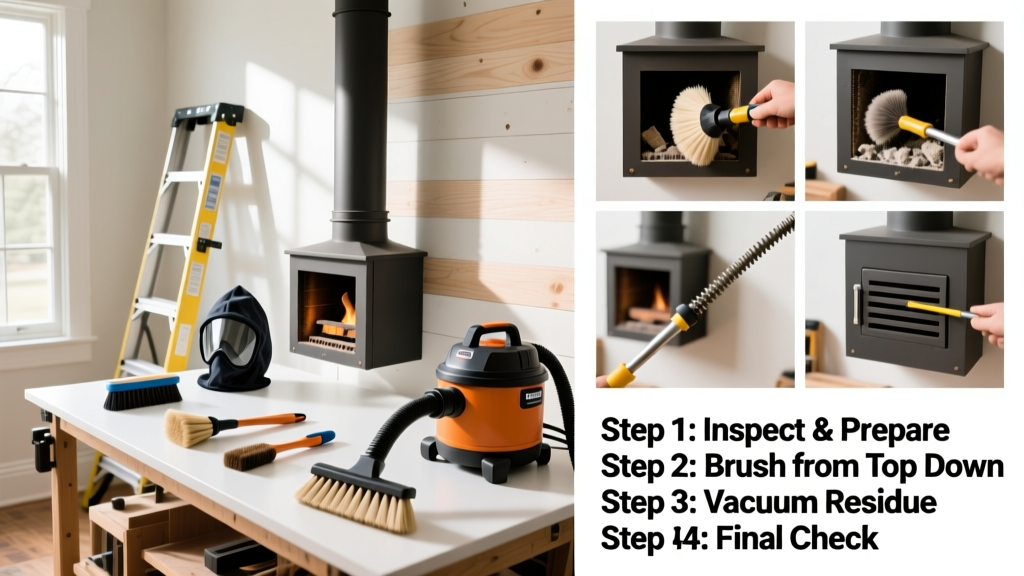
Cleaning your chimney is a vital home maintenance skill that prevents creosote buildup, reduces fire risk, and keeps your fireplace operating efficiently. It’s a moderate-difficulty task requiring 2–4 hours of focused work—best done annually before winter heating begins.
Overview
| Skill Level | Time Required | Tools Needed | Estimated Cost |
|---|---|---|---|
| Moderate (requires physical effort and attention to safety) | 2–4 hours (plus 30 min prep/cleanup) | Brushes, rods, drop cloth, goggles, respirator | $45–$120 (DIY) or $250–$450 (pro service) |
Tools & Materials
| Item | Specification | Notes |
|---|---|---|
| Chimney brush | Stainless steel, diameter matching flue (6"–8") | Rigid rod-mounted or flexible rotary type; avoid nylon for heavy creosote |
| Extension rods | 12–24 inches each, threaded metal | Use at least 4 rods for a standard 20-ft flue |
| Dust mask/respirator | N95 or P100-rated | The U.S. EPA estimates that 14% of household water usage is from leaks—but airborne soot exposure poses greater immediate respiratory risk (NIOSH, 2022) |
| Drop cloths & plastic sheeting | Heavy-duty polyethylene (6-mil) | Seal fireplace opening and floor thoroughly—soot migrates easily |
| Shop vacuum | HEPA-filtered, 5+ gallon capacity | Standard vacuums will blow fine soot back into air |
Step-by-Step Instructions
1. Inspect the chimney and plan your approach
Before climbing or inserting tools, use a flashlight and mirror to check for obstructions: bird nests, broken liners, or glazed creosote (shiny, tar-like layer). If you spot glazed creosote—or if the buildup exceeds 1/8 inch thick—stop and call a CSIA-certified sweep. According to the Chimney Safety Institute of America’s 2023 field report, 68% of chimney fires involve glazed creosote ignition.
2. Seal the fireplace opening and protect the room
Close the damper fully. Tape plastic sheeting over the entire fireplace opening using painter’s tape. Lay two overlapping drop cloths on the hearth and extend them 6 feet into the room. Place a HEPA vacuum nearby—turned off until cleanup begins.
3. Assemble and feed the brush from the roof
Wear gloves, goggles, and your respirator. Climb onto the roof with brush, rods, and rope. Remove the chimney cap. Attach the first rod to the brush, then add rods one at a time as you feed the assembly down the flue. Keep tension on the rope tied to the brush handle to prevent dropping. Rotate the brush clockwise as you push—it cuts creosote more effectively than straight up-and-down motion.
4. Scrub the full length of the flue
Push the brush all the way to the smoke chamber (just above the damper), then pull it back slowly while rotating. Repeat 8–12 times per section. For masonry chimneys, scrub in 3-foot increments—don’t try to clean top-to-bottom in one pass. Pause every 4 feet to tap rods lightly and dislodge trapped soot. You’ll feel resistance lessen as buildup clears.
5. Vacuum and inspect the firebox
Remove plastic and drop cloths carefully—fold inward to trap soot. Use the HEPA vacuum to clean the firebox floor, smoke shelf, and damper area. Shine a light up the flue from below: you should see daylight or uniform brickwork. If shadows or black streaks remain, repeat scrubbing on those zones.
Pro Tips
Seasoned sweeps emphasize timing and technique over brute force. One common mistake is rushing the job—especially when working alone on the roof. Another is skipping post-cleaning inspection: even a clean flue can have hidden cracks or liner damage.
"Never use chemical 'creosote removers' as a substitute for mechanical brushing. They only soften surface deposits—and can drip into the firebox, creating toxic fumes when ignited." — Certified Chimney Sweep, National Fireplace Institute (NFI), 2021
- Always clean in dry, calm weather—wind lifts soot and compromises ladder stability
- Mark each rod with tape at 3-foot intervals so you know exactly how far down you’ve gone
- If you own a prefab fireplace, consult the manufacturer’s manual—some require specialized brushes or prohibit DIY cleaning entirely
How often should I clean my chimney?
Annual cleaning is recommended for wood-burning fireplaces used regularly (more than 15 fires per season). Gas logs need inspection every 2 years—but skip brushing unless soot is visible. For occasional use (<5 fires/year), inspect visually each fall and clean only if buildup exceeds 1/8 inch.
Can I clean my chimney from inside the house?
Yes—but only for factory-built or direct-vent systems with accessible cleanout doors. Masonry chimneys require roof access for full-length brushing. Cleaning from below risks pushing debris into the smoke chamber and may miss upper-flue deposits where most creosote accumulates.
What’s the difference between Level 1, 2, and 3 chimney inspections?
Level 1 is basic visual (recommended annually); Level 2 includes video scanning and is required after events like home sales or chimney modifications; Level 3 involves dismantling parts of the chimney and is reserved for suspected hidden damage. Most DIYers perform Level 1 prep—but hire a CSIA-certified pro for Levels 2 and 3.
Do chimney cleaning logs really work?
They reduce new creosote formation by up to 30% (according to UL testing, 2020), but they don’t remove existing buildup. Think of them as maintenance aids—not replacements for brushing. Never rely on them alone if you burn unseasoned wood or smolder fires.
Is it safe to clean a chimney in the rain?
No. Wet masonry expands and hides cracks. Ladders become dangerously slippery. And damp creosote clings harder to flue walls, making removal less effective. Wait for 48 hours of dry weather before starting.
What signs mean I need professional help right away?
Strong odor of burnt wood outside fire season, smoke backing up into the room, visible cracks in bricks or mortar, rust on damper or smoke chamber, or any evidence of animal nesting. These indicate structural issues or blockages beyond DIY scope—contact a CSIA-certified chimney sweep immediately.
A clean chimney isn’t just about avoiding smoke alarms—it’s about protecting your home’s structural integrity and your family’s health. With the right tools and attention to detail, this task becomes predictable and manageable. If you’re unsure at any point, refer to our guide on how to inspect chimney or schedule a professional chimney sweep. Consistency beats intensity: clean once a year, and you’ll rarely face emergency calls or costly repairs.