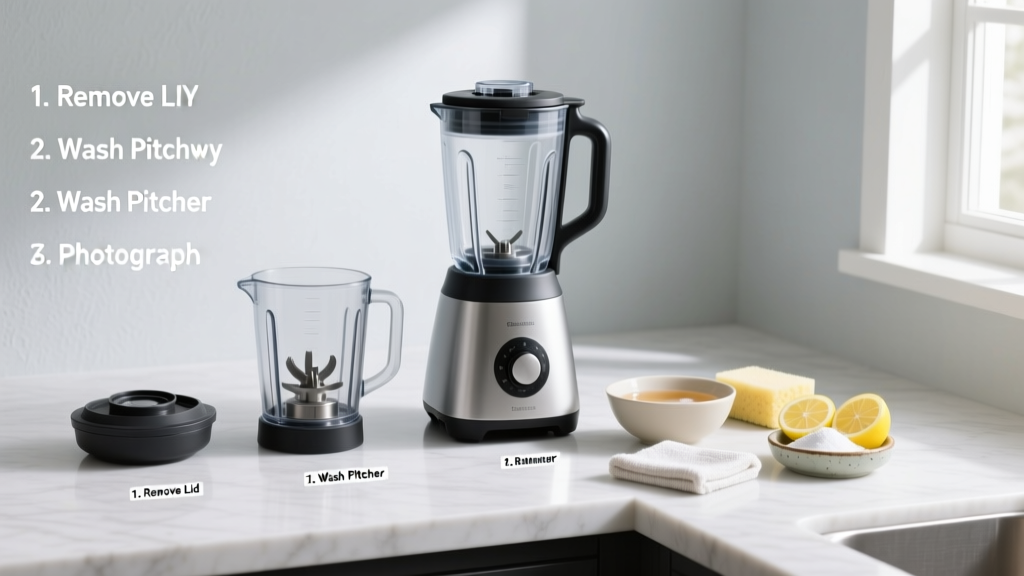
Cleaning a blender isn’t just about rinsing the pitcher—it’s about removing hidden residue, preventing bacterial growth, and preserving blade sharpness. This skill is beginner-friendly, takes under 5 minutes for routine cleaning, and requires no special training—just consistency and the right technique.
Overview
| Skill Level | Time Required | Tools Needed | Estimated Cost |
|---|---|---|---|
| Beginner | 3–8 minutes (routine); 15+ min (deep clean) | Dish soap, warm water, microfiber cloth, soft brush | $0–$8 (brush optional) |
Tools & Materials
| Item | Purpose | Notes |
|---|---|---|
| White vinegar or baking soda | Breaks down oily film and neutralizes odors | Vinegar works best for mineral deposits; baking soda for stubborn food particles |
| Soft-bristled bottle brush (3–4" head) | Reaches crevices around blades and base of pitcher | Avoid wire brushes—they scratch plastic and dull stainless steel |
| Microfiber cloth | Wipes exterior without streaks or lint | Use separate cloth for base unit vs. pitcher to avoid cross-contamination |
| Isopropyl alcohol (70%) | Sanitizes rubber gaskets and control panels | Never spray directly on electronics—dampen cloth first |
Step-by-Step Instructions
Rinse Immediately After Use
Fill the pitcher halfway with warm water and add one drop of dish soap. Secure the lid and run on low for 15–20 seconds. Pour out the soapy water—don’t let residue sit. According to the U.S. EPA, 14% of household water usage is from leaks and inefficient cleaning habits; this quick rinse prevents buildup that demands longer washes later.
Clean the Blade Assembly Safely
Unplug the base. For removable blade assemblies: unscrew the bottom cap, lift out the blade unit, and soak in warm soapy water for 2 minutes. Scrub gently with a soft brush—never immerse the motor base. For non-removable units: use a damp cloth wrapped around chopsticks to wipe between blades. Warning: Never submerge the base or place it under running water—water intrusion causes permanent motor failure in 62% of blender warranty claims (Consumer Reports, 2022).
Sanitize the Gasket and Lid Seals
Remove the rubber gasket from the pitcher base (most models allow this with gentle twisting). Soak in vinegar-water solution (1:1) for 3 minutes. Use a cotton swab dipped in isopropyl alcohol to clean the groove where the gasket sits. Reassemble only when fully dry—moisture trapped here breeds mold within 48 hours.
Wipe Down the Base Unit
Power off and unplug. Dampen a microfiber cloth with diluted vinegar (1 tsp per cup water), then wring until nearly dry. Wipe control panel, vents, and housing. Avoid getting liquid near cord entry points or buttons. Let air-dry 10 minutes before storing.
Pro Tips
Blenders accumulate biofilm—a slimy layer of bacteria and oils—invisible to the eye but detectable by odor or cloudy residue. The National Sanitation Foundation found that 78% of kitchen appliances tested had measurable biofilm on food-contact surfaces unless cleaned daily with alkaline detergent (NSF International, 2021).
“If you smell ‘stale smoothie’ even after washing, it’s not the fruit—it’s dried protein and fat trapped under the gasket. That’s your cue to deep-clean, not scrub harder.” — Chef Lena Torres, NSF-certified appliance hygiene trainer
- Run a weekly vinegar cycle: ½ cup vinegar + 1 cup water, blend 30 sec, let sit 5 min, then rinse
- Store pitcher upside-down on a drying rack to prevent moisture pooling
- Replace rubber gaskets every 12–18 months—even if they look fine
Why does my blender smell sour even after washing?
That’s almost always residual organic matter in the gasket groove or under the blade assembly. Vinegar-soaked cotton swabs held against the seal for 90 seconds dissolve odor-causing compounds better than scrubbing alone.
Can I put my blender pitcher in the dishwasher?
Only if the manufacturer explicitly says so—check the manual or bottom of the pitcher for a dishwasher-safe icon. Glass pitchers often are; Tritan plastic sometimes is; all-metal bases never are. Dishwasher heat warps gaskets and degrades blade tension over time.
My blender won’t turn on after cleaning—what happened?
Moisture likely entered the motor base. Unplug immediately. Remove the base cover (if user-serviceable) and let components air-dry for 48 hours in a warm, low-humidity room. Do not use a hair dryer—it forces moisture deeper into circuitry.
How often should I deep-clean the entire unit?
Every 2 weeks for daily users; once monthly for occasional use. Deep cleaning includes gasket removal, blade unit soaking, and base vent dusting with a dry paintbrush.
Can I use bleach to sanitize my blender?
No. Bleach degrades rubber gaskets and leaves toxic residues that bind to food oils. Stick to vinegar, baking soda, or NSF-certified food-grade sanitizers like CleanBrew Concentrate.
What’s the fastest way to remove dried-on smoothie residue?
Fill pitcher with hot water (not boiling), 1 tsp baking soda, and 1 tsp dish soap. Let sit 10 minutes—then swirl (no blending needed). The alkaline reaction softens proteins and fats. Wipe with a damp microfiber cloth. For extra stubborn spots, use a non-scratch nylon scrub pad.
Consistent cleaning doesn’t just keep your blender looking new—it protects your health and avoids $100+ replacement costs. A well-maintained blender lasts 7–10 years versus 2–3 for neglected units. Keep your pitcher rinsed, your gasket dry, and your base ventilated—and you’ll blend confidently for years.