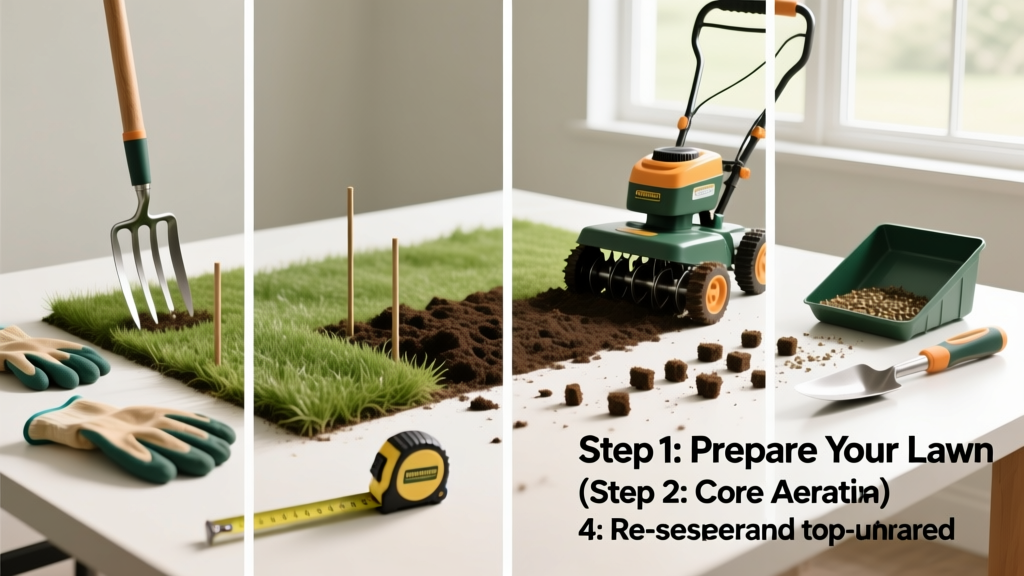
Aerating a lawn is the process of creating small holes in the soil to relieve compaction, improve air and water movement, and encourage deeper root growth. It’s a moderate-skill task that takes 1–3 hours for a typical 5,000 sq. ft. yard—and delivers measurable results within 2–4 weeks.
Overview
| Category | Details |
|---|---|
| Skill Level | Beginner to intermediate (no prior turf experience needed) |
| Time Required | 1.5–3 hours (including prep and cleanup; varies by lawn size and tool type) |
| Tools Needed | Aerator (spike or core), garden hose, sprinkler, rake, gloves |
| Estimated Cost | $0 (rental) to $120 (buying a manual core aerator); gas-powered rentals start at $65/day |
Tools & Materials
| Item | Purpose & Notes |
|---|---|
| Core aerator (preferred) or spike aerator | Core units remove 2–3 inch soil plugs—proven 3× more effective than spikes at reducing compaction (University of Minnesota Extension, 2022). Rent one from Home Depot or local garden center. |
| Garden hose + sprinkler | Soak soil to 3–4 inches deep 24 hours before aeration—dry soil crumbles; oversaturated soil gums up tines. |
| Stiff-bristle rake | For breaking up and removing soil plugs post-aeration. Don’t skip this—leaving plugs on grass blocks light and slows decomposition. |
| Gloves & safety glasses | Protect hands from sharp tines and flying debris—especially with gas-powered units. |
| Compost or topdressing mix (optional but recommended) | Apply ¼ inch after aeration to fill holes and add organic matter. Use screened compost—not manure-heavy blends—to avoid weed seeds. |
Step-by-Step Instructions
1. Test soil moisture and time your aeration
Push a screwdriver 3 inches into the soil. If it meets resistance or feels gritty, wait. Ideal moisture feels like a wrung-out sponge—not sticky, not dusty. Aerate in early fall (mid-August to mid-September) for cool-season grasses like Kentucky bluegrass or fescue. For warm-season grasses (zoysia, bermuda), aim for late spring (May–June) when soil temps hit 65°F at 4-inch depth.
2. Mow and clear the lawn
Cut grass to 2 inches (for cool-season) or 1–1.5 inches (warm-season) 2 days before aeration. Remove sticks, stones, and pet toys—these can damage tines or cause uneven passes. Mark irrigation heads and shallow utility lines with flags; most rental aerators penetrate 2.5–4 inches deep.
3. Make two perpendicular passes
Start at one edge and move slowly (2–3 mph) in straight, overlapping rows. After the first pass, turn 90° and repeat—this ensures full coverage and avoids missed strips. On slopes over 15%, go up-and-down, not side-to-side, to prevent slippage. Warning: Never aerate when soil is saturated—it creates smearing and worsens compaction.
4. Rake and topdress (optional but highly effective)
Let soil plugs dry for 1–2 days, then break them up with a stiff rake—don’t bag them. Spread a ¼-inch layer of compost or topdressing evenly across the lawn using a drop spreader or shovel and broom. Water lightly afterward to settle material into holes without washing it away.
Pro Tips
Timing and technique make or break your results. Core aeration works best when paired with overseeding—especially in thin or bare patches. According to the U.S. EPA, lawns with regular aeration use 20% less water annually due to improved infiltration.
“Core aeration isn’t just about poking holes—it’s about resetting soil structure. Skip the spike aerator if your soil has clay content over 30%. It compresses sidewalls instead of relieving pressure.” — Dr. Nick Christians, Turfgrass Science, Iowa State University, 2021
- Never aerate newly seeded lawns—wait until grass is mowed 3–4 times (typically 6–8 weeks).
- Avoid aerating during drought stress—even if soil feels dry, don’t proceed without proper moisture.
- If your lawn has heavy thatch (>½ inch), dethatch first with a power rake, then aerate 7–10 days later.
Can I aerate my lawn myself—or should I hire someone?
Yes—you can absolutely do it yourself. Manual core aerators work well for yards under 1,500 sq. ft. For larger areas, renting a powered unit saves time and effort. Hiring a pro costs $15–$25 per 1,000 sq. ft., but pros often bundle aeration with overseeding and fertilizer application. Compare that to a $65 rental fee plus your time—most homeowners break even after their second aeration.
How often should I aerate my lawn?
Most lawns benefit from annual aeration. High-traffic yards (play areas, dog runs) or those with heavy clay soil may need it twice yearly—once in spring and once in fall. The University of Massachusetts Amherst recommends skipping aeration in years when rainfall exceeds 20% above average, as natural freeze-thaw cycles provide some relief.
Will aeration kill weeds or crabgrass?
No—core aeration doesn’t target weeds. In fact, opening soil can give crabgrass seeds better contact with warmth and moisture. That’s why we recommend applying a pre-emergent herbicide 2–3 weeks before aeration in spring—or waiting until fall, when crabgrass is dormant. Post-aeration, spot-treat existing broadleaf weeds with a selective herbicide like 2,4-D.
Do I need to water after aeration?
Yes—but lightly. Apply ¼ inch of water within 24 hours to help settle topdressing and activate soil microbes. Then resume normal watering: 1 inch per week total, split across 2–3 deep sessions. Avoid daily light sprinkles—they encourage shallow roots and fungal issues.
Can I aerate right after fertilizing?
Not ideal. Fertilizer applied before aeration may wash into holes and concentrate salts near roots. Wait until after aeration and topdressing to apply slow-release nitrogen—ideally within 48 hours. This positions nutrients where new roots are actively growing.
What’s the difference between spike and core aeration?
Spike aerators punch holes with solid tines—like stabbing the ground. They’re cheap and easy but worsen compaction in clay soils. Core aerators extract cylindrical soil plugs, creating actual space for air, water, and roots. Data from Purdue Extension’s 2020 turf trials shows core-aerated plots had 37% greater root mass at 6 inches depth after 8 weeks versus spike-treated plots.
Aeration isn’t a one-time fix—it’s part of a seasonal rhythm that includes mowing at proper height, watering deeply, and feeding with balanced nutrients. Once you’ve done it right, you’ll see thicker turf, fewer puddles after rain, and noticeably greener grass within three weeks. Pair your next aeration with overseeding how to overseed a lawn for maximum density, or follow up with a soil test soil test kit guide to fine-tune pH and nutrient levels. And if your yard has persistent low spots or drainage issues, consider adding a French drain install French drain after aeration to handle excess water long-term.