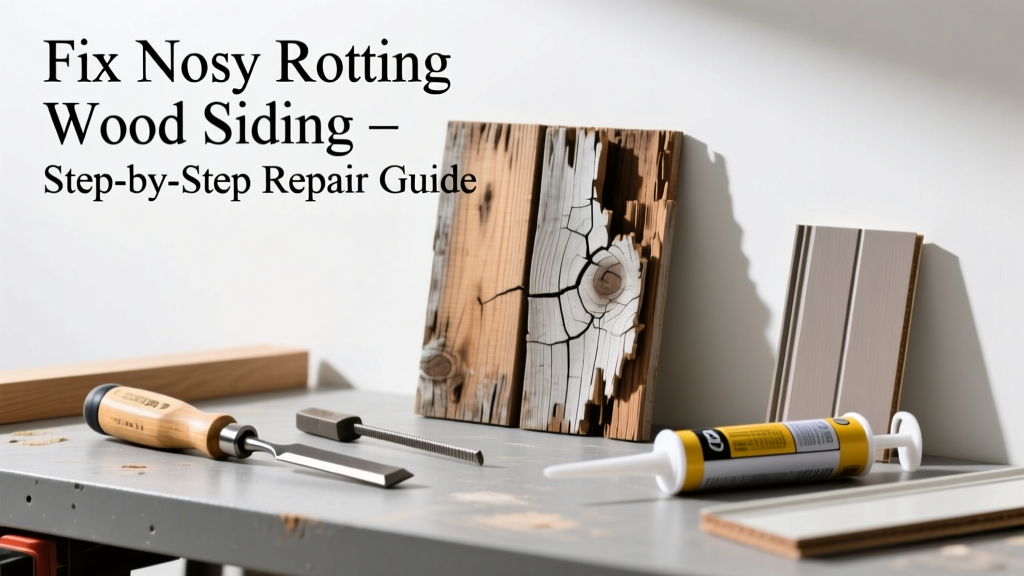
If your wood siding groans when the wind picks up or pops like popcorn on a hot afternoon, that’s not just weather talking—it’s decay speaking. Rotting wood loses structural integrity, flexes unpredictably, and creates unsettling sounds as moisture-swollen fibers shift or snap. Ignoring it invites water intrusion, insect infestation, and eventual sheathing damage.
Quick Diagnosis
Unusual noises from wood siding almost always point to moisture-related deterioration—but the exact cause matters for repair strategy. Check for these telltale signs:
- Soft, spongy spots you can dent with light thumb pressure
- Dark discoloration or fungal growth (especially in north-facing or shaded sections)
- Gaps widening between boards, especially near corners or window trim
- Creaking only during temperature swings—suggests freeze-thaw expansion in saturated wood
- Musty odor near the noise source, even indoors near exterior walls
Tools & Materials Needed
| Item | Purpose | Estimated Cost |
|---|---|---|
| 10-inch pry bar | Lifts loose or warped boards without splitting adjacent ones | $18–$24 |
| Moisture meter (pin-type) | Measures internal wood moisture; readings >20% indicate active rot | $45–$85 |
| Exterior-grade plywood (½") | Replacement backing for severely rotted sections behind lap siding | $22–$30 per sheet |
| CPES epoxy consolidant | Penetrates and hardens punky wood—extends life of marginal sections | $32–$48 per quart |
| Zinc-coated siding nails (2") | Corrosion-resistant fasteners for wet-prone zones | $8–$12 per box |
Step-by-Step Fix
Address the noise by stabilizing the structure—not just masking symptoms. Use this sequence based on severity:
- Isolate the sound source: Tap along each board with a rubber mallet while listening for hollow, dead, or resonant tones. Mark suspect boards with chalk.
- Test moisture and depth: Insert pin meter at multiple points—including top, middle, and bottom of each marked board. If >20% at any point, cut a 1" x 1" inspection notch at the lowest point to check for interior rot.
- Consolidate or replace: For surface rot (<¼" deep), saturate with CPES epoxy using a stiff brush. Let cure 48 hours. For deeper rot, remove the board entirely using a cat’s paw and replace with primed, kiln-dried cedar or redwood.
- Re-flash and seal: Install Z-flashing under upper course before re-nailing. Back-prime all new wood and caulk joints with silicone-acrylic hybrid (e.g., DAP Dynaflex Ultra).
When to Call a Pro
DIY stops where structural risk begins. Call a licensed contractor if:
- You find rotted sheathing or framing behind the siding (visible through inspection cuts or gaps)
- Noise originates from two or more stories’ worth of siding—indicating systemic moisture migration
- The home has stucco or EIFS over wood sheathing (hidden rot risk requires infrared imaging)
- You’re uncomfortable working at heights above 8 feet without fall protection
According to the Insurance Institute for Business & Home Safety's 2023 report, 68% of siding-related insurance claims involved undetected rot behind intact-looking surfaces—most missed during DIY visual checks.
Prevention Tips
Stop recurrence by managing moisture at its source:
- Clean gutters twice yearly—clogged gutters dump water directly onto siding baseboards
- Maintain 6–8 inches of clearance between soil and bottom siding edge (check annually for mulch or grade creep)
- Repaint or restain every 5–7 years—use 100% acrylic latex with mildewcide (e.g., Sherwin-Williams Duration)
- Install drip caps over all windows, doors, and horizontal trim to deflect runoff
Can I use bleach on this?
No. Household bleach kills surface mold but doesn’t stop rot fungi feeding deep in cellulose. It also degrades wood lignin over time, accelerating breakdown. Use a borate-based preservative like Bora-Care instead—it penetrates and inhibits fungal growth long-term.
Why does it only creak at night?
Nighttime cooling causes wood to contract unevenly—especially when one side is damp (from dew or trapped moisture) and the other dries faster. That differential shrinkage stresses weakened fibers, producing audible pops. This is a red flag: consistent nocturnal noise often means rot is advancing beyond surface layers.
Will painting over it stop the noise?
Temporarily, maybe—but paint seals in existing moisture and hides worsening decay. A fresh coat over compromised wood traps vapor, accelerating rot beneath. Always diagnose and dry the substrate first. As contractor Mike Rizzo told Journal of Light Construction (2022): “Painting over rot is like putting a bandage on a broken bone—it looks better, but the problem gets worse.”
How long can I wait before replacing?
If moisture meter readings exceed 25% in three or more spots on one board, replacement should happen within 30 days. Beyond that, rot spreads laterally at ~1/8" per month in humid conditions (per USDA Forest Service FPL Report #2021-04). Delaying invites carpenter ants or termites.
Do I need to replace the whole wall?
Rarely. Rot usually follows water paths—so focus on zones below downspouts, window sills, and grade-level transitions. Replace only affected boards plus one adjacent ‘buffer’ board to ensure secure nailing into sound framing. Use a level and straightedge to match reveal lines precisely.
What’s the best wood for replacement siding?
Kiln-dried western red cedar or white oak offer natural rot resistance and stable expansion/contraction ratios. Avoid pressure-treated pine for above-grade siding—it warps and checks badly. For high-humidity climates, consider fiber-cement as a low-maintenance alternative for future projects.
Noisy siding isn’t just an annoyance—it’s your home’s early warning system. Tackle the rot now, not when the noise turns into leaks or sagging panels. A few hours with the right tools and moisture testing can save hundreds in labor and prevent insulation damage behind the walls. Stay vigilant, stay dry, and never ignore what your house is trying to tell you.