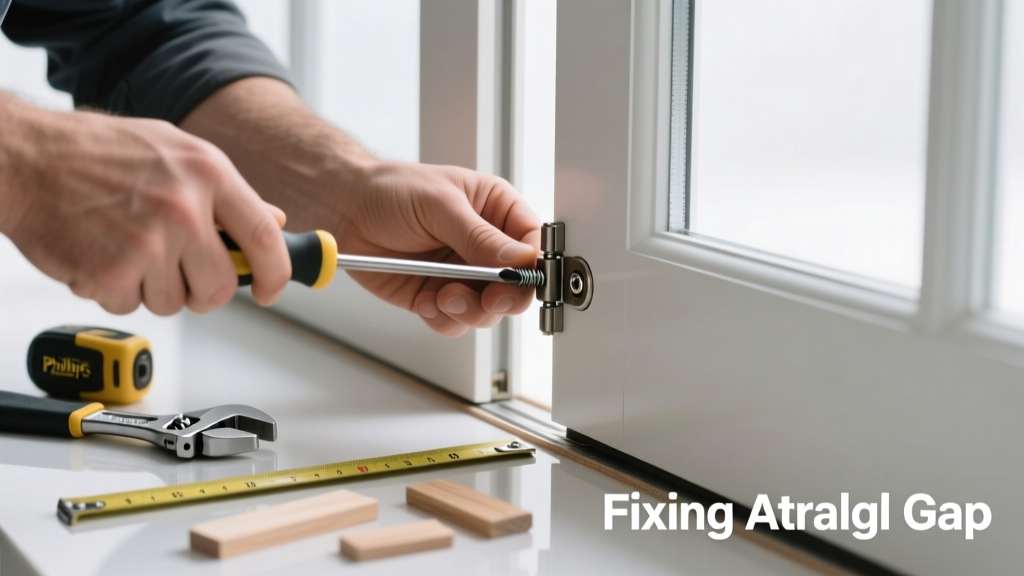
If your French doors rattle, whistle, or let in cold air near the center seam, you’re likely dealing with an astragal gap — the vertical strip between doors that’s shifted, warped, or improperly installed. This isn’t just annoying; gaps over 1/8" can increase heating costs by up to 10% and compromise security. The good news? Most gaps are fixable in under two hours with basic tools.
Quick Diagnosis
Before grabbing tools, identify the root cause. A misaligned astragal rarely appears in isolation — it’s usually a symptom of something else:
- Loose or stripped hinge screws on one or both doors
- Warped door stiles due to humidity or age (common in solid wood doors)
- Settling foundation causing the threshold or header to shift
- Astragal screws pulled out or missing entirely
- Incorrectly installed or reversed astragal (especially after DIY replacement)
Tools & Materials Needed
| Item | Purpose | Estimated Cost |
|---|---|---|
| 3/16" hex key or Phillips screwdriver | Tightens astragal mounting screws and hinge hardware | $5–$12 |
| Shim pack (wood or composite) | Compensates for uneven gaps at top/bottom of astragal | $4–$8 |
| Drill with countersink bit | Re-drills pilot holes if original screws stripped the jamb | $25–$60 |
| Replacement astragal (if warped) | Matches profile and material (aluminum, vinyl, or wood) | $18–$45 |
| Door alignment gauge or straightedge | Verifies flushness of doors along the meeting edge | $10–$22 |
Step-by-Step Fix
Start with the least invasive method and work up. Most gaps resolve at Step 1 or 2:
- Tighten all astragal mounting screws — Use a hex key to snug each screw (don’t overtighten). Check for stripped holes: if screws spin freely, skip to Step 3.
- Adjust hinge tension — Loosen hinge screws slightly on the active door, then gently push or pull the door toward the astragal while retightening. Use a straightedge across both doors to confirm flushness.
- Re-anchor stripped screw holes — Remove screws, fill holes with wood glue + toothpicks or a hardwood dowel, let dry 2 hours, then re-drill pilot holes and reinstall screws.
- Add shims behind astragal base — If gap persists only at top or bottom, insert thin composite shims behind the astragal’s mounting flange before re-screwing.
- Replace warped astragal — Measure length and profile (e.g., 'T-style aluminum, 80"'), order exact match, and install using manufacturer’s template spacing (typically 8" on center).
When to Call a Pro
Some gaps signal deeper structural issues that go beyond hardware tweaks. Call a licensed door technician if:
- The gap changes size throughout the day (suggesting significant seasonal wood movement or foundation settlement)
- You detect >1/4" gap at the top AND bottom simultaneously — often means the header has sagged or the sill is heaving
- Doors bind or scrape the threshold when opening/closing — indicates frame distortion
- You’ve tried all five steps above and the gap returns within 2 weeks
According to the National Association of Home Builders’ Door Installation Standards Handbook (2022), “Astragal gaps exceeding 3/16" that persist after hinge and fastener correction require frame-level evaluation — not just hardware adjustment.”
Prevention Tips
Keep your French doors operating smoothly year after year:
- Check and tighten astragal and hinge screws every 6 months — especially before winter
- Maintain indoor humidity between 35–55% to minimize wood swelling/shrinking
- Install a high-quality sweep on the active door’s bottom edge to reduce pressure on the astragal seal
- Wipe down aluminum astragals quarterly with mild soap and water to prevent corrosion-induced warping
Can I use caulk to seal the astragal gap?
No — caulk creates a rigid bond that prevents normal door expansion and stresses the astragal’s mounting points. It also traps moisture behind metal astragals, accelerating corrosion. Instead, use a compressible weatherstrip like vinyl bulb seal mounted directly to the astragal face.
Why does my astragal gap get worse in summer?
Wood doors absorb humidity and swell, but the astragal itself (often metal or PVC) doesn’t expand at the same rate. That mismatch causes binding, which forces the astragal away from the door surface — widening the visible gap. Seasonal gaps under 1/16" are normal; larger ones need hinge realignment.
Do I need to remove the doors to fix this?
Rarely. Over 90% of astragal gap repairs happen with doors fully installed. Only remove doors if replacing the entire astragal assembly or correcting severe frame twist — and even then, use proper door stands and safety straps. See our guide on how to remove french doors safely.
What’s the ideal astragal gap size?
The U.S. Department of Energy recommends no more than 1/8" (0.125") gap along the full length for energy efficiency and security. Gaps under 1/16" are acceptable for older homes with natural wood movement. Anything wider invites drafts, pests, and compromised lock engagement.
Can I paint over an aluminum astragal?
Yes — but only after thorough cleaning and light sanding with 220-grit paper. Use 100% acrylic latex paint formulated for metal. Avoid oil-based paints, which can peel within 12–18 months due to thermal expansion. For best results, apply primer first — like Rust-Oleum Metal Primer.
Is a gap at the top of the astragal normal?
A slight top gap (≤1/16") is common and often intentional — it allows for seasonal expansion without binding. But if it’s larger than the bottom gap or accompanied by a draft, check hinge torque and ensure the top hinge isn’t pulling away from the jamb. A loose top hinge is the #1 cause of top-heavy astragal gaps.
A well-aligned astragal shouldn’t be invisible — it should be silent. No whistling, no light leakage, no finger-width gaps. When you close your French doors and hear that soft, confident *thunk*, you’ll know the fix held. Keep your screwdrivers handy, monitor seasonal shifts, and treat your astragal like the security and efficiency gatekeeper it is — because it is.