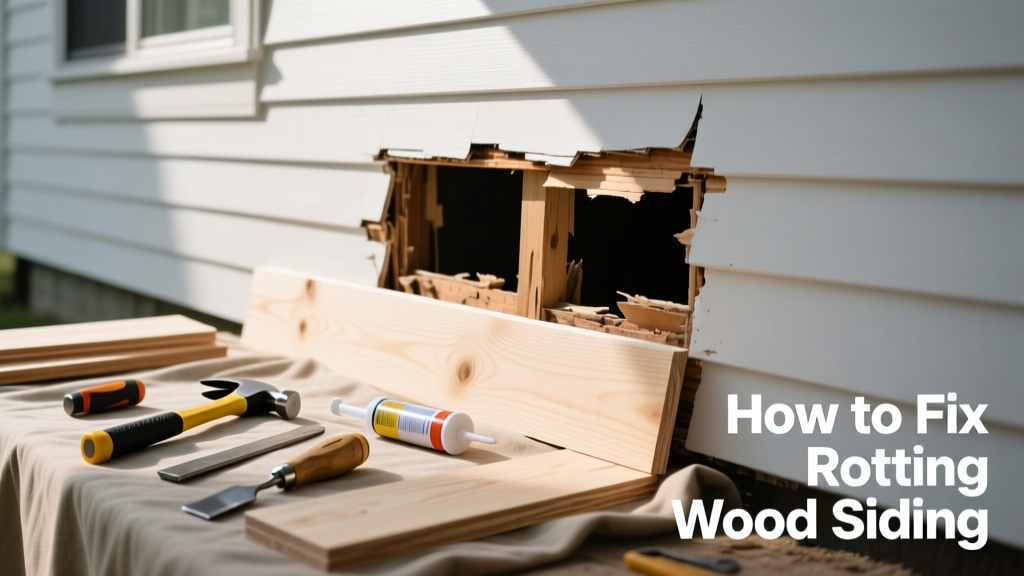
Rotting wood siding isn’t just an eyesore—it’s a red flag for moisture intrusion that can compromise your home’s structural integrity and invite pests. Left unaddressed, even a small 4-inch patch of soft, spongy cedar or pine can spread to adjacent boards within a season. Catching it early means saving hundreds—or thousands—in future repairs.
Quick Diagnosis
Rotten siding rarely appears out of nowhere. Here are the most common root causes:
- Poorly installed or missing flashing above windows, doors, and roof intersections
- Clogged or damaged gutters causing water to pool against the wall
- Landscaping mulch or soil piled up against the siding (trapping moisture at the base)
- Missing or cracked caulk around trim, corners, and butt joints
- Lack of regular paint or stain maintenance—especially on south- and west-facing walls exposed to intense UV and rain
Tools & Materials Needed
| Item | Purpose | Estimated Cost |
|---|---|---|
| 10-in pry bar | Removes nails without splitting adjacent boards | $12–$18 |
| 3-in chisel + mallet | Cleans out deeply decayed wood fibers before epoxy fill | $14–$22 |
| Abatron WoodEpox or LiquidWood | Two-part epoxy system that bonds to sound wood and resists moisture | $35–$48 |
| 120-grit sandpaper (belt or orbital) | Prepares surface for primer; removes loose fibers and old finish | $6–$10 |
| Oil-based primer + acrylic latex topcoat | Blocks tannin bleed and provides long-term UV/moisture resistance | $45–$65 (gallon set) |
Step-by-Step Fix
Choose the method based on severity and location:
- Surface Rot (less than ¼" deep): Use a stiff wire brush to remove loose fibers, then saturate with Abatron LiquidWood. Let cure 24 hours, sand smooth, prime, and paint.
- Moderate Rot (¼"–½" deep, still structurally sound): Excavate decayed wood with chisel until you hit solid grain. Apply WoodEpox in layers no thicker than ¼", allowing each to cure before adding more. Sand flush when fully cured.
- Full Board Replacement: Cut out the affected board using a circular saw set to depth (just shy of sheathing), remove nails with pry bar, install new pre-primed board with galvanized ring-shank nails spaced every 12", and caulk all seams with OSI Quad Max.
When to Call a Pro
DIY is smart—but not always safe or effective. Call a licensed contractor if:
- You find rotted framing or sheathing behind the siding (requires structural assessment)
- More than three consecutive boards are compromised on a single wall section
- The rot extends beneath window or door jambs where hidden water damage is likely
- Your home was built before 1978 and you suspect lead paint—disturbing it requires EPA RRP-certified contractors
According to the Insurance Institute for Business & Home Safety's 2023 report, homes with untreated siding rot are 3.2× more likely to experience interior mold growth within 18 months.
Prevention Tips
Fixing rot is only half the battle—stopping recurrence is where lasting value lies:
- Clean gutters twice yearly and extend downspouts at least 5 feet from the foundation
- Maintain a 6-inch clearance between soil/mulch and the bottom of siding (use gravel or pavers if needed)
- Re-caulk all joints and trim annually—pay special attention to horizontal seams and corner boards
- Repaint or re-stain wood siding every 5–7 years (sooner on sun-exposed surfaces)
- Install drip caps over all windows and doors—even if original construction omitted them
Can I use bleach on this?
No. Bleach kills surface mold but doesn’t stop rot fungi, which live deep in the wood fibers. It also degrades lignin—the glue holding wood cells together—accelerating deterioration. Stick to borate-based preservatives like Bora-Care for active fungal treatment.
Will painting over rotted wood stop the rot?
Painting over active rot is like putting a bandage on an infected wound. It traps moisture, worsens decay, and hides progression until structural failure occurs. Always remove or stabilize decayed wood before any finish application.
How do I tell if it’s rot or just weathered wood?
Tap the area with a screwdriver handle: solid wood rings; rotten wood gives a dull thud and yields easily. Probe with an awl—if it sinks in deeper than 1/8 inch with light pressure, it’s compromised. Surface checking or gray discoloration alone isn’t rot—true rot feels soft, spongy, or crumbly.
Can I repair cedar siding the same way as pine?
Yes—but cedar’s natural oils slow rot, so decay often starts where fasteners penetrate or where paint fails. Cedar also swells/shrinks more with humidity, making caulk integrity critical. Always use stainless steel or hot-dipped galvanized fasteners with cedar to avoid staining.
Is pressure washing safe before repair?
Only at low pressure (under 500 PSI) and held at least 12 inches from the surface. High-pressure washing blows water behind siding and into sheathing—especially dangerous near windows, corners, and lap joints. Better: scrub with oxygen bleach solution and rinse gently.
Do I need to replace the entire siding if one board is rotten?
Not unless adjacent boards show active decay or the rot originated from a systemic issue like chronic gutter overflow. Isolated rot is almost always repairable. However, if your siding is over 25 years old and multiple boards show similar degradation, consider phased replacement—starting with the most exposed walls.
A well-executed repair buys you 10–15 years of reliable performance—if paired with consistent maintenance. That’s why pros recommend scheduling a full siding inspection every spring, especially after harsh winters or heavy rainfall seasons. For deeper issues like flashing failures or gutter alignment problems, tackle those first—they’re usually the real culprits behind recurring rot. And if you're weighing options beyond wood, our guide on fiber cement vs. wood siding breaks down long-term durability trade-offs.