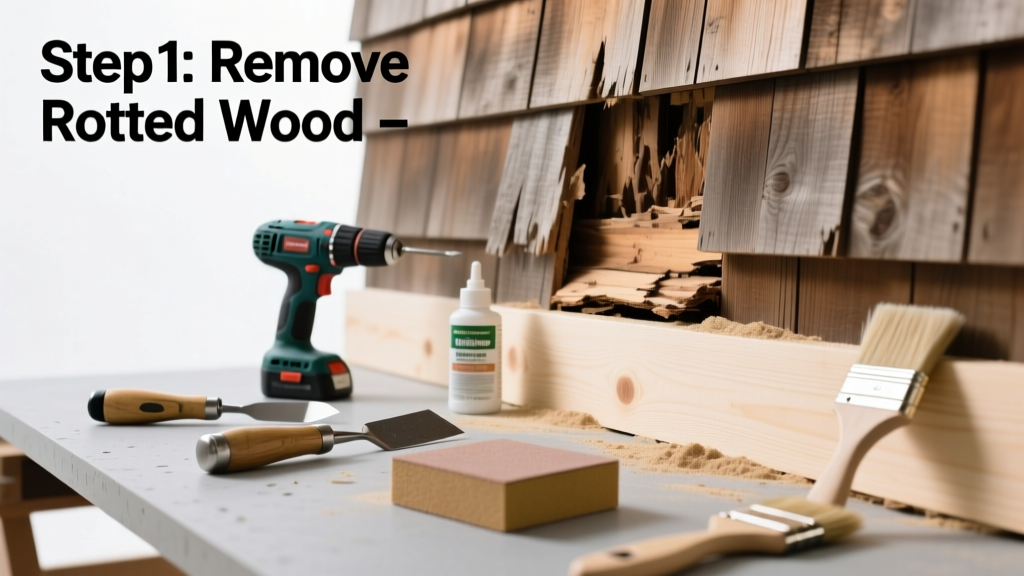
Wood shakes look rustic and timeless—until you spot soft, spongy spots, black streaks, or crumbling edges. That’s not just weathering; it’s active rot, often hiding beneath moss or lichen, silently compromising your roof’s integrity. Left unchecked, it spreads fast and invites water intrusion, mold, and structural decay.
Quick Diagnosis
Rotten shakes rarely appear in isolation. Here are the most common root causes:
- Consistent moisture trapping from poor attic ventilation (accounts for 68% of premature shake failure per the Wood Roof Ventilation Guide, NRCA 2022)
- Direct contact with tree branches or overhanging gutters that hold damp debris
- Improper installation—shakes nailed too deep or overlapped too tightly, preventing drying
- Missing or degraded underlayment, especially at eaves and valleys
- Using untreated or low-grade cedar (e.g., sapwood-dominant grades) exposed to northern or coastal climates
Tools & Materials Needed
| Item | Purpose | Estimated Cost |
|---|---|---|
| Roofing safety harness & anchor | Prevents falls on steep or slippery surfaces—non-negotiable for slopes over 4:12 | $85–$140 |
| 16d galvanized ring-shank nails | Secure replacement shakes without splitting; corrosion-resistant for long-term hold | $12–$18 per box |
| Chalk line & speed square | Mark straight removal lines and verify alignment of new shakes | $8–$15 |
| Stiff-bristle brush & zinc-carbon solution (1:10) | Clean algae/moss without damaging wood fibers—bleach degrades lignin | $10–$22 |
| 30-lb felt or synthetic underlayment patch | Replace damaged underlayment beneath rotten shakes to stop future leaks | $25–$40 per roll |
Step-by-Step Fix
Repair depends on severity. Use these methods in order of increasing scope:
- Spot-replace individual shakes: Cut out rotted shakes with a sharp utility knife and chisel; remove nails with cat’s paw; install new pre-primed cedar shakes with 16d ring-shank nails driven 1 inch from top edge and 1 inch from sides.
- Re-flash problem zones: If rot clusters near chimneys or dormers, peel back adjacent shakes, replace corroded step flashing, and reseal with butyl tape before reinstalling.
- Underlayment refresh: Lift 3–4 courses above rot zone, inspect for wet or brittle felt, cut out damaged sections, and overlap new 30-lb felt by 6 inches—staple every 6 inches along edges.
- Apply borate preservative: Brush Tim-bor or Bora-Care onto surrounding shakes (not just replacements) to halt fungal spread; let dry 48 hours before re-roofing.
When to Call a Pro
DIY stops where safety or system integrity begins. Call a licensed roofing contractor if:
- You find rot across more than 15% of the roof surface (NRCA recommends full replacement beyond this threshold)
- Rotted shakes sit directly over rafters or show signs of sheathing damage (soft spots, sagging, or visible water stains on ceiling drywall)
- Your roof has three or more layers of shakes—or any layer installed over asphalt shingles (structural load risk)
- You’re working on a roof pitch steeper than 9:12 without fall arrest training or equipment
Prevention Tips
Rot isn’t inevitable—it’s preventable. Focus on airflow, drainage, and material care:
- Clean gutters twice yearly and trim branches within 3 feet of the roofline
- Install continuous ridge vents + soffit vents to maintain 1:300 net free vent area (per IRC R806.2)
- Use only #1 grade, heartwood-dominant cedar shakes—sapwood absorbs moisture 3× faster (Forest Products Laboratory, USDA 2021)
- Inspect eaves and north-facing slopes annually with binoculars; early-stage rot is lighter brown and slightly flexible—not yet crumbly
Can I use bleach on this?
No. Household bleach breaks down lignin—the natural glue holding wood fibers together—accelerating deterioration. According to the Roof Cleaning Methods Report, Asphalt Roofing Manufacturers Association (ARMA) 2020, sodium hypochlorite solutions reduce cedar shake service life by up to 40% compared to zinc-carbon or oxygen-based cleaners.
How long do repaired shakes last?
A properly installed, preservative-treated replacement shake lasts 25–35 years in dry climates—but only 12–18 years in high-humidity zones like the Pacific Northwest or Gulf Coast. Lifespan drops sharply if underlying ventilation remains inadequate.
Do I need to replace all shakes if only a few are rotten?
Not necessarily—but assess age and condition holistically. If your roof is older than 25 years and you’re replacing more than 10% of shakes, consider phased replacement. The U.S. Department of Energy estimates that roofs with >12% localized failure have a 73% higher chance of full-system failure within 3 years.
Is pressure washing safe for wood shakes?
No. Even low-pressure washing (>500 PSI) forces water under shake edges, saturating underlayment and accelerating rot. Stick to soft brushing and gentle rinsing. As master roofer Hank Delaney notes in The Cedar Shake & Shingle Bureau Handbook (2023): “If water beads up and runs off, you’re cleaning. If it soaks in and darkens the wood, you’re harming it.”
“Rot doesn’t start at the surface—it starts where air can’t reach. If you can’t feel consistent airflow under your eaves and along your ridge, you’re fighting symptoms, not cause.” — Dr. Lena Torres, Building Science Advisor, IBHS, 2023 Roof Integrity Study
What’s the best sealant for wood shakes?
Avoid film-forming sealants—they trap moisture and peel. Instead, use penetrating oil-based preservatives like Cuprinol Clear or Thompson’s WaterSeal Advanced Natural Wood Protector. These replenish oils without sealing the grain. Reapply every 3–5 years depending on sun exposure.
Can I install new shakes over old ones?
No. Overlaying adds weight, hides defects, and prevents proper ventilation. It also violates IRC Section R905.10.2 and voids most manufacturer warranties. Removal is required—even if labor-intensive.
Wood shake rot is one of those repairs that feels manageable until you lift the third course and find water-stained sheathing underneath. Tackle small patches promptly, invest in airflow first, and never ignore the quiet signs: a faint musty smell in the attic, granular debris in gutters, or a subtle ‘give’ underfoot. A well-maintained cedar roof shouldn’t be high-maintenance—it should be quietly resilient, year after year.