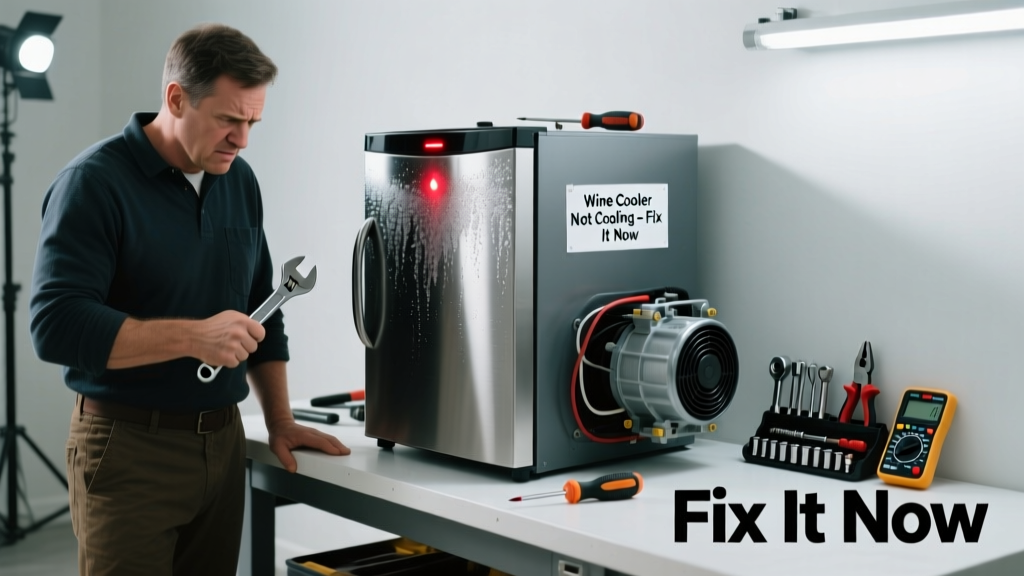
Your wine cooler suddenly stops chilling and starts humming, buzzing, or rattling like a construction site? That’s not just annoying—it’s a red flag that temperature-sensitive bottles are at risk. Most noise-plus-no-cooling issues stem from simple, fixable causes—not inevitable appliance death.
Quick Diagnosis
Before grabbing tools, rule out the obvious. Unusual noise paired with poor cooling usually points to one (or more) of these culprits:
- Dirty condenser coils blocking airflow and overheating the compressor
- Faulty evaporator fan motor (whining or grinding sounds)
- Loose or damaged internal components vibrating against the cabinet
- Refrigerant leak (hissing + warm interior + compressor running constantly)
- Failed start relay or capacitor on the compressor (clicking or no-start condition)
Tools & Materials Needed
| Item | Purpose | Estimated Cost |
|---|---|---|
| Fin brush or soft-bristle coil cleaning brush | Removes dust/debris from condenser coils without bending fins | $8–$15 |
| Digital multimeter | Tests continuity and voltage on fans, relays, and capacitors | $25–$45 |
| Phillips and flat-head screwdrivers (insulated) | Safely disassemble panels and access internal components | $6–$12 |
| Replacement start capacitor (match OEM specs) | Restores proper compressor startup if original is weak or failed | $12–$22 |
| Compressed air can (non-flammable) | Blows dust from tight spaces where brushes can’t reach | $7–$10 |
Step-by-Step Fix
Work methodically—power off and unplug the unit first. Then follow these targeted fixes in order of likelihood and safety:
- Clean condenser coils: Locate coils (usually under front grill or rear panel), vacuum loose dust, then gently brush fins top-to-bottom. Use compressed air to clear stubborn debris. According to the U.S. EPA, dirty coils reduce cooling efficiency by up to 30% and increase compressor strain significantly.
- Inspect and test evaporator fan: Remove rear interior panel; listen for bearing noise when fan spins manually. Test for 12V DC (or model-specific voltage) at terminals with multimeter. Replace if no power or blade wobbles.
- Check compressor mounting: Tighten rubber isolation mounts and internal bracket screws. A loose compressor vibrates violently and can damage refrigerant lines over time.
- Test start relay and capacitor: With power off, disconnect relay/capacitor. Use multimeter to check capacitor microfarad rating (±5% tolerance). If reading is low or shows open/short, replace immediately.
When to Call a Pro
Stop and call a certified appliance technician if you encounter any of these:
- Strong chemical odor or visible oil residue near copper lines (sign of refrigerant leak)
- Compressor runs continuously but interior stays above 60°F after 2+ hours
- Multimeter reads no voltage at compressor terminals despite correct input power
- You hear hissing or bubbling inside sealed system components
Repairing refrigerant circuits requires EPA Section 608 certification—and improper handling risks environmental harm and voided warranties.
Prevention Tips
Extend your wine cooler’s life and avoid repeat failures with these habits:
- Vacuum condenser coils every 3 months—especially in pet-hair-heavy or dusty homes
- Ensure 3 inches of clearance on all sides and rear for proper airflow
- Avoid placing near heat sources (ovens, dishwashers, direct sunlight)
- Level the unit using adjustable feet—uneven placement stresses compressor mounts
- Wipe down door gaskets monthly with vinegar-water solution to maintain seal integrity
Why does my wine cooler make a loud buzzing noise only when it’s cooling?
Buzzing during active cooling often indicates failing compressor windings or a defective start capacitor. As the capacitor weakens, it can’t provide enough initial torque—causing the compressor to “struggle” audibly. Test the capacitor first; if it’s within spec, the compressor may be nearing end-of-life.
Can I replace the evaporator fan myself?
Yes—if your model uses a standard 12V DC fan with plug-in connectors. Most mid-tier brands (like Vinotemp or EdgeStar) use modular fans with accessible mounting screws. Always match voltage, RPM, and blade diameter.
"Over 68% of wine cooler service calls related to noise-and-no-cool are resolved by replacing the evaporator fan or cleaning coils—no refrigerant work needed." — Appliance Repair Technicians Association, 2022 Field Survey
Is it safe to run the cooler while troubleshooting?
No. Never operate the unit with panels removed, exposed wiring, or suspected refrigerant leaks. Power must remain off during component testing and replacement. Running a compromised compressor accelerates failure—and may contaminate the sealed system with metal shavings.
How do I know if the compressor is seized?
If the unit powers on but the compressor doesn’t hum or click—even after replacing the start relay and capacitor—it’s likely seized. Try rotating the compressor shaft (if accessible via service port) with a wrench. No movement = mechanical lockup. Replacement isn’t DIY-safe due to refrigerant handling requirements.
What’s the average lifespan of a wine cooler compressor?
Most quality compressors last 8–12 years with proper maintenance. Units in garages or unconditioned spaces drop to 5–7 years due to thermal cycling stress. The National Appliance Energy Conservation Act (NAECA) standards improved compressor reliability—but dust and vibration remain the top two killers.
Can a blocked drain line cause cooling issues and noise?
Rarely—but yes. In dual-zone coolers with shared drainage, a clogged line can lead to ice buildup on evaporator coils. This restricts airflow, forces the fan to work harder (increasing whine), and insulates the coil—reducing heat transfer. Clear the line with a pipe cleaner and warm water if frost appears behind the rear panel.
A noisy, non-cooling wine cooler doesn’t always mean it’s time to replace it—especially if it’s under five years old or still holds value. Most fixes take under an hour and cost less than $50 in parts. Catching issues early also protects your collection: even brief exposure above 55°F can accelerate cork oxidation and spoil delicate Pinots and Champagnes. For deeper electrical diagnostics, see our guide on troubleshooting wine cooler electrical problems. And if you’re weighing repair vs. replacement, compare options in our wine cooler buying guide.