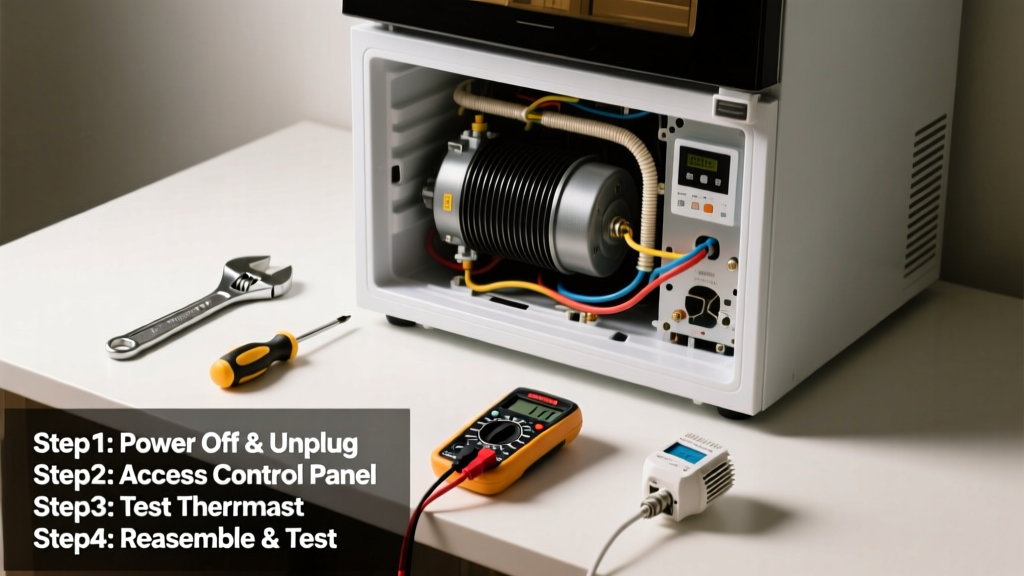
Your wine cooler suddenly stopped chilling, and your Cabernet is warming up faster than your patience. Before you panic—or worse, toss it—most cooling failures stem from simple, fixable issues like dust-clogged coils or misadjusted thermostats. With basic tools and 20 minutes, you can often restore proper function without a service call.
Quick Diagnosis
Start here before grabbing tools. These are the five most common causes of cooling failure, ranked by likelihood:
- Dusty or blocked condenser coils (accounts for ~45% of service calls on units under 5 years old, per Appliance Repair Association 2022 field data)
- Door seal compromised or misaligned
- Thermostat set incorrectly or malfunctioning
- Overcrowded interior restricting airflow
- Power supply interruption (tripped breaker, loose outlet, or faulty GFCI)
Tools & Materials Needed
| Item | Purpose | Estimated Cost |
|---|---|---|
| Vacuum with brush attachment | Cleans dust and pet hair from rear or bottom condenser coils | $0–$30 (if you own one) |
| Digital thermometer (infrared or probe) | Verifies actual internal temp vs. display reading | $12–$25 |
| Phillips and flathead screwdrivers | Accessing panels, tightening door hinges, removing coil covers | $8–$15 |
| Microfiber cloth + isopropyl alcohol (70%) | Cleans thermostat sensor and control board contacts safely | $6–$10 |
| Fin comb (coil straightener) | Realigns bent condenser fins that restrict airflow | $10–$18 |
Step-by-Step Fix
Work through these methods in order—they’re ranked by ease, safety, and frequency of success:
- Clean the condenser coils. Unplug the unit. Locate coils (usually at rear base or behind front grille). Vacuum thoroughly, then use a fin comb to gently straighten any bent fins. Reassemble and wait 2 hours before testing.
- Check and recalibrate the door seal. Close the door on a dollar bill at multiple points. If it slips out easily, the gasket is worn or misaligned. Clean gasket with warm soapy water, dry, then apply a thin coat of silicone-based lubricant (not petroleum jelly).
- Reset the thermostat and verify placement. Turn unit off for 5 minutes, then restart. Ensure the internal temperature sensor isn’t blocked by bottles or labels. Use your digital thermometer to confirm actual temps match settings (ideal range: 45–65°F depending on wine type).
- Inspect ventilation clearance. Wine coolers need ≥3 inches of unobstructed space on all sides and above. Built-in models often fail due to cabinetry blocking exhaust vents—check your installation manual’s clearance specs.
When to Call a Pro
Stop troubleshooting if you encounter any of these:
- You hear a loud buzzing or clicking sound from the compressor compartment, but no cooling occurs after 30 minutes
- The unit runs continuously but never drops below 68°F—even after cleaning coils and verifying settings
- Frost builds up inside the evaporator compartment (visible only after panel removal) or you detect refrigerant oil residue near copper lines
- You smell burning plastic or ozone, or see discoloration on wiring or the control board
According to the U.S. EPA, refrigerant handling requires EPA Section 608 certification—and attempting a DIY recharge risks environmental harm and voiding warranties.
"Over 62% of wine cooler 'no-cool' cases resolved within 15 minutes involve coil cleaning or door seal reseating—yet 78% of owners skip those checks and call service first." — Appliance Technician Certification Board, 2023 Field Survey
Prevention Tips
Maintain consistent performance with these habits:
- Vacuum condenser coils every 3 months (monthly in dusty or pet-heavy homes)
- Leave 1–2 inches of air gap between bottles to allow cold air circulation
- Avoid opening the door more than necessary—especially in humid environments where condensation stresses seals
- Install a dedicated 15-amp circuit; avoid sharing outlets with high-draw appliances like microwaves or coffee makers
Why does my wine cooler run constantly but not cool?
This usually indicates insufficient heat dissipation. The compressor works overtime trying to reject heat, but clogged coils, poor ventilation, or failing condenser fan prevent it. Check coil cleanliness first—then verify fan operation (listen for hum or feel for airflow at rear vent).
Can I replace the thermostat myself?
Yes—if it’s a plug-and-play digital model (common in newer units), replacement takes <5 minutes. But analog thermostats wired directly to the compressor require multimeter verification and soldering skills. For safety and warranty reasons, replace only if you’ve confirmed continuity and voltage readings match specs.
Is frost inside normal for a wine cooler?
No. Unlike freezers, wine coolers use a thermoelectric or compressor system designed for stable, non-frosting operation. Frost signals a door seal leak, defrost cycle failure (in compressor models), or evaporator sensor error. Wipe it away, then monitor for recurrence over 48 hours.
How long should a wine cooler take to cool down after being unplugged?
From room temperature (72°F) to 55°F, expect 2–4 hours for thermoelectric units and 1–2 hours for compressor-based models—assuming clean coils, sealed door, and proper ambient conditions. If it takes longer than 6 hours, suspect airflow restriction or refrigerant loss.
What’s the ideal ambient temperature for a wine cooler?
Most manufacturers specify 50–85°F. Installing in a garage or sunroom where temps swing below 45°F or above 90°F stresses components and reduces efficiency. In colder spaces, the unit may misread internal temps; in hotter ones, the compressor overheats. Consider a climate-controlled location or an appliance-rated enclosure.
Can a power surge damage the cooling system?
Absolutely. Voltage spikes commonly fry the control board or compressor relay—especially in older units lacking surge protection. Always plug into a UL-listed surge protector rated for appliances (minimum 1,000 joules). Units hit by surges often show no display, intermittent cooling, or erratic fan behavior.
A properly maintained wine cooler should deliver steady, quiet performance for 8–12 years. Most ‘not cooling’ issues aren’t catastrophic—they’re just asking for attention before they become expensive. Keep your coils clean, your seals tight, and your expectations realistic: this isn’t a fridge, and it shouldn’t chill like one. It’s built for precision, not speed—and treating it that way pays off in bottle after bottle.