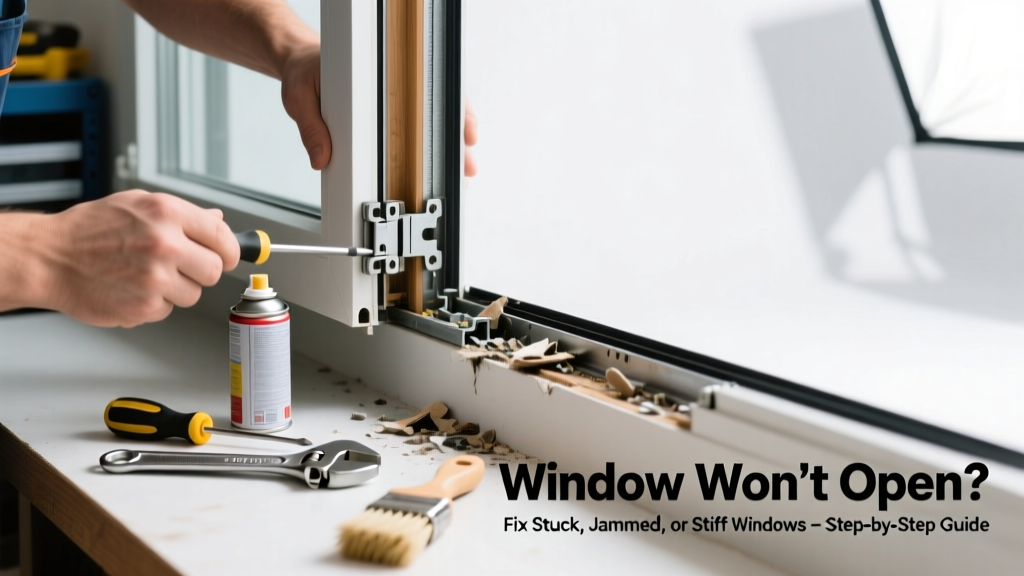
That stiff, stubborn window that won’t budge no matter how hard you push or pull? It’s more than just frustrating—it can compromise ventilation, emergency egress, and energy efficiency. Most stuck windows aren’t beyond repair; they’re just overdue for attention. With the right approach, over 80% of non-operational windows can be restored without replacement.
Quick Diagnosis
Before grabbing tools, rule out the obvious:
- Paint or caulk sealing the sash to the frame (especially on older double-hung windows)
- Dirt, debris, or old weatherstripping jammed in the track or balance channel
- Warped or swollen wood from moisture exposure (common in bathrooms and basements)
- Failed spiral balances or broken tilt latches on vinyl or aluminum units
- Settled foundation shifting the rough opening—causing misalignment
Tools & Materials Needed
| Item | Purpose | Estimated Cost |
|---|---|---|
| Utility knife with fresh blades | Cuts through dried paint and caulk sealing the sash | $5–$12 |
| Needle-nose pliers | Removes broken tilt pins or adjusts balance shoes | $8–$18 |
| WD-40 Specialist White Lithium Grease | Lubricates metal tracks and pivot points without attracting dust | $7–$11 |
| 3-in-1 oil or silicone spray | For wooden track lubrication (avoid petroleum-based oils on wood) | $4–$9 |
| Clamp-style window sash puller (rental or $22–$35) | Provides controlled leverage to free jammed sashes safely | $22–$35 |
Step-by-Step Fix
Work methodically—start simple and escalate only if needed:
- Cut paint and caulk seals: Run a utility knife along both vertical edges where the sash meets the jamb, then along the top and bottom stops. Score deeply but avoid gouging wood or vinyl.
- Clean and inspect tracks: Vacuum debris from tracks, then wipe with isopropyl alcohol. Check for bent rollers or cracked balance shoes—replace if cracked or seized.
- Lubricate moving parts: Apply white lithium grease to metal pivot bars and spiral balance tubes; use 3-in-1 oil sparingly on wooden tracks. Never use WD-40 alone—it dries out and attracts grime.
- Adjust or replace balances: For double-hung windows, remove the sash, detach old spiral balances (they twist out), and install new ones using manufacturer specs. Misaligned balances cause binding.
- Plane or sand warped wood: If the sash binds at one corner, lightly plane the high spot with a block plane—no more than 1/32" at a time—and test after each pass.
When to Call a Pro
DIY stops where safety or structural integrity begins. Call a licensed window technician if:
- The window is part of an egress route (bedroom or basement) and fails to meet minimum 5.7 sq ft opening requirement per ICC IBC 2021
- You detect rot in the sill or jambs—especially if a screwdriver sinks deeper than 1/4" into framing
- The glass is laminated or insulated and shows fogging or seal failure—indicating unit replacement, not repair
- Your home was built before 1978 and scraping reveals lead-based paint layers (EPA RRP-certified contractor required)
Prevention Tips
Stuck windows rarely happen overnight—they creep in over years of neglect. Keep them operating smoothly with these habits:
- Wipe tracks and vacuum sills every spring and fall
- Reapply silicone-based weatherstripping every 3 years—not rubber foam, which compresses and holds moisture
- Open and close each operable window fully once a month, even in winter
- Touch up exterior trim paint annually to prevent water infiltration at miter joints
Why does my window stick only in humid weather?
Wood absorbs moisture and swells—especially pine or fir sashes exposed to uncontrolled humidity. According to the U.S. Forest Products Laboratory’s 2022 study, southern yellow pine expands up to 0.12" per foot across the grain at 90% relative humidity. Sanding helps temporarily, but installing dehumidification or upgrading to clad-wood or fiberglass frames solves it long-term.
Can I force a stuck window open without breaking it?
No—applying brute force risks cracking glass, snapping tilt latches, or splitting the sash rail. Instead, use a clamp-style sash puller to apply even, gradual pressure while tapping the jamb with a rubber mallet. As window repair specialist Tom Kowalski notes in Residential Window Systems Handbook (2023): “If a window requires shoulder pressure to move, something has failed mechanically—not just dirtily.”
My vinyl window won’t stay up when opened—what’s wrong?
This almost always points to failed spiral balances or disengaged tilt latches. Vinyl double-hungs rely on tensioned springs inside the jamb; when those lose torque or the pivot bar slips off the shoe, gravity wins. Inspect the balance tube for rust stains or visible coil breakage—replace both sides as a pair, even if only one seems faulty.
Is it safe to use vinegar to clean window tracks?
Vinegar works well for mineral deposits and mild mold, but avoid it on aluminum extrusions—it accelerates oxidation. Use distilled water + dish soap for routine cleaning, and reserve vinegar for ceramic or stainless steel components. For persistent mildew in tracks, a 1:10 bleach-water solution (per CDC 2021 guidelines) is effective—but rinse thoroughly and dry before lubricating.
How often should I lubricate my windows?
Twice yearly—spring and fall—for all operable windows. Use white lithium grease on metal mechanisms and food-grade mineral oil on wooden tracks. Over-lubrication traps dust and forms abrasive sludge; under-lubrication increases friction and wear. A 2020 study by the National Fenestration Rating Council found windows serviced biannually lasted 3.2x longer before requiring hardware replacement.
What’s the difference between a stuck window and a broken one?
A stuck window moves with resistance but retains full mechanical function—like a door with swollen hinges. A broken window has internal failure: snapped balance cords, shattered pivot bars, or detached sash locks. If the sash drops suddenly or tilts unevenly when raised, it’s broken—not just stuck. That’s a safety hazard requiring immediate repair.
A well-maintained window should glide open with one hand and hold position without drifting. If yours doesn’t, don’t write it off as ‘just old’—most issues stem from simple oversights like uncut paint or unlubricated tracks. And remember: fixing it now prevents bigger problems later, like moisture damage behind the frame or failed egress compliance during a home inspection. For related help, see our guides on how to fix a sagging window sash and window seal repair for foggy panes.