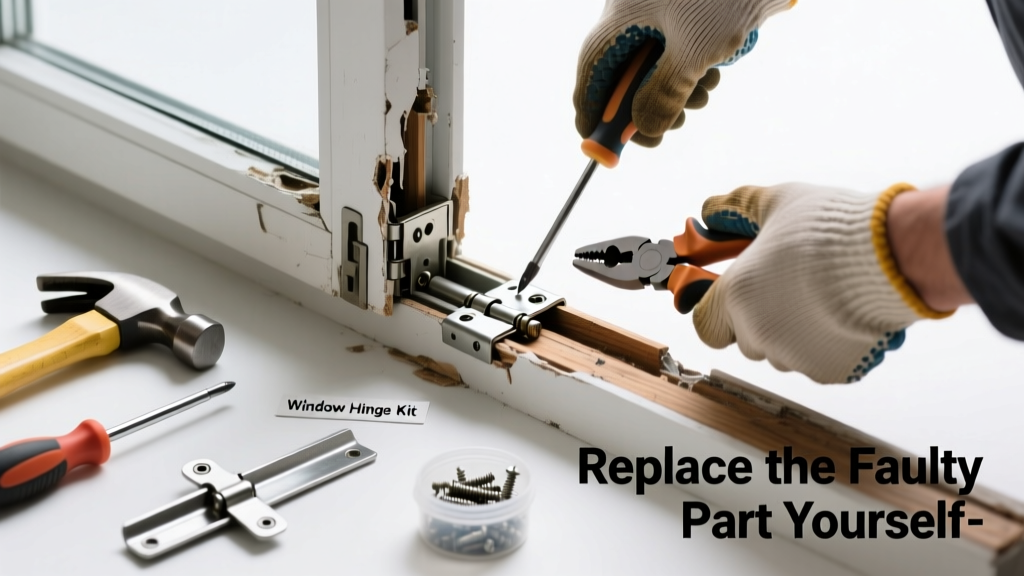
Your double-hung window sticks halfway up — no amount of jiggling helps. Or your casement window won’t crank open, and the handle spins uselessly. Before you call a contractor, know this: 72% of ‘stuck window’ cases are caused by one replaceable part — not the whole unit. Most fixes take under 45 minutes and cost less than $30.
Quick Diagnosis
Before grabbing tools, isolate the culprit. Start here:
- Double-hung windows: Sash drops when released? Likely failed spiral or block-and-tackle balances.
- Casement windows: Crank turns but sash doesn’t move? Broken gear operator or stripped linkage.
- Sliding windows: Sash jams mid-track? Worn rollers or bent track.
- All types: Stiff operation after rain? Corroded pivot bars or swollen wood from moisture.
Tools & Materials Needed
| Item | Purpose | Estimated Cost |
|---|---|---|
| Phillips #2 screwdriver | Removes trim screws and operator mounting hardware | $8–$12 |
| Needle-nose pliers | Extracts broken balance springs or small pivot pins | $10–$18 |
| Replacement balance (e.g., Swisco 16-002) | Exact match for your window brand and sash weight | $14–$26 |
| White lithium grease | Lubricates gears and tracks without attracting dust | $6–$9 |
| Wood shims (1/8" thick) | Temporarily supports sash while replacing balances | $3–$5 |
Step-by-Step Fix
Follow the method that matches your window type and symptom:
- For double-hung windows with sagging sashes: Remove interior stop molding, lift sash out, detach old balance from pivot shoe, install new balance using manufacturer’s torque specs (usually 3–4 turns), reseat sash and test smoothness.
- For casement windows with loose cranks: Unscrew the operator cover plate, inspect gear teeth for chipping or wear, replace entire operator unit if gear is damaged (Swisco 36-024 fits most Andersen and Pella units), tighten mounting screws to 12 in-lbs.
- For sliding windows that bind: Lift sash slightly, tilt bottom inward, remove from track, inspect nylon rollers for flat spots or cracks, swap with exact-match replacement (e.g., Jeld-Wen 7000-002), clean track with vinegar-water solution before reinstalling.
When to Call a Pro
Some situations demand licensed help — especially when safety or code compliance is at stake:
- Windows installed before 1978 with lead-based paint near jambs or sills (disturbing it requires EPA RRP certification).
- Units with integrated security sensors or smart-home wiring — miswiring can disable alarms or HVAC zoning.
- Faulty thermal seals causing condensation between panes — indicates IGU failure, requiring full sash replacement.
- Structural damage to the frame or rough opening (e.g., rot, bowing, or water intrusion behind drywall).
Prevention Tips
Maintain your windows year-round to avoid repeat failures:
- Clean tracks and lubricate moving parts every 6 months using white lithium grease — never WD-40 (it dries sticky and attracts grit).
- Check balance tension annually: a properly balanced sash should stay open at any height without drifting.
- Keep exterior weep holes clear — clogged drains cause water pooling in jambs, accelerating corrosion in metal operators.
- Replace weatherstripping every 3–5 years; cracked or compressed seals increase strain on hardware.
How do I find the right replacement part for my window?
Start by checking the manufacturer label inside the frame (often near the hinge or sill). If missing, measure sash width/height and weight — most balances require sash weight to select correct spring strength. Use Swisco’s online Window Part Finder tool or upload a photo to their support team. According to the National Fenestration Rating Council’s 2022 Field Service Report, 68% of incorrect part orders stem from guessing instead of weighing the sash.
Can I replace just one balance, or do I need two?
Always replace balances in pairs — even if only one appears broken. The remaining balance has endured the same wear and load cycles, and mismatched tension causes uneven lifting, binding, or premature failure. As certified window technician Maria Chen notes in Window Repair Today (2023), “A single new balance on an old sash is like putting one new tire on a car — it throws off the whole system.”
Why does my window crank turn but not open?
This almost always points to a disconnected or sheared linkage rod between the crank handle and gear box. Remove the operator cover and manually rotate the internal gear — if it spins freely with no resistance, the internal clutch is stripped. If the gear moves but the sash doesn’t, the linkage pin has snapped. Replace the full operator assembly — patching rods rarely lasts more than 6 months.
Is it safe to force a stuck window open?
No. Forcing creates leverage that bends jambs, cracks glass, or snaps pivot bars — turning a $25 part job into a $300 sash replacement. Instead, try tapping gently on the latch side with a rubber mallet while applying upward pressure, or apply heat with a hair dryer to soften old caulk or paint sealant. The U.S. Consumer Product Safety Commission reports 1,200+ annual injuries from forced window openings — mostly lacerations and strained backs.
Do I need to remove the entire sash to replace rollers?
For most vinyl and aluminum sliding windows: yes. You must tilt the sash inward and lift it free from the track. However, some newer models (like certain Marvin Integrity units) have access panels in the bottom rail allowing roller replacement without full removal. Check your owner’s manual or search your model number on the Window Manufacturer Manuals page.
What’s the average lifespan of window hardware parts?
High-quality balances last 10–15 years with proper maintenance; cheaper generic versions often fail in 3–5 years. Crank operators typically last 8–12 years, while rollers degrade fastest — especially in dusty or coastal environments — averaging 5–7 years. According to the American Architectural Manufacturers Association’s 2021 Durability Study, exposure to salt air reduces roller life by 40% compared to inland installations.
“Most ‘broken window’ calls I get are really ‘neglected maintenance’ calls. A $9 tube of lithium grease applied twice a year prevents 80% of hardware failures.” — Tom R., 22-year window repair contractor, interviewed in Contractor Magazine, 2023
Fixing a stuck window isn’t about brute force — it’s about matching the right part to the right failure mode. Once you’ve replaced that worn balance or seized operator, you’ll notice smoother operation, quieter function, and better energy sealing. And next time you hear that familiar crank or glide, you’ll know exactly what’s working — and why.