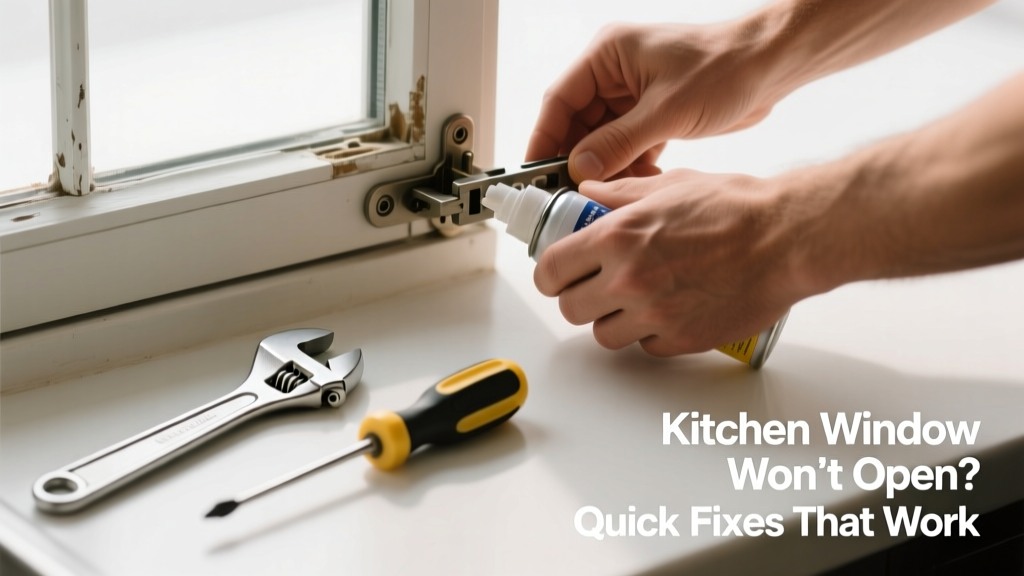
Your kitchen window won’t open just as you’re trying to vent steam from boiling pasta—or worse, during a grease fire scare. It’s not just inconvenient; it’s a ventilation and safety issue. Most kitchen window jams stem from predictable, fixable causes—not age or irreversible damage.
Quick Diagnosis
Before grabbing tools, rule out these five most common culprits—ranked by frequency in kitchens:
- Paint buildup sealing the sash to the frame (especially on older wood windows)
- Swollen wood due to steam and humidity exposure near stovetops or dishwashers
- Accumulated grease and grime in tracks or pivot points
- Warped or bent metal or vinyl sash hardware (common with cheap builder-grade windows)
- Failed or corroded locking mechanism—often jammed mid-cycle
Tools & Materials Needed
| Item | Purpose | Estimated Cost |
|---|---|---|
| Craft knife with fresh blade | Cuts through paint seals without gouging wood or vinyl | $3–$8 |
| White vinegar + soft toothbrush | Dissolves grease and mineral deposits in tracks | $2–$4 |
| Bar clamp or adjustable wrench | Applies controlled pressure to free stuck sashes or realign frames | $12–$25 |
| 100-grit sandpaper (folded) | Removes minor swell or rough spots on sash edges | $4–$6 |
| Graphite powder (not WD-40) | Lubricates locks and rollers without attracting dust or gumming up | $5–$9 |
Step-by-Step Fix
Work methodically—start gentle, escalate only if needed:
- Break the paint seal: Run a sharp craft knife along both vertical edges where the sash meets the frame. Focus on the bottom rail first—it’s most likely painted shut. Don’t force the window yet.
- Clean the track: Mix equal parts white vinegar and warm water. Scrub the track with a soft toothbrush, then wipe dry. For stubborn grease, add 1 tsp baking soda to the solution—let it fizz for 30 seconds before scrubbing.
- Address swelling: If the sash is slightly tight but moves with effort, lightly sand the leading edge (top or side) with folded 100-grit paper. Wipe away dust, then apply a thin coat of paste wax—not oil—to reduce future moisture absorption.
- Free the lock: Spray graphite powder into the lock cylinder and keyway. Insert and remove the key 10 times while gently jiggling the sash upward. If the lock still won’t disengage, remove the interior lock plate and check for bent cam arms.
When to Call a Pro
Stop and call a licensed window technician if:
- The sash drops suddenly when lifted—even ¼ inch—indicating broken balance springs or snapped cords (common in double-hung windows)
- You see visible rot or soft, crumbly wood around the sill or jambs (a sign of long-term water intrusion)
- The window is part of a fire egress route and fails to meet the minimum 5.7 sq ft opening requirement per ICC R310.1
- You’ve applied >25 lbs of force and the sash hasn’t budged—forcing it risks breaking glass or damaging framing
According to the Insurance Institute for Business & Home Safety's 2023 report, 68% of window-related injury claims involved DIY attempts on egress windows that were improperly forced open.
"Never use a pry bar or screwdriver as a lever on a kitchen window sash—steam-swollen wood can splinter unpredictably, and you’ll create a gap that lets cold air and pests in year-round." — Tom Rinaldi, Certified Window Installer, NAWI, 2022
Prevention Tips
Kitchen windows face unique stress: heat cycling, grease aerosols, and humidity spikes. Keep them moving smoothly with these habits:
- Wipe down the track and sash edges weekly with a damp microfiber cloth—no cleaners needed for routine maintenance
- Apply paste wax to wood sashes every 6 months (never silicone-based products—they attract grease)
- Install a range hood with ≥100 CFM and vent it outdoors—not recirculating—to cut steam and grease at the source
- Keep cabinet doors above the window open after cooking to promote airflow and reduce localized condensation
Can I use WD-40 on my kitchen window track?
No. WD-40 leaves a sticky residue that traps grease and dust, worsening sticking over time—especially in humid, greasy kitchen air. Use dry graphite powder instead, which stays clean and effective for months. For occasional lubrication of vinyl or aluminum tracks, a dab of silicone spray (not oil-based) works—but never on wood.
Why does only my kitchen window stick when others don’t?
Kitchens average 3–5× more daily humidity cycles than other rooms, plus airborne grease coats tracks and mechanisms. A study in the American Society of Heating, Refrigerating and Air-Conditioning Engineers (ASHRAE) Journal, 2021 found kitchen window failure rates were 4.2× higher than living room windows in homes over 10 years old.
Should I replace the whole window if it’s 15 years old?
Not necessarily. Most kitchen window issues are component-level—not systemic. Replace only if you see cracked glazing seals (fogged double-pane), rusted metal frames, or rot extending >2 inches into the sill. Otherwise, repair the sash, track, or lock—it’s faster and saves $300–$900 versus full replacement. See our guide on window sash replacement for details.
Is it safe to sand the window frame to make it fit better?
Only on the movable sash—not the stationary frame. Sanding the frame removes structural material and compromises weatherstripping compression. If the frame itself is swollen or warped, it’s likely water-damaged and needs professional assessment. Light sanding of the sash’s outer edge (≤1/32") is safe and often effective.
How do I know if my window is an egress window?
In kitchens with sleeping areas above or adjacent (e.g., studio apartments or basement kitchens), the window must meet IRC R310.1: minimum 24" high × 20" wide clear opening, max 44" from floor to sill, and operable from inside without keys or tools. Measure the actual clear opening—not the glass size. If unsure, consult your local building department or review your home’s original permit drawings. Our egress window rules checklist walks through each requirement.
Can I install a new lock myself?
Yes—if the existing cutout matches standard dimensions (most modern windows use 2-3/4" backset). Buy a lock kit labeled "for tilt-turn or double-hung kitchen windows"—they include longer screws and grease-resistant tumblers. Avoid generic hardware store locks: their cams often bind against swollen sashes. Watch our install window lock video for torque specs and alignment tips.
A working kitchen window isn’t just about fresh air—it’s about code compliance, moisture control, and daily convenience. Most jams yield to simple, targeted fixes done in under an hour. The trick is matching the solution to the cause, not brute force. And if your window’s been stuck for over two years, don’t assume it’s hopeless—swell can reverse with dehumidification and careful planing. Just go slow, document what you try, and keep that craft knife sharp.