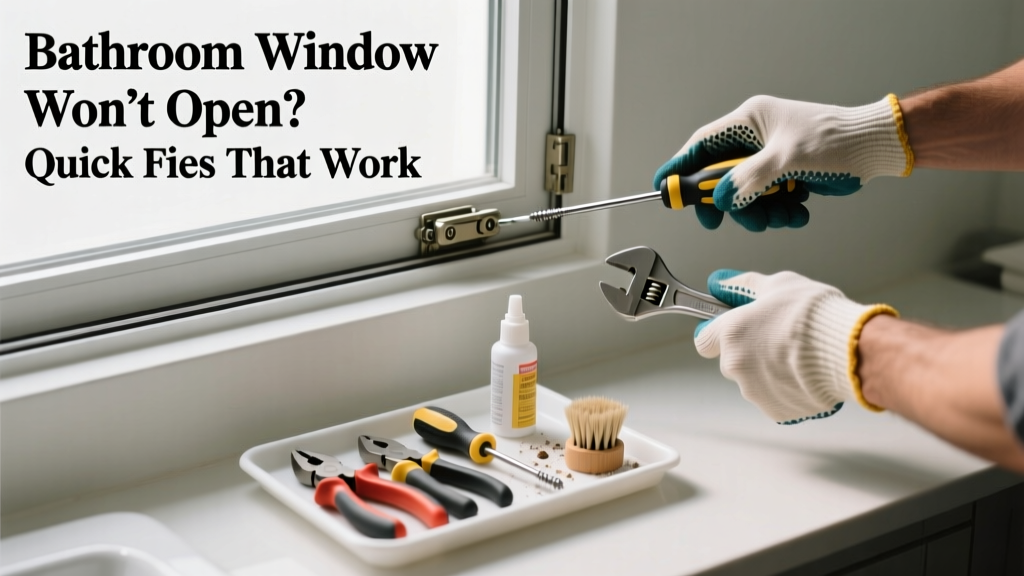
Your bathroom window won’t budge—no matter how hard you push or wiggle it. Humidity, age, and mineral buildup turn even simple vinyl or aluminum windows into stubborn fixtures overnight. This isn’t just inconvenient; it’s a ventilation and safety issue.
Quick Diagnosis
Before grabbing tools, rule out the most likely culprits:
- Paint or caulk sealing the sash to the frame (common after bathroom repaints)
- Swelling wood sash from years of steam exposure
- Rusted or corroded hinges, tracks, or locking mechanism
- Broken tilt-latch or spiral balance in double-hung windows
- Debris or mold buildup in the track or sill
Tools & Materials Needed
| Item | Purpose | Estimated Cost |
|---|---|---|
| Utility knife with fresh blade | Cuts through dried paint or caulk binding the sash | $5–$12 |
| White vinegar + soft brush | Dissolves mineral deposits and mildew in tracks | $3–$6 |
| WD-40 Specialist Water Resistant Lubricant | Lubricates rusted hardware without attracting dust | $7–$10 |
| Small pry bar or stiff putty knife | Gently separates swollen sash from frame without cracking trim | $8–$15 |
| Replacement spiral balance (if needed) | Fixes sagging or non-tilting double-hung sashes | $12–$22 |
Step-by-Step Fix
- Cut paint/caulk seal: Run a utility knife along both vertical edges where the sash meets the frame—especially at top and bottom corners. Don’t force it; score first, then gently work the sash loose.
- Clean and lubricate tracks: Mix equal parts white vinegar and warm water. Scrub tracks and hinge points with a soft nylon brush. Dry thoroughly, then apply WD-40 Specialist to rollers, hinges, and locking latches.
- Address swelling (wood only): Lightly sand swollen areas with 120-grit sandpaper. Apply a thin coat of spar urethane to protect against future moisture. Test opening every few minutes during drying.
- Replace failed hardware: If the window tilts but won’t lift—or drops when released—the spiral balances are likely broken. Match your window brand (e.g., Jeld-Wen, Pella) and order exact replacement kits; installation takes <15 minutes per side.
When to Call a Pro
Don’t risk injury or damage if:
- The window is part of an egress requirement (bedroom or basement bathrooms), and opening force exceeds 5 lbs—per ICC 2021 Building Code Section R310.1
- You detect structural rot behind the frame or crumbling drywall around the rough opening
- The glass is tempered or laminated and shows stress cracks near the frame
- You’ve tried all DIY steps twice and the sash still binds or jams mid-open
According to the National Association of Home Builders’ 2022 Remodeling Impact Report, 68% of bathroom window repairs that involved frame replacement required licensed contractors due to waterproofing integration.
Prevention Tips
- Wipe down window frames weekly with a dry microfiber cloth to remove humidity residue
- Reapply silicone-based lubricant to tracks and hinges every 6 months—not petroleum-based grease, which attracts dust
- Keep bathroom exhaust fan running for 20+ minutes post-shower to reduce ambient moisture
- Inspect paint edges annually: re-cut any new seal forming between sash and frame with a utility knife before it sets
Can I use bleach on the window track to kill mold?
No—bleach doesn’t penetrate porous surfaces and can corrode aluminum tracks or degrade vinyl seals. Use a 3% hydrogen peroxide solution instead, applied with a soft brush and rinsed with distilled water. The CDC advises against routine bleach use for mold on non-porous surfaces due to off-gassing risks in confined spaces like bathrooms.
Will forcing the window open break the glass?
Yes—especially with older single-pane or annealed glass. Bathroom windows often use thinner glazing (⅛” or 3mm), and lateral pressure from prying increases fracture risk. Always test movement at multiple points first: top corner, center, bottom latch. If resistance is uneven, stop and diagnose the bind point.
How do I know if my window has spiral balances or block-and-tackle balances?
Spiral balances have a visible coiled metal rod inside the jamb channel, usually with a colored tip (red = left, blue = right). Block-and-tackle systems use cords and pulleys hidden behind a plastic cover at the bottom rail. Most post-2005 vinyl double-hungs use spirals; pre-1995 wood windows often use blocks. Check your manufacturer’s spec sheet online using the serial number etched in the glass corner.
Can I replace just the sash without removing the entire frame?
Yes—if the frame is intact and square. Many modern windows (e.g., Andersen 400 Series, Marvin Integrity) offer sash-only replacement kits. Measure the exposed glass area and compare it to the manufacturer’s sash dimension chart. You’ll need a helper to hold the new sash while reinstalling balance shoes and locking cams.
Is it safe to install a vent fan if my window won’t open?
Above-code ventilation is always safer than relying on a stuck window. Per ASHRAE Standard 62.2-2022, bathroom fans must move ≥50 CFM continuously or ≥110 CFM intermittently. Install a timer-switched fan like the Panasonic WhisperGreen to meet code—even if the window stays closed. But don’t skip fixing the window: natural ventilation helps prevent condensation-related drywall failure.
What’s the average cost to replace a bathroom window if DIY fails?
For a standard 24" x 36" vinyl replacement unit installed by a contractor, expect $320–$580 (HomeAdvisor 2023 national average). Add $120–$200 if waterproofing membrane repair or tile removal is needed. Compare that to the $45 average spent on tools and parts for successful DIY fixes—making diagnosis worth every minute.
A stuck bathroom window isn’t just a nuisance—it’s a red flag for moisture management failure. Fixing it correctly restores airflow, prevents mold recurrence, and keeps your space compliant with ventilation codes. And once it opens smoothly again, add it to your monthly maintenance checklist—right next to cleaning the exhaust fan grille and checking caulk lines around the tub.