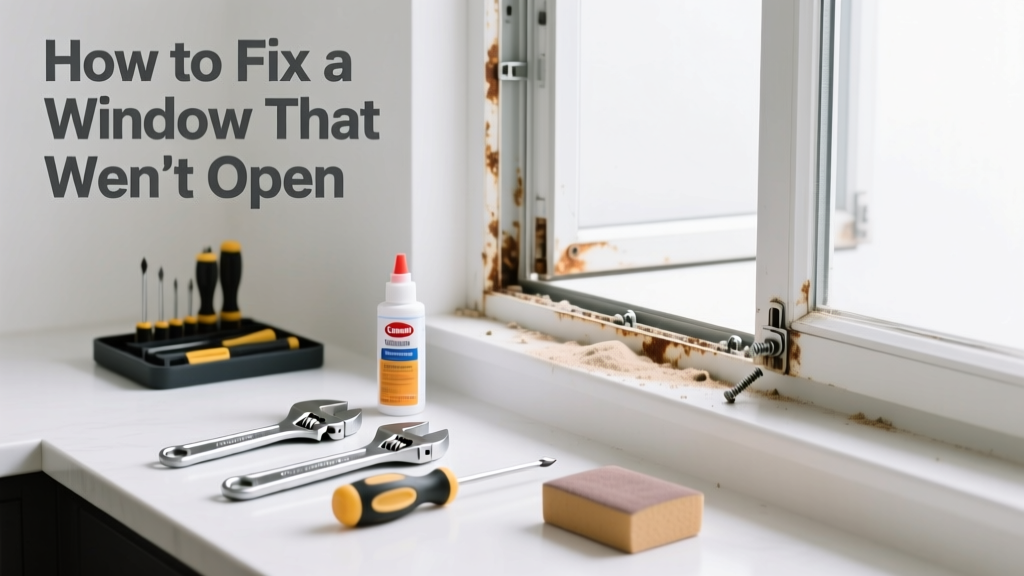
That stiff, jammed window in your bedroom or kitchen isn’t just annoying—it can compromise ventilation, emergency egress, and energy efficiency. Before you assume it needs full replacement, most stuck windows respond to simple, targeted fixes using tools you likely already own. Let’s get it moving again—safely and effectively.
Quick Diagnosis
Start by identifying the root cause. Don’t force it—that risks breaking the sash, track, or locking mechanism. Common culprits include:
- Paint or caulk buildup sealing the sash to the frame
- Dirt, grime, or old lubricant gumming up sliding or tilt mechanisms
- Warped wood or vinyl due to moisture or temperature shifts
- Failed or misaligned balance springs (in double-hung windows)
- Swollen frames from humidity or water exposure
Tools & Materials Needed
| Item | Purpose | Estimated Cost |
|---|---|---|
| Utility knife with fresh blade | Cuts through paint seals and caulk without gouging wood or vinyl | $3–$8 |
| WD-40 Specialist White Lithium Grease | Lubricates tracks and pivot points without attracting dust | $5–$9 |
| Plastic putty knife (1/2") | Breaks loose debris and gently pries without scratching surfaces | $4–$7 |
| Clamp-style window lock pliers | Releases seized tilt latches on double-hung or casement windows | $12–$18 |
| Small cordless drill + #2 Phillips bit | Tightens or replaces stripped screw heads in balance systems | $25–$60 (if not already owned) |
Step-by-Step Fix
Work methodically—from least invasive to more involved. Always test after each step.
- Break the paint seal: Run a utility knife along the meeting rail (where sash meets frame) on both sides and top. Score deeply enough to cut through dried paint but not into wood or vinyl. Gently wiggle the sash side-to-side to loosen adhesion.
- Clean and lubricate tracks: Vacuum debris from tracks. Wipe with a damp rag and isopropyl alcohol. Apply white lithium grease—not silicone spray—to rollers, pivot pins, and track surfaces. Operate the window 5–10 times to work it in.
- Adjust or reset balance systems: For double-hung windows, remove the sash by tilting it inward and lifting out. Inspect nylon cords or spring balances. If frayed or detached, replace using manufacturer-specific parts—full balance replacement guide here.
- Shim the frame (if warped): Only for wood windows with minor binding. Loosen hinge screws slightly, insert thin cardboard shims behind hinges, then retighten. Check operation before adding more than 1/16" of shim material.
When to Call a Pro
Some issues go beyond DIY safety or skill level. Call a licensed window technician if:
- The window is part of an egress route (e.g., basement bedroom) and fails to meet minimum 5.7 sq ft opening requirement
- You see visible rot, delamination, or structural cracks in the frame or sash
- Balance springs are broken inside sealed vinyl channels (no access panel)
- The window is under warranty—and tampering voids coverage
- You’ve tried all steps above and the sash still binds or drops suddenly
According to the Insurance Institute for Business & Home Safety's 2023 report, 68% of window-related insurance claims stem from improper DIY attempts—especially on multi-point locking systems and insulated glazing units.
"Never use excessive force on a stuck window—especially aluminum or fiberglass units. You’re more likely to shear off a locking cam than free the sash." — Mike R., Certified Window Installer, Fenestration Council of North America (2022)
Prevention Tips
Maintain smooth operation year-round with these habits:
- Wipe tracks and clean screens every spring and fall
- Reapply lithium grease to moving parts annually (not petroleum-based oils)
- Repaint wood windows with flexible acrylic enamel—not oil-based paint—to reduce future binding
- Keep interior humidity between 30–50% to minimize seasonal swelling
- Check and tighten hinge and lock screws every 6 months
Why does my vinyl window stick only in winter?
Cold temperatures make vinyl frames contract slightly—but more often, indoor humidity condenses on cold glass and drips into the track, freezing overnight. Wipe tracks dry before bedtime during sub-freezing spells, and run bathroom/kitchen exhaust fans longer to reduce ambient moisture.
Can I sand down a swollen wooden window sash?
Yes—but only minimally. Use 120-grit sandpaper on the sticking edge, removing no more than 1/32" at a time. Test fit after each pass. Over-sanding weakens structural integrity and creates gaps that leak air. Better yet: address the moisture source first—check for roof leaks, poor flashing, or failed caulk around the exterior trim.
Will vinegar help dissolve mineral buildup in sliding tracks?
Vinegar works well on calcium deposits from hard water, but it’s ineffective on dried lubricant, paint, or organic grime. Mix equal parts white vinegar and water, soak a cloth, and hold it against the affected area for 5 minutes before scrubbing with a soft-bristled brush. Rinse thoroughly—vinegar residue can corrode aluminum tracks over time.
My double-hung window lifts halfway then drops—what’s wrong?
This almost always points to failed or disengaged balance systems. The spring or cord has lost tension or snapped. If you hear a ‘snap’ or see frayed cord when tilting the sash, stop immediately. Replacing balances requires precise weight-matching—see our balance weight chart and installation video.
Is it safe to use a heat gun on painted window frames?
Only on wood frames—not vinyl, aluminum, or fiberglass. Set the gun to low (≤300°F) and keep it moving constantly. Overheating can blister paint unevenly, warp wood grain, or ignite dust buildup. A safer alternative: score with a utility knife, then use gentle tapping with a rubber mallet along the stiles.
How do I know if my window’s locking mechanism is jammed or broken?
Try turning the lock handle while applying light pressure inward on the sash. If it clicks but doesn’t engage, the latch is likely bent or misaligned. If it feels gritty or won’t turn at all, internal gears may be stripped—or debris is lodged in the lock body. Remove the interior lock cover plate and inspect for metal shavings or cracked plastic components.
A stuck window isn’t a sentence to replacement—it’s often a symptom of routine wear, seasonal change, or simple neglect. With the right diagnosis and careful execution, most units regain full function in under an hour. Keep your tools handy, rotate maintenance tasks seasonally, and remember: when in doubt about structural integrity or egress compliance, a pro’s assessment pays for itself in safety and longevity.