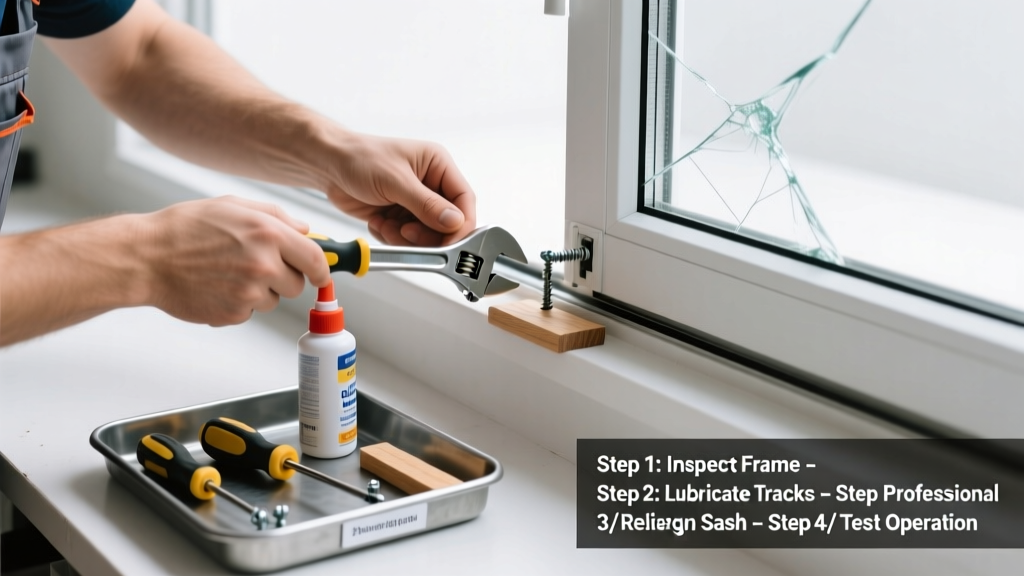
Your window refuses to latch, sticks halfway shut, or won’t budge at all — especially during humid weather or after seasonal expansion. This isn’t just an inconvenience; it compromises security, energy efficiency, and indoor comfort. Most cases are simple fixes you can handle in under an hour with basic tools.
Quick Diagnosis
Before grabbing tools, identify the root cause. A window that won’t close usually falls into one of these categories:
- Paint or debris jamming the track or frame
- Warped or swollen wood (common in older single-hung or casement windows)
- Failed or misaligned hardware — latches, hinges, or balances
- Dirty or corroded rollers (in sliding or double-hung windows)
- Foundation settling shifting the entire window frame
Tools & Materials Needed
| Item | Purpose | Estimated Cost |
|---|---|---|
| Screwdriver (Phillips & flathead) | Tighten loose hardware and adjust hinges/latches | $8–$15 |
| Utility knife | Cut through dried paint buildup on sash edges and tracks | $3–$7 |
| WD-40 or silicone lubricant | Free up sticky rollers and metal mechanisms without attracting dust | $5–$12 |
| Shim kit or thin wood shims | Realign jammed or sagging sashes without prying | $6–$10 |
| Clamp or bar clamp (optional) | Apply gentle pressure to temporarily compress swollen wood | $12–$25 |
Step-by-Step Fix
Start with the least invasive method and escalate only if needed:
- Clean and lubricate the track and moving parts. Vacuum debris from the track, scrape dried paint with a utility knife, then apply silicone-based lubricant — never oil-based, which attracts grime (U.S. Department of Energy, 2022).
- Check and tighten all hardware. Inspect screws on hinges, latches, and pivot bars. Tighten any loose ones; replace stripped screws with slightly longer ones (e.g., #8 x 1¼" instead of #8 x 1") for better grip in aged wood.
- Adjust the sash alignment. For double-hung windows: loosen the side jamb screws, gently tap the sash into position with a rubber mallet, then retighten. For casements: adjust hinge mounting plates using the slotted holes — move top hinge slightly inward to lift the latch end.
- Trim minor swelling. If wood is swollen but not rotted, use a fine-grit sanding block (150–220 grit) on the sticking edge — remove no more than 1/32" at a time, then test. Finish with a light coat of exterior-grade primer.
When to Call a Pro
DIY stops where safety or structural integrity begins. Call a licensed window contractor if:
- The frame is cracked, bowed more than 1/8" over its height, or shows signs of rot (soft, dark, crumbly wood)
- You’ve adjusted hardware and sash alignment but the window still binds unevenly — this may indicate foundation movement
- The window is part of a historic home with custom milling or leaded glass
- You’re dealing with insulated glass units (IGUs) that fog or leak between panes — attempting disassembly voids warranties and risks seal failure
Prevention Tips
Proactive care extends window life and prevents recurring issues:
- Wipe down tracks and hardware quarterly with a damp microfiber cloth and mild dish soap
- Reapply exterior-grade caulk around the window perimeter every 3–5 years to prevent moisture infiltration
- Avoid painting over moving parts — use painter’s tape to mask tracks, hinges, and latches before repainting
- In high-humidity climates, run exhaust fans longer during showers and cooking to reduce interior condensation buildup
Why does my window stick only in summer?
Wood absorbs moisture from humid air and swells — especially pine and fir used in older construction. According to the Forest Products Laboratory’s 2021 study, southern yellow pine can swell up to 0.012" per inch of width at 90% relative humidity. That’s enough to bind a tight-fitting sash.
Can I force a stuck window open or closed?
No — forcing it risks breaking the glass, snapping a balance cord, or splitting the sash rail. If resistance feels sudden or uneven, stop immediately. As window installer Mark Delaney told Professional Remodeler (2023): “A window that fights back is telling you something’s wrong — listen before you leverage.”
Do I need to replace the whole window if it won’t close?
Not usually. In fact, the National Fenestration Rating Council estimates that over 70% of window performance issues stem from maintenance neglect or minor misalignment — not failed components. Replacing the entire unit costs 3–5× more than targeted repairs.
How do I know if my window balance is broken?
If the sash drops suddenly when raised, won’t stay open, or feels unusually heavy on one side, the balance (spiral, block-and-tackle, or constant-force spring) is likely compromised. Test by lifting the sash fully — it should hold steady without drifting.
Is it safe to sand down a vinyl window frame?
No — sanding vinyl damages its UV-resistant outer layer and weakens structural integrity. Instead, clean with vinegar-water solution and inspect for bent or obstructed tracks. Vinyl expands/contracts significantly with temperature; if binding occurs seasonally, check for improper installation gaps or missing shims.
What’s the best lubricant for window tracks?
Silicone spray (not oil-based) is ideal — it resists dust, doesn’t degrade rubber seals, and performs across temperatures. Avoid WD-40 as a long-term solution: it’s a solvent first, lubricant second, and dries out quickly. The U.S. EPA estimates that 14% of household water usage is from leaks — including air leaks around poorly sealed windows — so proper function directly impacts utility bills.
“Most ‘broken’ windows aren’t broken at all — they’re just dirty, misaligned, or overdue for a tune-up.” — Sarah Lin, Certified Window Technician, Window Safety Task Force (2022)
Fixing a window that won’t close doesn’t require a contractor’s license — just patience, the right tools, and knowing when to pause and reassess. Even small adjustments restore security, cut drafts, and keep your HVAC system from working overtime. If your issue persists after trying these steps, consider checking related topics like how to adjust double-hung window balances or window seal replacement guide for deeper troubleshooting paths.