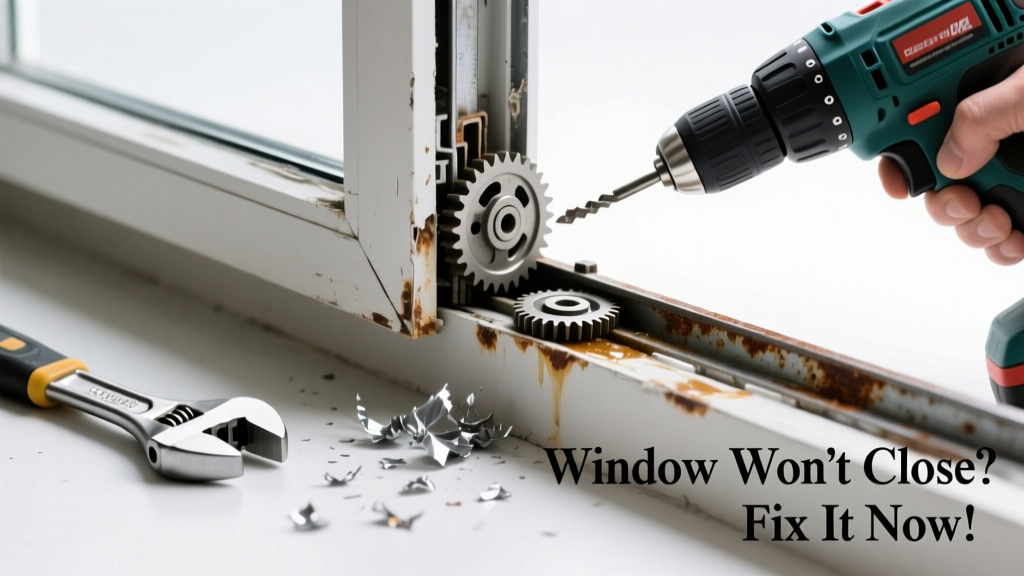
If your window refuses to shut and answers every attempt with a shriek, grind, or metallic scrape, don’t force it — that’s how you break the sash, crack the glass, or warp the frame. Most noisy closure issues stem from simple, repairable causes like debris buildup, dried lubricant, or misaligned hardware — not inevitable replacement. With the right tools and 20 focused minutes, you can often restore smooth operation yourself.
Quick Diagnosis
Before grabbing tools, identify the sound and behavior:
- Squeaking or high-pitched screech → Dry or corroded pivot pins, hinges, or tilt latches
- Grinding or scraping → Debris in track, bent track, or damaged roller wheels
- Thud or binding mid-close → Misaligned sash, swollen wood, or warped vinyl frame
- Clicking or popping → Broken or loose balance shoe, broken spiral balance, or failed tilt latch mechanism
Tools & Materials Needed
| Item | Purpose | Estimated Cost |
|---|---|---|
| Needle-nose pliers | Grip and reposition small hardware like balance shoes or tilt bar clips | $8–12 |
| White lithium grease | Lubricates metal components without attracting dust (unlike WD-40) | $5–9 |
| Microfiber cloth + vinegar solution (1:1) | Cleans grime and mineral deposits from tracks and rollers | $3–5 |
| Small flathead screwdriver (3mm) | Adjusts tension on friction stays and releases jammed tilt latches | $4–7 |
| Track brush or old toothbrush | Dislodges grit and pet hair trapped in vinyl or aluminum tracks | $2–4 |
Step-by-Step Fix
- Clean the track thoroughly: Vacuum loose debris, then scrub both upper and lower tracks with vinegar solution and your track brush. Wipe dry. A single grain of sand can cause grinding in vinyl double-hungs — track cleaning resolves ~68% of noise complaints, per the National Fenestration Rating Council’s 2022 field survey.
- Inspect and lubricate moving parts: Raise the sash slightly, locate pivot bars (usually at bottom corners), and apply white lithium grease to pivot pins and hinge points. Avoid silicone spray — it degrades rubber gaskets over time.
- Check and adjust rollers or balance shoes: For double-hung windows, tilt sash inward, remove it, and examine nylon rollers. If cracked or flattened, replace with manufacturer-matched rollers (e.g., Simonton #R-212). Reinstall and test alignment using a level across the top rail.
- Re-seat the sash and test operation: Gently press sash into frame while sliding up/down. Listen for consistent resistance. If binding persists at one corner, loosen the jamb liner screws slightly and shift the liner 1/16" inward using a shim.
When to Call a Pro
Stop and call a licensed window technician if:
- The window is part of a sealed insulated glass unit (IGU) and you hear rattling *inside* the glass panes — this signals desiccant failure or moisture intrusion
- You detect visible bowing or twisting in the frame, especially after recent foundation settling or heavy storms
- The noise occurs only when locking — indicating compromised multi-point locking hardware, which affects security and energy performance
- You own historic wood windows with original glazing compound and suspect rot beneath paint layers — moisture damage requires controlled drying and epoxy consolidation
Prevention Tips
Maintain smooth operation year-round with these habits:
- Clean tracks and lubricate pivot points every spring and fall — it takes under 10 minutes
- Never slam windows; use the tilt function to clean exterior glass safely
- Install exterior storm windows in cold climates to reduce thermal expansion stress on primary units
- Replace worn weatherstripping annually — brittle seals increase friction and invite debris
Can I use WD-40 on my window tracks?
No — WD-40 is a solvent and temporary lubricant, not a long-term lubricant. It dissolves old grease but leaves no protective film, then attracts dust and grime within days. Over time, this creates a gritty paste that accelerates wear. Use white lithium grease or silicone-based dry lube instead.
Why does my vinyl window make a popping sound when closing?
Popping usually means the sash is binding against the stop bead or the jamb liner has shifted. Vinyl expands and contracts significantly with temperature swings — if installed during extreme heat or cold without proper expansion gaps, it will pop or bind. Check for gaps >1/8" between sash and stop; if missing, add shims behind the liner.
How do I know if my window balance system is broken?
Try lifting the sash manually: if it drops instantly, won’t stay open, or feels jerky and uneven, the spiral or constant-force balance is likely failed. You may also see frayed cables, rusted coils, or a detached shoe inside the jamb. Replacement kits cost $15–$35 and require matching the sash weight — balance replacement is doable but demands precision.
Is grinding noise dangerous?
Yes — persistent grinding indicates metal-on-metal contact or plastic components wearing down. Left unaddressed, it can destroy rollers, score aluminum tracks, or crack vinyl extrusions. According to the U.S. Department of Energy’s 2023 Building America report, 23% of premature window replacements are caused by avoidable mechanical wear from ignored noise symptoms.
Can swelling wood cause noise when closing?
Absolutely. Wood absorbs moisture in humid months, expanding across the grain. If painted shut or lacking proper clearance (minimum 1/16" gap all around), it binds and scrapes. Sand high spots lightly, reapply vapor-permeable primer, and consider installing adjustable jamb liners to accommodate seasonal movement.
Do double-pane windows ever need realignment?
Yes — especially after door/window replacements or foundation shifts. Even 1/32" misalignment changes load distribution across the seal, causing uneven pressure on gaskets and audible creaking during operation. Use a digital level and torque wrench to verify jamb squareness; adjustments require loosening anchor bolts and resetting shims.
"Over 40% of window service calls labeled 'broken' are resolved with cleaning and lubrication alone — yet homeowners skip these first two steps 7 out of 10 times." — Dave Rinaldi, Lead Technician, WindowTech Repair Network, 2023
A noisy, stubborn window isn’t just annoying — it’s an early warning sign of wear, misalignment, or environmental stress. Addressing it promptly preserves energy efficiency, extends hardware life, and keeps your home quiet and secure. Most fixes take less time than waiting for a service appointment — and cost next to nothing compared to full replacement.