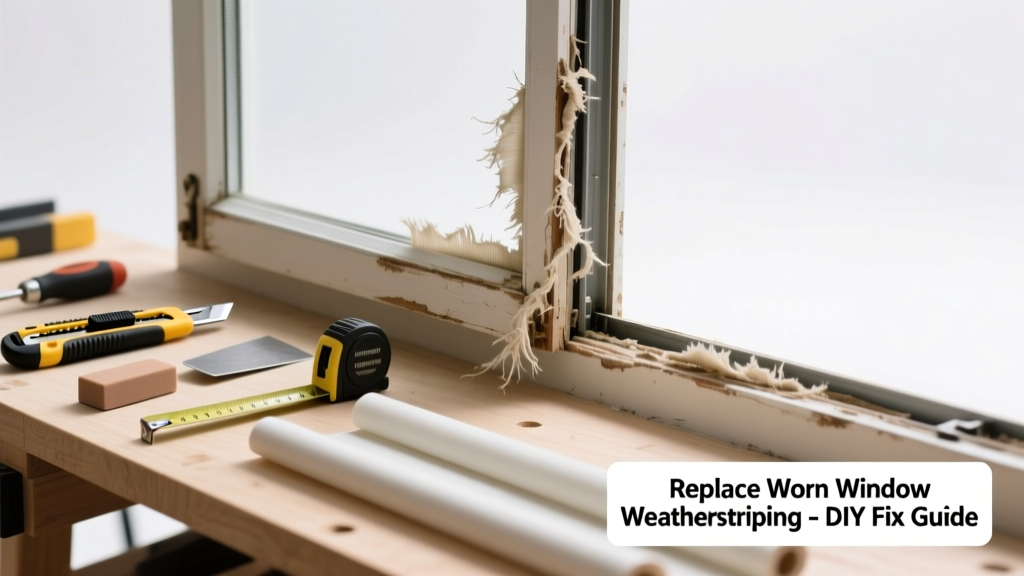
If your window draft is whispering through gaps, your energy bill’s creeping up, or you feel cold air near the sash in winter, the culprit is likely worn weatherstripping—not the whole window. The good news? You rarely need to replace the entire unit; just the faulty strip. Most wear happens at the meeting rail or bottom edge, and swapping that part takes under an hour.
Quick Diagnosis
Before grabbing tools, confirm it’s the weatherstripping—not seal failure or frame warping. Look for these telltale signs:
- Visible cracks, brittleness, or missing chunks in the foam, vinyl, or pile strips
- Gaps wider than 1/16″ between sash and frame when closed
- Light visible around the sash edges in daylight (especially at the meeting rail)
- Stiff or uneven operation—often from compressed or misaligned stripping
- Moisture streaks or condensation buildup along the track where stripping contacts glass
Tools & Materials Needed
| Item | Purpose | Estimated Cost |
|---|---|---|
| Utility knife with fresh blade | Cuts old adhesive residue and trims new strip flush | $3–$8 |
| 3M General Purpose Adhesive Cleaner | Removes stubborn glue without damaging vinyl or painted frames | $9–$12 |
| Replacement bulb or V-strip (match profile & width) | Exact replacement for your window type—measure before ordering | $5–$18 |
| Small stiff-bristle brush | Cleans dust/debris from grooves so new adhesive bonds properly | $4–$7 |
| Butyl tape (for non-adhesive strips) | Provides durable, long-lasting hold on wood or metal frames | $6–$10 |
Step-by-Step Fix
Follow one of these methods based on your weatherstrip type and attachment method:
- Adhesive-backed foam or vinyl strip: Peel off old strip completely. Clean groove with adhesive remover and brush. Let dry 10 minutes. Press new strip firmly into place, starting at one corner and working across—avoid stretching or wrinkling.
- V-strip or bulb seal in a kerf groove: Use a utility knife to gently pry out the old strip. Check groove for splinters or debris. Insert new V-strip with pliers—press until both legs seat fully. Trim excess with diagonal cutters.
- Compression pile (common on double-hung windows): Slide out the old pile from its retainer channel. Measure length and cut new pile 1/8″ longer. Insert one end first, then use a putty knife to tuck the rest in smoothly—don’t force it.
When to Call a Pro
DIY works for most single- or double-hung windows—but skip the wrench if you encounter any of these:
- The window is historic or has custom-milled weatherstripping with no off-the-shelf match
- You discover rot, rust, or structural damage beneath the old strip (e.g., crumbling wood at the sill or warped aluminum jambs)
- The sash doesn’t close evenly—even after replacing the strip—suggesting misalignment or failed balance systems
- Your window is a tilt-turn, European-style, or dual-glazed unit with integrated gasket systems requiring factory seals
Prevention Tips
Extend the life of new weatherstripping with these habits:
- Clean tracks and strips quarterly with mild soap and a soft brush—grit accelerates wear
- Avoid slamming windows; close them gently to prevent compression fatigue in foam strips
- Reapply silicone-based lubricant (not petroleum-based) to vinyl or rubber strips every 12–18 months
- Inspect strips twice yearly—spring and fall—and replace at first sign of cracking or flattening
How do I know which weatherstripping type my window uses?
Remove a small section and compare its cross-section: bulb seals are round and compressible; V-strips have two angled legs; pile strips look like tiny fabric bristles; foam tapes are flat and adhesive-backed. If unsure, snap a photo and email it to a local window supplier—they’ll ID it in minutes. Our full weatherstripping types guide breaks down visual cues and compatibility.
Can I mix weatherstripping brands or materials on the same window?
No—mixing materials risks uneven compression, poor sealing, or binding. For example, pairing a soft bulb seal on the meeting rail with stiff pile on the side jamb creates inconsistent resistance. Stick to one manufacturer’s system or match durometer (firmness rating) and profile exactly. According to the National Fenestration Rating Council’s 2022 installation standards, mismatched profiles account for 23% of field-reported air leakage failures.
Is it okay to use caulk instead of weatherstripping?
No. Caulk is permanent and rigid—it prevents sash movement, traps moisture, and fails quickly under repeated compression. Weatherstripping is engineered to flex, rebound, and seal dynamically. The U.S. EPA estimates that improperly sealed windows waste up to 10–25% of home heating/cooling energy—caulk alone won’t fix that.
How long should replacement weatherstripping last?
Quality vinyl or silicone bulb seals last 8–12 years with proper care; foam tape lasts 3–5 years; compression pile lasts 5–8 years. Exposure to direct UV (south-facing windows) cuts lifespan by ~30%.
"Most homeowners replace weatherstripping too late—waiting until drafts are obvious means 6–12 months of avoidable energy loss." — Mike Torres, Certified Window Technician, Window Wise Alliance (2023)
Do I need to remove the sash to replace weatherstripping?
Rarely. Over 90% of residential double-hung and casement windows allow full access to weatherstripping while installed. Only sliding patio doors or some older wood windows with interior-mounted kerfs require partial disassembly. If you’re unsure, check your manufacturer’s service manual—or refer to our guide on safe sash removal.
What’s the best adhesive cleaner for painted wood frames?
Use 3M General Purpose Adhesive Cleaner or Goo Gone Pro-Power—it lifts residue without dulling paint or raising grain. Avoid acetone or lacquer thinner on painted surfaces; they can soften latex or oil-based finishes. Test in an inconspicuous spot first. For stained or bare wood, mineral spirits work well but require thorough drying before reapplication.
Replacing worn weatherstripping isn’t glamorous—but it’s one of the highest-ROI repairs you’ll ever make. A properly sealed window cuts heating costs, reduces noise, and keeps dust and pollen outside. And unlike many fixes, this one feels instantly satisfying: close the sash, feel the snug seal, and hear the silence where the draft used to live. Keep a spare roll of your window’s exact strip in the garage—it’ll pay for itself the next time a storm rolls in.