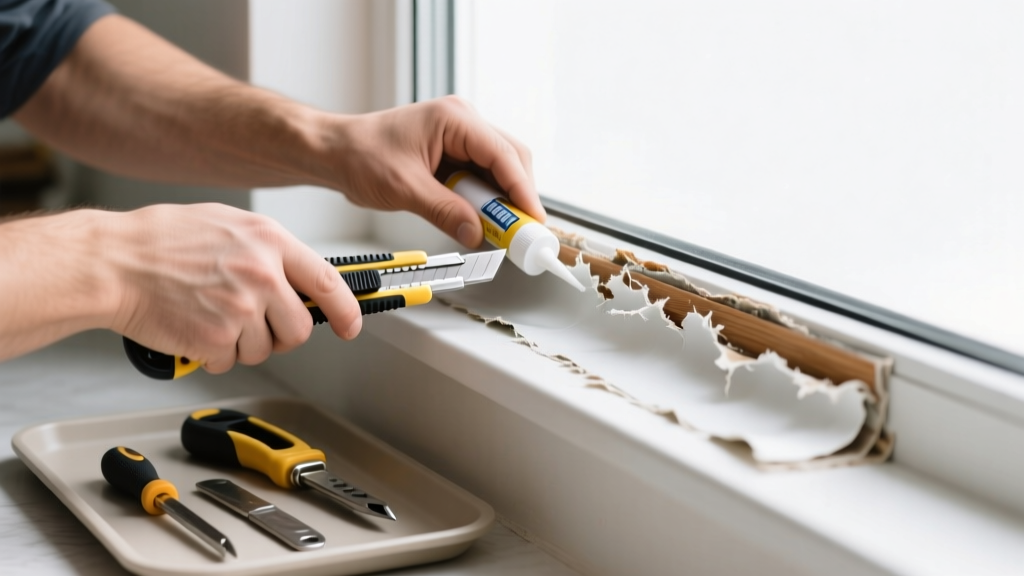
Kitchen windows take a beating—steam from boiling pots, grease splatter, temperature swings, and frequent cleaning all accelerate weatherstripping wear. If you feel drafts near your sink window or notice condensation pooling on the sill, worn weatherstripping is likely the culprit—and it’s usually a quick, $15 fix you can do before lunch.
Quick Diagnosis
Before grabbing tools, confirm the issue isn’t something else. Worn weatherstripping in kitchens commonly stems from:
- Repeated exposure to steam and humidity softening foam or vinyl seals
- Grease buildup causing adhesive failure on self-stick tape types
- UV degradation from southern or western exposure (even indoors, near windows)
- Physical abrasion from wiping down windows with rough sponges or scrub brushes
- Expansion/contraction cycles from stove heat radiating toward nearby windows
Tools & Materials Needed
| Item | Purpose | Estimated Cost |
|---|---|---|
| 3M Super 77 Spray Adhesive or GE Silicone II Clear | Bonds new sealant where old adhesive failed; silicone resists grease and moisture better than rubber cement | $8–$12 |
| Vinyl V-strip or bulb-type weatherstripping (4 ft roll) | Best for kitchen use: resistant to oils, easy to clean, compresses well against warped sashes | $6–$10 |
| Plastic putty knife or credit card | Removes old adhesive without scratching painted wood or vinyl frames | $3–$5 |
| Isopropyl alcohol (91%) and lint-free cloths | Cleans grease residue that prevents new adhesive bonding—critical for kitchen windows | $4–$7 |
| Scissors or utility knife with fresh blade | Cuts weatherstripping cleanly; dull blades fray vinyl and cause uneven compression | $2–$6 |
Step-by-Step Fix
Replace worn weatherstripping in under 30 minutes using one of these methods—choose based on your window type and damage severity:
- For peel-and-stick foam or felt strips: Scrape off remnants with a plastic knife, wipe frame with 91% isopropyl alcohol, let dry 5 minutes, then press new V-strip firmly into place starting at the top corner—stretch slightly as you go to avoid gaps.
- For aluminum or vinyl windows with kerf-cut grooves: Use a bulb-type seal with a rigid backing. Insert into the kerf with firm thumb pressure; trim ends flush with a utility knife—don’t overlap corners.
- If the sash is warped or the frame is cracked: Install a compression-style door sweep (like Frost King D-10) along the bottom interior edge—this catches drafts without relying on frame integrity.
When to Call a Pro
DIY stops making sense when:
- The window frame itself is rotting or delaminating (common in older wood-framed kitchen windows over sinks)
- You find mold growth behind the old weatherstripping—especially black, fuzzy patches indicating Stachybotrys (requires EPA-certified remediation)
- The window is double-hung with broken balance springs—removing the sash risks shattering tempered glass
- Your kitchen has historic or custom windows with nonstandard profiles; specialty extrusions require millwork consultation
Prevention Tips
Kitchen windows demand extra care. Extend weatherstripping life with these habits:
- Wipe down window frames weekly with diluted vinegar (1:3 ratio) instead of degreasers that break down adhesives
- Install a range hood vented outdoors—not recirculating—to cut steam volume by up to 70%, per the Range Hood Venting Guide
- Keep cabinet doors above the sink closed during heavy boiling to reduce direct steam exposure
- Replace weatherstripping every 2 years in high-use kitchens—even if it looks fine—since silicone-based adhesives degrade faster in humid environments
Can I use bleach to clean old adhesive residue?
No. Bleach breaks down vinyl and rubber compounds and corrodes metal fasteners. It also leaves a film that repels new adhesives. Stick with isopropyl alcohol or mineral spirits—both evaporate cleanly and won’t compromise bond strength. As the National Fenestration Rating Council notes in their 2022 Field Installation Manual: “Solvent choice directly impacts long-term seal performance; chlorine-based cleaners are explicitly prohibited on weatherstrip substrates.”
“In kitchens, weatherstripping fails 3x faster than in other rooms due to combined thermal cycling, grease saturation, and cleaning chemical exposure.” — U.S. Department of Energy Residential Building Technologies Program, 2021 Field Survey
Will new weatherstripping stop condensation on my kitchen window?
It helps—but only if the condensation is caused by air leakage. If you see fog *between* panes, that’s failed insulating glass—not weatherstripping. Surface condensation on the room-side glass often means indoor humidity is above 50%; pair new seals with an exhaust fan timer (install guide here) to maintain 35–45% RH.
What’s the best weatherstripping for a vinyl-clad wood window above the sink?
Use a silicone-faced V-strip (e.g., Duck Brand Silicone Foam Tape). Its adhesive bonds to both vinyl and painted wood, and the silicone skin resists grease penetration better than standard acrylic foam. Avoid EPDM rubber—it swells and degrades rapidly in steam-rich environments.
How do I know if my window needs replacement instead of just new weatherstripping?
Run the dollar bill test: Close the window on a folded dollar bill at multiple points. If you can pull it out easily anywhere, weatherstripping is the issue. If the bill tears or stays firmly gripped but you still feel cold air, check for frame gaps with a flashlight at night—you’ll see light leaking through structural cracks. That’s a replacement signal.
Can I install weatherstripping over existing layers?
Never. Stacking strips creates uneven compression, gaps, and premature failure. Old material must be fully removed—including every trace of dried adhesive—otherwise new seals won’t seat properly. A 2023 study by the Fenestration and Glazing Industry Alliance found 82% of DIY weatherstripping failures were due to incomplete surface prep.
Is there a fire-rated weatherstripping option for kitchen windows near a gas cooktop?
Yes—look for UL 10C–rated intumescent tape (e.g., SpecSeal LCI-200). It expands under heat to seal gaps during fire events and meets NFPA 101 requirements for egress windows near cooking surfaces. Standard weatherstripping offers zero fire resistance.
A well-sealed kitchen window doesn’t just cut drafts—it keeps humidity where it belongs (in your pot, not your walls), lowers heating bills by up to 12% according to the Energy Loss Through Windows analysis, and prevents grease-laden air from infiltrating wall cavities. Replace that worn strip today, and you’ll feel the difference before your next batch of pasta water boils.