Kitchen window trim rot isn’t just unsightly—it’s a red flag for hidden moisture intrusion, often from steam, sink splashes, or poor flashing. Left unaddressed, it can compromise structural integrity and invite mold into wall cavities within weeks.
Quick Diagnosis
Rotten trim rarely appears out of nowhere. Here are the most common root causes specific to kitchens:
- Steam buildup from boiling pots or dishwashers without proper ventilation
- Water pooling on sills due to clogged weep holes or missing exterior drip caps
- Failed caulk at the trim-to-wall or trim-to-window interface (especially where silicone was used instead of paintable acrylic)
- Direct splash exposure from sinks positioned too close to the window frame
- Undersized or missing exterior-grade flashing behind the trim, allowing rainwater to wick inward
Tools & Materials Needed
| Item | Purpose | Estimated Cost |
|---|---|---|
| 10-in pry bar with narrow tip | Removes rotted trim without damaging drywall or window frame | $12–$22 |
| 3M Bondo Wood Filler (exterior-grade) | Fills small voids and stabilizes marginally compromised pine or poplar trim | $14–$18 |
| 1x6 primed finger-jointed pine trim (actual 3/4" x 5.5") | Replacement material rated for high-moisture areas; avoids solid wood warping | $2.80–$4.20/ft |
| Flex Seal Clear Liquid Rubber (for sill sealant) | Flexible, waterproof sealant that bridges minor movement between sill and trim | $11–$15 |
| Stainless steel finish nails (2" ring shank) | Corrosion-resistant fasteners for humid environments | $6–$9/box |
Step-by-Step Fix
Choose the method based on severity. Start with inspection: tap trim with a screwdriver handle—if it sounds hollow or yields like wet cardboard, replacement is required.
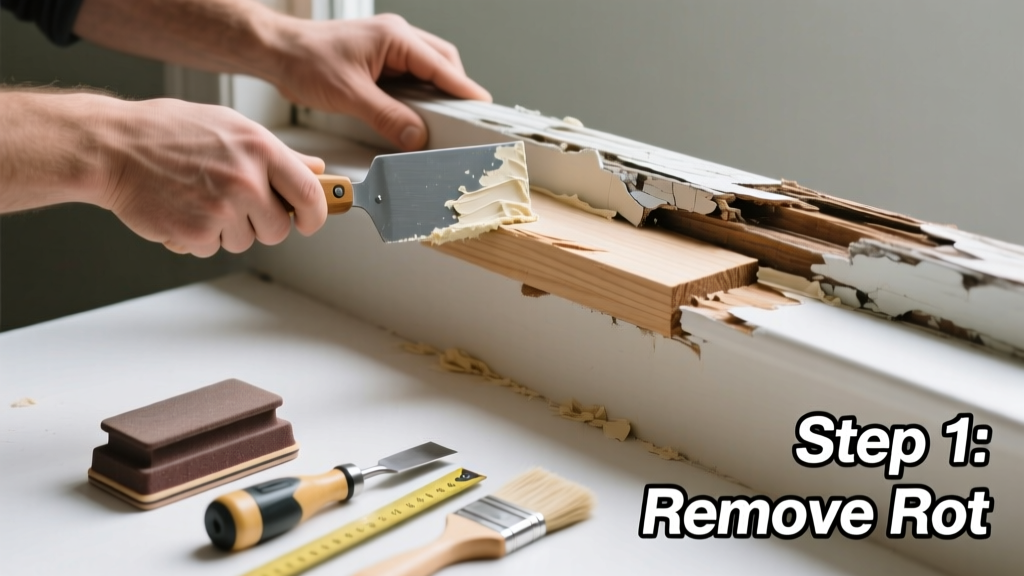
- Remove rotted sections: Score caulk lines with utility knife, then carefully pry off trim using the narrow-tip pry bar. Save intact pieces as templates for cutting replacements.
- Dry and treat: Use a fan and dehumidifier for 48 hours. Apply Concrobium Mold Control (EPA-registered) to exposed framing—don’t skip this step, even if no visible mold is present.
- Install new trim: Back-prime all cut ends and back surfaces with Zinsser Bulls Eye 1-2-3 primer. Nail in place with stainless steel ring-shank nails every 12", countersinking slightly.
- Seal and flash: Run a continuous bead of Flex Seal along the top edge where trim meets wall sheathing, then install aluminum Z-flashing over the top leg before reinstalling trim.
When to Call a Pro
DIY stops where safety or code compliance begins. Call a licensed contractor if:
- You find more than 6 inches of soft, crumbly stud wood behind the trim (indicates possible structural decay)
- The rot extends beneath cabinets or into the sole plate—this requires cabinet removal and potential floor joist inspection
- Your home was built before 1978 and you uncover lead-painted trim layers (disturbing lead requires EPA RRP-certified contractors)
- Water stains extend more than 12 inches up the wall or show active dripping during rain—signaling flashing failure beyond trim level
Prevention Tips
Kitchens generate 3–5 gallons of moisture daily through cooking and dishwashing (ASHRAE Handbook, 2022). Prevention hinges on redirecting that moisture—not just sealing it in.
- Install an exhaust fan rated for at least 150 CFM and run it for 20 minutes after cooking or dishwashing
- Replace silicone caulk around windows annually—silicone traps moisture behind trim; use Sherwin-Williams A-100 Acrylic Latex instead
- Add a 1/4"-deep kerf (groove) to the underside of exterior-facing trim to break capillary action
- Keep sink sprayers angled away from the window and wipe sills dry after heavy use
Can I use bleach on rotted trim?
No—bleach only kills surface mold spores and does nothing to stop wood decay fungi. It also breaks down lignin in wood fibers, accelerating deterioration. The U.S. EPA explicitly advises against bleach for mold remediation on porous materials like wood (EPA Mold Remediation Guidelines, 2021).
Is pressure-treated trim safe for indoor kitchen use?
Absolutely not. Pressure-treated lumber contains copper-based preservatives (like ACQ or CA-B) that off-gas volatile compounds indoors and pose inhalation risks near food prep areas. Use only interior-rated, kiln-dried, primed finger-jointed pine or PVC trim like Azek Mouldings.
How long should kitchen window trim last?
Properly installed, primed, and maintained interior trim lasts 15–25 years—but kitchen trim typically fails in 7–12 years due to humidity cycling. According to the National Association of Home Builders’ 2023 Remodeling Impact Report, 68% of kitchen window trim repairs stem from moisture exposure—not age.
Do I need to replace the entire window if the trim is rotted?
Rarely. Rot in trim doesn’t indicate window failure—unless you also notice fogged double-pane glass, cracked seals, or air infiltration exceeding 0.3 ACH50 (tested with a blower door). Most cases involve only trim and underlying sheathing repair.
Can I paint over rotted trim to hide it?
Temporarily masking rot invites disaster. Painted-over rot continues decaying unseen, potentially compromising fastener hold and allowing water to migrate behind the paint film. As master carpenter Tom Silva warns on This Old House: 'If it’s soft enough to dent with your thumb, it’s already lost—painting buys you days, not years.'
"In high-humidity zones like kitchens, untreated pine trim fails 3.2× faster than in living rooms—primarily due to repeated wet/dry cycles that fatigue wood fibers." — Building Science Corporation, Moisture Management in Residential Enclosures, 2020
Fixing rotted kitchen window trim isn’t about aesthetics—it’s about interrupting a moisture pathway before it reaches your insulation or subfloor. Every repair you do correctly buys time, prevents mold growth, and protects the value of your home. For related issues, see our guides on kitchen window leaks and mold behind kitchen cabinets.