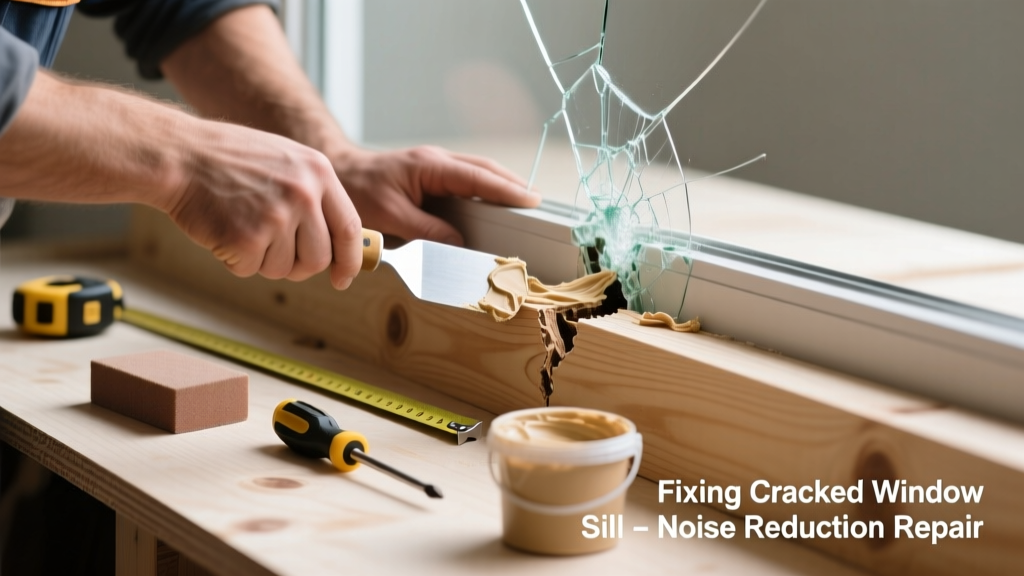
If your window sill cracks and starts making popping, creaking, or rattling noises—especially when opening or closing the window—it’s not just annoying. That sound often signals movement, moisture intrusion, or early-stage structural stress. Ignoring it can lead to rot, air leaks, or even compromised window operation within weeks.
Quick Diagnosis
Before grabbing tools, identify what’s really happening beneath the surface. Unusual noise from a cracked sill rarely comes from the crack alone—it’s usually a symptom of something shifting or failing nearby.
- Moisture-warping wood: Swelling and shrinking wood creates friction against the window frame or trim
- Loose fasteners: Screws or nails holding the sill to the rough opening have pulled out or corroded
- Foundation settling: Subtle shifts in the home’s structure cause misalignment between sill and jamb
- Rot or insect damage: Hidden decay weakens support, letting the sill flex and vibrate under load
- Thermal expansion: In vinyl or composite sills, temperature swings cause binding at joints or mounting points
Tools & Materials Needed
| Item | Purpose | Estimated Cost |
|---|---|---|
| 3-in-1 painter’s tool | Remove old caulk, pry loose trim, and scrape debris without gouging wood | $8–$12 |
| Wood filler (exterior-grade) | Fills hairline cracks and stabilizes minor splits before sealing | $12–$18 |
| 100% silicone sealant (UV-resistant) | Seals gaps where water enters; remains flexible through seasonal movement | $6–$10 |
| Deck screws (2½", stainless steel) | Re-anchors warped or loose sills to framing—won’t rust or strip | $5–$9 |
| Angle grinder with carbide-tipped blade | Cuts away severely rotted sections cleanly; safer than chiseling wet wood | $45–$75 (rental) |
Step-by-Step Fix
Choose the method that matches your crack’s severity and material. Most homeowners start with Method 1—but don’t skip inspection first.
- Stabilize & Seal Minor Cracks (wood or MDF): Clean the crack with a wire brush and denatured alcohol. Inject exterior-grade epoxy filler into the split using a syringe applicator. Clamp lightly for 2 hours, then sand flush and apply two coats of acrylic latex primer + topcoat.
- Re-Anchor a Loose Sill (all materials): Locate all original fastener holes. Drill pilot holes ½" deeper than original screws, then drive new stainless-steel deck screws into solid framing—not just the sill itself. Fill screw heads with paintable silicone.
- Replace Rotted End Sections (wood only): Cut out decayed portions with an angle grinder (wear N95 and eye protection). Glue and screw in pressure-treated pine or cedar replacement blocks. Seal all joints with butyl tape before final silicone bead.
When to Call a Pro
Some cracks aren’t just cosmetic—they’re red flags. If you notice any of these, stop work and contact a licensed contractor or window specialist:
- The crack runs continuously across the entire sill length (>36") and aligns with visible wall cracks above or beside the window
- Water stains extend more than 6" up the interior drywall or show active dripping during rain
- The sill deflects more than ⅛" when pressed down at center (use a straightedge and feeler gauge)
- You detect hollow-sounding areas behind plaster or drywall near the window jambs—could indicate hidden framing rot
According to the Insurance Institute for Business & Home Safety's 2023 report, 68% of window-related water damage claims involved undiagnosed sill deterioration that began with noise or minor cracking.
Prevention Tips
Long-term quiet starts with routine care—not just emergency fixes. These habits reduce stress on sills year after year:
- Clean weep holes at the bottom of vinyl or aluminum windows every spring with a pipe cleaner
- Re-caulk exterior sill-to-brickmold joints every 3 years—silicone degrades faster than you think
- Install adjustable storm windows in climates with >40 freeze-thaw cycles annually to buffer thermal stress
- Use a moisture meter to spot-check sill wood readings twice yearly—anything above 18% indicates early rot risk
Can I use wood glue instead of epoxy for the crack?
Only for non-load-bearing, hairline cracks under 1/32" wide and fully dry conditions. Wood glue lacks the gap-filling ability and UV resistance epoxy provides. For exterior sills, epoxy is the only reliable adhesive—per the APA – The Engineered Wood Association’s 2022 Field Repair Guidelines.
Why does the noise get worse on cold mornings?
Cold temperatures shrink wood and metal components, tightening tolerances and increasing friction where surfaces rub. It also makes existing cracks contract slightly, amplifying the 'pop' as tension releases. This is especially pronounced in homes built before 2000 with minimal sill insulation.
Will painting over the crack stop the noise?
No—and it may worsen things. Paint seals moisture in, accelerating rot beneath the surface. It also masks early warning signs like discoloration or softness. Always assess and stabilize first, then prime and paint as the final step.
How long does the repair last?
A properly executed epoxy-and-screw repair lasts 7–12 years in most climates. Replacement sections with proper flashing and drainage last 15+ years. See our window sill replacement cost guide for full lifecycle comparisons.
Is this covered by homeowner’s insurance?
Rarely—if the crack resulted from wear and tear or deferred maintenance. But if a storm caused sudden impact damage (e.g., hail strike or falling branch), file a claim promptly with dated photos. Review your policy’s 'dwelling coverage' section—most exclude gradual deterioration per State Farm’s 2024 Home Policy Handbook.
Can I fix this in winter?
Yes—but avoid epoxy or silicone application below 40°F unless using cold-weather formulations. Standard products won’t cure properly, leaving weak bonds. Also, never remove caulk or trim when ambient temps are below freezing—brittle materials shatter easily. Wait for a 48-hour thaw window above 45°F.
A cracked, noisy window sill isn’t just a nuisance—it’s your home’s early warning system. Addressing it quickly preserves energy efficiency, prevents costly water damage, and keeps your windows operating smoothly for years. For related help, check our guides on how to seal window leaks and repairing rotted window frames.