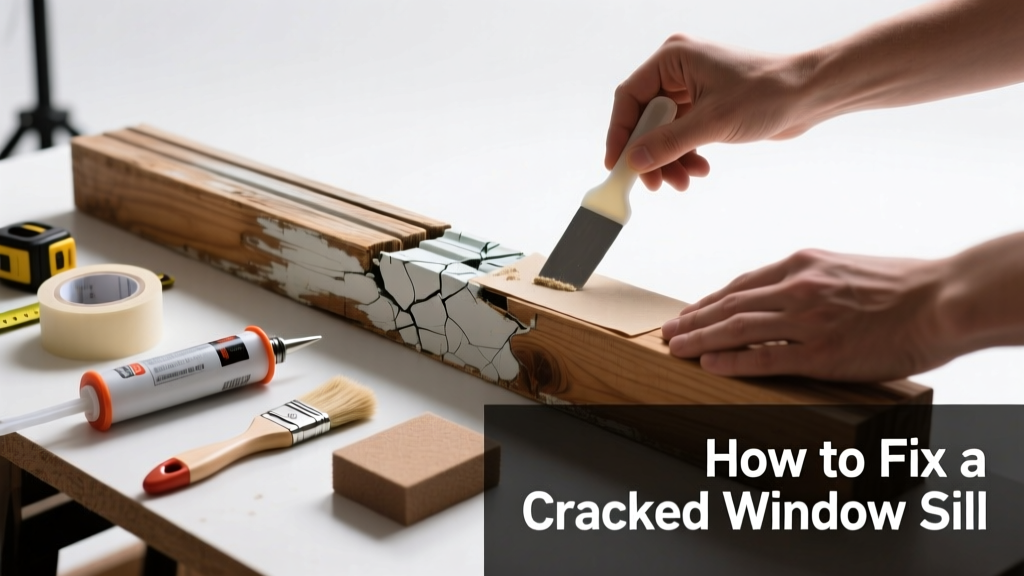
A cracked window sill isn’t just an eyesore—it’s a red flag for moisture intrusion, rot, or structural stress. Left unaddressed, even a hairline crack can widen, compromise insulation, and invite wood decay or mold growth behind the trim. Most small-to-moderate cracks are repairable in under two hours with basic tools and materials.
Quick Diagnosis
Before grabbing tools, identify the root cause. Cracks rarely appear out of nowhere—they’re symptoms. Here are the most common culprits:
- Moisture buildup from poor drainage or failed caulk allowing water to soak into wood
- Thermal expansion and contraction in older homes with inconsistent indoor/outdoor temps
- Structural settling that shifts the frame and stresses the sill
- Impact damage (e.g., dropped tools, furniture bumping)
- Rot underneath the surface—often masked by intact paint or finish
Tools & Materials Needed
| Item | Purpose | Estimated Cost |
|---|---|---|
| 120- and 220-grit sandpaper | Smooth crack edges and prep surface for filler adhesion | $4–$8 |
| Epoxy wood filler (e.g., Abatron WoodEpox) | Bonds permanently to damp or dry wood; resists shrinking | $18–$26 |
| Painter’s tape | Protect adjacent glass and trim during sanding/filling | $3–$6 |
| Putty knife (1.5" flexible) | Press filler deep into crack without gouging surrounding wood | $5–$12 |
| Minwax Helmsman Spar Urethane (clear satin) | Water-resistant topcoat ideal for exterior sills and high-moisture zones | $14–$20 |
Step-by-Step Fix
Choose your method based on crack size, location (interior vs. exterior), and material (wood, MDF, or composite). For wood sills—still the most common—here’s what works:
- Clean & dry thoroughly: Remove loose debris with a stiff brush, then wipe with denatured alcohol. Let dry 24 hours if moisture is suspected.
- Stabilize hairline cracks: Drill tiny (1/16") relief holes at each end of the crack to prevent further splitting, then inject thin CA glue (e.g., Insta-Cure+) using a syringe.
- Fill deeper cracks: Mix epoxy wood filler per manufacturer instructions. Press firmly into the crack with a putty knife, overfilling slightly. Let cure 6–8 hours.
- Sand and seal: Sand smooth with 120-grit, then 220-grit. Wipe dust, then apply two coats of spar urethane—sand lightly between coats.
When to Call a Pro
Not every crack is DIY-safe. Call a licensed contractor or window specialist if you see any of these:
- Crack extends more than 1.5 inches into the sill’s structural depth (not just surface)
- Adjacent framing feels soft or spongy when pressed—indicating hidden rot
- The sill is part of a load-bearing header or integrated into masonry (e.g., stone or brick lintel)
- You spot active water staining or mold behind the trim or on interior drywall below the window
According to the Insurance Institute for Business & Home Safety's 2023 report, 68% of window-related water damage claims involved undetected sill deterioration that had gone unrepaired for over 18 months.
Prevention Tips
Fixing the crack is only half the battle—preventing recurrence matters more. These habits extend sill life by 5–10 years:
- Re-caulk the exterior joint between sill and wall annually using silicone-acrylic hybrid caulk (e.g., GE Silicone II)
- Install drip caps on exterior wood sills to direct runoff away from the front edge
- Keep interior humidity between 30–50% year-round—use a hygrometer near windows to monitor
- Trim nearby tree branches that shade the sill and trap moisture
Can I use regular wood glue instead of epoxy filler?
No. Standard PVA wood glue (like Titebond) requires clamping and won’t bond well to open, dry cracks or damp wood. Epoxy fillers like Abatron or Minwax High-Performance Wood Filler cure chemically, adhere to degraded surfaces, and resist moisture—critical for sill durability.
What if the crack keeps reappearing after repair?
That signals ongoing movement—likely from foundation settlement or thermal stress. Monitor crack width monthly with calipers. If it widens >1/32" in 90 days, consult a structural engineer before re-repairing.
Is painting over the crack enough?
Paint alone masks but doesn’t stop deterioration. A 2022 study by the National Association of Home Builders found painted-over cracks progressed to full failure 3.7× faster than properly filled and sealed ones.
Can I repair a cracked vinyl or PVC window sill?
Vinyl and PVC sills rarely crack—but when they do, it’s usually due to impact or UV degradation. Small cracks (<1/4") can be stabilized with clear PVC cement and reinforced with fiberglass mesh tape. Larger splits require replacement—vinyl lacks the grain structure to accept filler reliably.
Do I need to remove the window to fix the sill?
Almost never. Most sill repairs happen from the interior or exterior without disturbing the window unit itself. Only consider removal if the sill is integral to the window frame (e.g., some aluminum-clad wood units) or if rot has compromised mounting screws.
How long does the repair last?
A properly executed epoxy repair on a dry, stable wood sill lasts 7–12 years—especially with annual caulk maintenance. Composite sills repaired with matching polymer filler typically outlast wood repairs by 2–4 years due to lower moisture absorption.
A cracked sill is rarely an emergency—but it’s a warning sign you shouldn’t ignore. Address it promptly with the right materials, and you’ll avoid bigger headaches like rotted framing or energy loss. For more on related fixes, see our guides on window caulk peeling and rotten window frame repair.