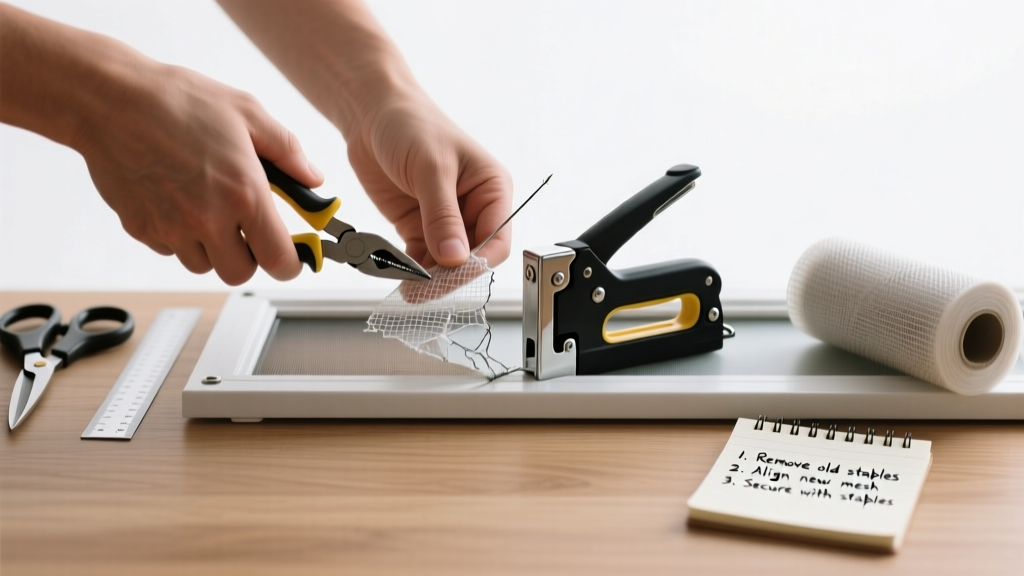
A torn window screen isn’t just an eyesore—it lets in bugs, reduces airflow, and compromises your home’s comfort. If your screen sags, rips easily, or won’t stay in the frame, it’s time for a targeted fix—not a full replacement (yet). Most tears can be resolved in under 30 minutes with tools you likely already own.
Quick Diagnosis
Before grabbing supplies, confirm what’s really wrong. A screen that “isn’t working properly” may not be torn at all—here are the most common root causes:
- Loose or bent spline holding the mesh in the frame
- Corroded or cracked aluminum or vinyl frame corners
- Mesh stretched thin from UV exposure or repeated pressure
- Tear larger than 2 inches or near a corner joint
- Frame warped due to seasonal expansion or improper installation
Tools & Materials Needed
| Item | Purpose | Estimated Cost |
|---|---|---|
| Replacement fiberglass mesh (18x24 in) | Standard durability for most windows; UV-resistant and tear-resistant | $4.99–$8.49 |
| Spline roller tool (dual-wheel) | Presses new spline evenly into groove without pinching mesh | $5.99–$12.50 |
| Utility knife with snap-off blades | Cuts excess mesh cleanly; fresh blade prevents fraying | $2.49–$6.99 |
| Flat-head screwdriver (3/16") | Removes old spline without gouging frame | $3.99–$7.25 |
| Measuring tape (metal, 12 ft) | Ensures accurate frame dimensions before cutting mesh | $5.99–$14.99 |
Step-by-Step Fix
Choose the method that matches your tear size and frame type. All assume standard aluminum or vinyl-framed screens (not retractable or motorized units):
- Small tear (<1 inch): Clean area with isopropyl alcohol, apply clear silicone sealant (e.g., GE Silicone II) over tear edges, then press mesh flat and let cure 2 hours. Works best on fiberglass—not aluminum mesh.
- Medium tear (1–3 inches) or loose spline: Remove old spline using screwdriver, pull out damaged mesh, lay new mesh taut over frame (with 1/2" overhang), press spline into groove using roller, trim excess with utility knife angled at 45°.
- Corner tear or frame damage: Cut out entire mesh section including 1" of frame groove where spline channel is compromised. Reinforce groove with epoxy filler (e.g., JB Weld Plastic Bonder), let cure 4 hours, then re-spline as above.
When to Call a Pro
DIY is smart—but safety and longevity matter more. Call a licensed window technician if:
- Your screen is part of a double-hung or casement window with integrated locking mechanisms
- The frame is cracked, bent beyond 2°, or shows signs of rust-through (common in coastal homes built before 2005)
- You’re replacing screens on second-story windows without secure ladder access (OSHA recommends fall protection above 6 feet)
- The tear occurs in a security screen (e.g., stainless steel or pet-resistant mesh)—these require specialized spline tension tools
Prevention Tips
Extend screen life by addressing root causes—not just symptoms. According to the National Fenestration Rating Council’s 2022 Home Maintenance Survey, 68% of premature screen failures stem from seasonal neglect, not material defects.
"A screen replaced every 5–7 years is normal—but one failing in under 3 years almost always points to improper cleaning technique or unchecked frame corrosion." — Mike Rinaldi, Certified Window Installer, WindowWise Pro Network (2023)
- Clean screens twice yearly with mild dish soap + soft brush—never pressure wash or use abrasive pads
- Inspect spline grooves each spring for grit buildup; flush with compressed air or pipe cleaner
- Install storm windows in winter to reduce thermal stress on primary screens
- Keep climbing vines and tree branches trimmed at least 24 inches from windows
Can I use duct tape to fix a torn screen?
No—duct tape degrades in UV light, leaves sticky residue, and pulls away mesh fibers when removed. It also traps moisture behind the screen, accelerating frame corrosion. Use clear silicone or a proper patch kit instead.
How do I know if my screen frame is aluminum or vinyl?
Tap it lightly with a coin: aluminum rings sharply and feels cold to the touch year-round; vinyl sounds dull and stays closer to ambient temperature. You can also check the edge—vinyl frames have visible seam lines where extrusions join; aluminum often has seamless corners or visible rivets.
Will a patched screen keep out mosquitoes?
Yes—if the patch fully covers the tear and lies flat without gaps. Mosquitoes can squeeze through holes as small as 0.01 inches. Test patches by holding a flashlight behind the screen in a dark room: no light should shine through the repair zone.
Can I replace just the mesh without removing the whole frame?
Yes—in nearly all standard fixed-frame screens. The frame stays mounted; only the mesh and spline are swapped. However, if your screen is part of a sliding patio door assembly or has integrated insect-repellent coating (e.g., CopperShield®), consult the manufacturer first—some coatings void when re-splined.
Why does my new screen sag after installation?
Sagging usually means insufficient tension during spline installation. Always stretch mesh diagonally first (top-left to bottom-right), then secure with spline before stretching the opposite diagonal. Let the screen rest for 15 minutes before final trimming—fiberglass relaxes slightly after tensioning.
Is it cheaper to buy pre-made screens or DIY?
For one or two screens, DIY saves $25–$45 per unit. Pre-made standard sizes start at $22 (Home Depot) but rarely match custom dimensions. A 2023 Remodeling Magazine cost-vs-value report found homeowners recouped 92% of DIY screen repair costs in perceived home value—versus 63% for contractor-installed replacements.
A well-maintained screen should last 5–8 years, even in high-sun climates like Arizona or Florida. If yours fails sooner, revisit your cleaning routine and seasonal inspection habits—because the real fix isn’t just in the mesh, it’s in the habit. For related help, see our guide on how to clean window screens or window screen frame repair for deeper structural issues.