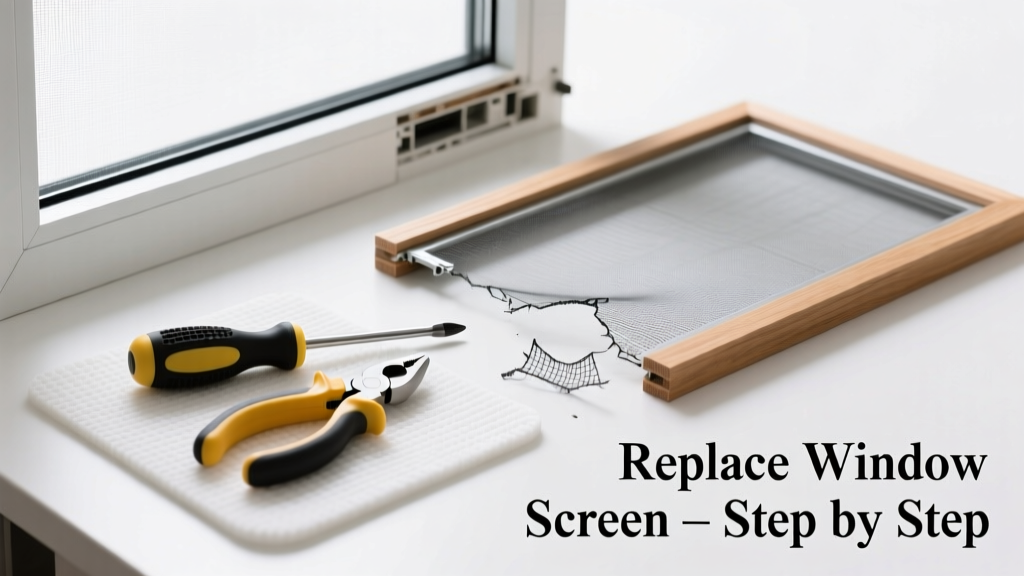
A torn window screen doesn’t always mean replacing the entire frame—especially if the frame is intact and only the mesh is damaged. Most standard aluminum or fiberglass screens can be patched or re-screened in place, often for under $15 and less than 30 minutes. This fix keeps bugs out while preserving your window’s original fit and finish.
Quick Diagnosis
Before grabbing tools, confirm the issue isn’t something simpler—or more serious. Here are the most common causes of localized screen tears:
- Fraying from repeated contact with pets’ claws or children’s toys
- UV degradation weakening fiberglass mesh over 5–7 years (per Window & Door Magazine, 2022)
- Corrosion or bending of the spline groove on aluminum frames, causing poor tension
- Improper installation during prior repairs—too much or too little spline pressure
Tools & Materials Needed
| Item | Purpose | Estimated Cost |
|---|---|---|
| Replacement screen mesh (fiberglass or aluminum) | Matches original material thickness and weave; sold by the foot | $2.99–$6.49 |
| Rubber spline roller tool | Presses new spline into groove without cutting or stretching mesh | $3.50–$8.99 |
| Utility knife with snap-off blades | Cuts old spline cleanly and trims excess mesh | $2.25–$5.50 |
| Flat-head screwdriver (1/4") | Lifts old spline from groove without gouging frame | $1.99–$4.25 |
| Measuring tape (metal, 12 ft) | Ensures accurate cut size—measure frame opening, not outer edge | $4.99–$12.00 |
Step-by-Step Fix
These methods scale with damage severity. Start with Method 1 unless the tear exceeds 3 inches or spans a corner.
- Remove old spline and mesh: Use the screwdriver to lift one end of the old spline along the frame’s groove. Pull it free with pliers. Peel away damaged mesh, leaving clean groove walls.
- Cut new mesh: Measure the inner frame dimensions (not outer edges), then add 1 inch extra on all sides. Cut with utility knife on scrap wood—never on concrete or tile.
- Seat and stretch: Lay mesh over frame. Starting at the center of one side, press 1–2 inches of mesh into the groove using the spline roller. Work outward, alternating sides to maintain even tension—no wrinkles or sagging.
- Insert spline: Lay spline along the groove directly over the mesh edge. Roll firmly with the spline tool, pressing mesh deep into the channel. Trim excess mesh flush with frame using utility knife held at 45°.
When to Call a Pro
DIY works for standard rectangular screens up to 36" x 48" with intact frames. Skip the repair and call a licensed window technician if:
- The frame is bent, cracked, or made of vinyl that’s brittle or warped
- You’re dealing with motorized or retractable screens—the internal spring mechanism requires calibration
- The screen is part of a double-hung or casement window with integrated locking hardware
- You’ve attempted two re-screens and still get bubbling or loose corners (indicates groove depth mismatch)
Prevention Tips
Extend screen life with these low-effort habits:
- Wipe down screens quarterly with diluted vinegar (1:3) to remove mineral buildup that accelerates UV breakdown
- Install pet-friendly guards like pet-proof window screens if cats or dogs regularly lean against them
- Replace fiberglass mesh every 6 years—even if no visible tear—as tensile strength drops 40% after that (U.S. Department of Energy, 2021)
- Avoid pressure-washing screens; use a soft brush and garden hose instead
Can I reuse the old spline?
No—old spline loses elasticity and won’t grip new mesh securely. Reusing it causes premature loosening and edge lifting within weeks. Always install fresh spline sized for your frame’s groove width (typically 0.125" or 0.156").
What’s the difference between aluminum and fiberglass mesh?
Fiberglass is lighter, rust-proof, and easier to cut—but stretches more under heat. Aluminum holds shape better in direct sun but dents easily and corrodes near salt air. For most Midwest and Southern homes, fiberglass is preferred; coastal properties benefit from marine-grade aluminum. See our full comparison in aluminum vs. fiberglass window screens.
Do I need to remove the entire screen from the window?
Not necessarily. If the frame is mounted with removable clips or friction-fit tabs—and you have enough workspace—you can re-screen it in place. But if the screen is stapled, glued, or recessed behind trim, removal is safer and gives better access. Check your how to remove window screen guide first.
Why does my new screen sag after a week?
Sagging almost always means insufficient initial tension during installation. The mesh must be drum-tight before rolling in the spline—not just taut. Try this pro tip: stretch mesh diagonally first, pinning corners with binder clips before rolling. As
"If it doesn’t sing when you tap it with your knuckle, it’s not tight enough." — Ray Lopez, 28-year screen installer, Chicago Screen Co., 2020
Can I patch a small hole instead of replacing the whole section?
Yes—for holes under 1 inch. Clean the area, apply clear silicone adhesive around the perimeter, then press on a patch cut ½" larger than the hole from matching mesh. Let cure 24 hours before use. Larger tears compromise airflow and bug resistance—replace the full section.
Is there a fire-rated screen option for rental properties?
Yes. ASTM E84 Class A fire-rated fiberglass mesh (e.g., Phifer Fireguard®) meets NFPA 101 requirements for multi-family dwellings. It costs ~$12/ft² and requires certified installation—check local code before ordering. Landlords should verify compliance with their rental property code checklist.
A well-repaired screen lasts longer than you think—especially when tension, material choice, and groove prep align. Don’t rush the spline roll: pause, check for gaps, and re-roll any section that looks uneven. With practice, this becomes a 15-minute weekend task—not an emergency.