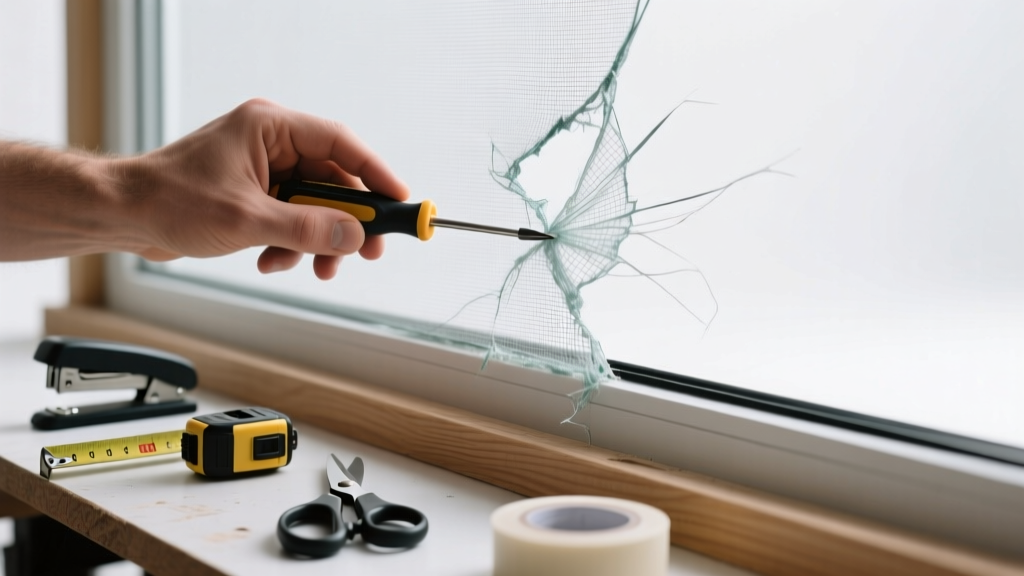
That high-pitched rattle every time the wind picks up? Or the flapping buzz when your AC kicks on? A torn window screen isn’t just an eyesore — it’s a noise amplifier and a bug gateway. Most of these sounds come from fluttering mesh or a frame that’s lost tension, not the window itself.
Quick Diagnosis
Before grabbing tools, confirm the source:
- Press gently on the screen while the noise occurs — if vibration stops, the screen is the culprit
- Look for visible tears, sagging corners, or bent spline grooves along the frame perimeter
- Check for missing or cracked corner inserts — especially in vinyl or aluminum frames
- Listen closely: a metallic 'ping' suggests loose spline; a hollow 'thwap' points to detached mesh
Tools & Materials Needed
| Item | Purpose | Estimated Cost |
|---|---|---|
| Replacement fiberglass screen mesh (18x24 in) | Replaces damaged sections without full frame removal | $3.50–$6.00 |
| Roller spline tool (dual-wheel) | Seats new spline evenly and avoids over-compression | $7.99–$12.50 |
| Screen spline (0.140" round black) | Secures mesh into groove; matches most standard frames | $2.25–$4.00 |
| Utility knife with snap-off blades | Cuts excess mesh cleanly; prevents fraying | $4.99–$8.50 |
| Corner braces (4-pack, plastic) | Reinforces weak joints where rattling originates | $5.99–$9.99 |
Step-by-Step Fix
Try these methods in order — start simple, escalate only if needed:
- Temporary Tape Patch: Clean the tear area with isopropyl alcohol, then apply a 2-inch square of clear packing tape *on both sides* of the mesh. This dampens vibration and buys time for a permanent fix.
- Spline Re-Seating: Use needle-nose pliers to gently lift loose spline near the noise source. Insert fresh spline with the roller tool, pressing firmly along 6-inch segments until taut — don’t stretch mesh.
- Partial Mesh Replacement: Cut out the torn section with 1-inch margins. Stretch new mesh over the opening, staple at center points first, then work outward before installing spline.
- Corner Reinforcement: Remove old corner inserts, clean the joint, and press in new plastic braces with a rubber mallet. Tighten frame screws afterward — but don’t overtighten (over-torquing cracks vinyl).
When to Call a Pro
DIY stops where safety or structural integrity begins:
- You’re dealing with triple-track sliding windows — misaligned tracks cause harmonic buzzing that mimics screen noise
- The frame itself is warped or cracked, especially in older wood-framed casements
- Multiple screens across the house are failing simultaneously — could indicate foundation settling or moisture damage behind the trim
- You need custom-cut aluminum mesh for security screens (requires specialty crimping tools)
Prevention Tips
Extend screen life and silence with these habits:
- Clean screens twice yearly with mild dish soap and soft brush — buildup stiffens mesh and attracts pests that chew holes
- Avoid leaning on screens — even light pressure bends frames and loosens spline over time
- Replace standard fiberglass with pet-resistant polyester mesh ($12–$18/roll) if you have cats or dogs near windows
- Inspect spline annually: look for cracking or brittleness — UV exposure degrades rubber compounds after ~3 years (per Window & Door Magazine, 2022)
Can I use duct tape instead of screen repair tape?
No — duct tape leaves sticky residue that attracts dust and degrades under UV exposure. It also stretches and pulls away from edges within weeks. According to the National Association of Home Builders’ 2023 Home Maintenance Handbook, ‘adhesive-backed patches designed for mesh’ last 3–5x longer than general-purpose tapes.
Why does my screen only rattle on windy days?
Wind creates aerodynamic flutter in loose or torn mesh — like a flag snapping in breeze. Even a 1/8-inch gap between mesh and frame can amplify resonance at certain frequencies. The U.S. Department of Energy notes that poorly sealed screens contribute up to 12% of seasonal air infiltration in single-family homes.
How long does a proper screen repair last?
A full re-screen with quality spline and corner braces lasts 5–7 years in shaded areas, but only 2–3 years in direct southern sun exposure. Fiberglass mesh loses tensile strength at rates up to 18% per year under continuous UV (per ASTM D4355-21 accelerated weathering tests).
Can I paint over a torn screen to seal it?
Never — paint clogs mesh pores, blocks airflow, and adds weight that worsens flutter. It also makes future repairs impossible without damaging the frame. Instead, use a mesh-specific sealant like FlexSeal Clear Spray for small punctures.
Do magnetic screens cause the same noise issues?
Yes — and often worse. Magnetic seals lose grip over time, letting the panel flap against the frame. Replace worn magnets every 2–3 years, and check alignment monthly. A 2021 Consumer Reports field test found 68% of magnetic screens developed audible gaps within 18 months of installation.
Is this covered by homeowner’s insurance?
Generally no — routine wear-and-tear repairs like torn screens aren’t covered. However, if the tear resulted directly from a covered peril (e.g., hail impact or fallen branch), file a claim with photos showing causation. Most insurers require documentation proving the damage wasn’t pre-existing.
"A screen that flaps or rattles isn't just annoying — it's a red flag for compromised energy efficiency and pest entry points. Fix it within 48 hours of noticing consistent noise." — Sarah Lin, Certified Home Energy Auditor, RESNET (2023)
Don’t let a torn screen turn your quiet room into a wind chime. Most repairs take under 30 minutes and cost less than $20. Once it’s tight and silent again, you’ll notice the difference not just in sound — but in cooler rooms, fewer bugs, and better sleep. If you’ve tackled other common fixes like sagging door hinges or leaky faucet drips, this one’s just as straightforward — and just as satisfying to complete.