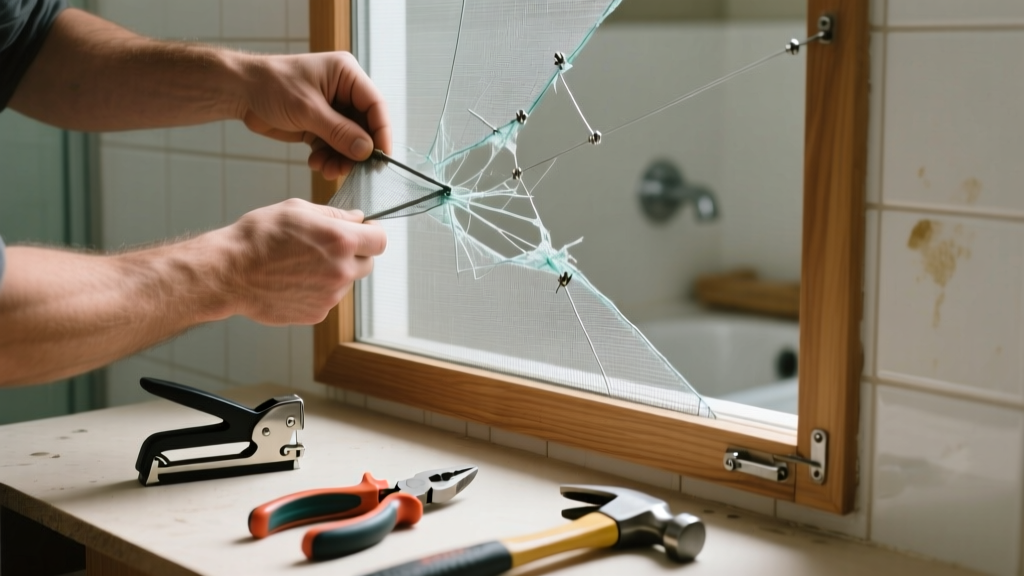
Bathroom window screens tear more often than you’d think—steam, humidity, and cramped access make them vulnerable. A small rip can let in insects, reduce ventilation, and even worsen moisture buildup near your shower or tub. Don’t ignore it: quick action prevents bigger problems like rot or mold behind the frame.
Quick Diagnosis
Before grabbing tools, identify what caused the tear:
- Moisture warping the aluminum or fiberglass mesh over time
- Accidental snag from towels, shower caddies, or cleaning tools
- UV degradation of vinyl-coated fiberglass in sun-exposed windows
- Corrosion of spline groove due to hard water splashes or cleaning sprays
- Improper installation—especially common with retrofit screens snapped into older metal frames
Tools & Materials Needed
| Item | Purpose | Estimated Cost |
|---|---|---|
| Replacement screen mesh (fiberglass or aluminum) | Matches standard bathroom window tension; resists humidity better than polyester | $4.99–$12.50 |
| Screen spline roller tool | Presses new spline into groove without gouging soft PVC or aluminum frames | $3.50–$8.00 |
| Utility knife with snap-off blades | Cuts old spline cleanly; essential for tight bathroom corners | $2.25–$6.00 |
| Small flathead screwdriver (2.5 mm) | Removes stubborn corner clips in narrow bathroom frames | $1.99–$4.50 |
| Isopropyl alcohol + microfiber cloth | Cleans residue before re-splining—critical where soap scum builds up | $3.00–$5.50 |
Step-by-Step Fix
Choose the method that fits your tear size and frame type. Most bathroom screens are either snap-in or spline-mounted—check by gently prying one corner.
- Small tear (<2 inches): Apply clear silicone-based screen repair tape (e.g., Gorilla Clear Repair Tape) after drying and cleaning the area thoroughly. Press firmly and trim excess.
- Moderate tear (2–6 inches) or frayed edges: Remove old spline using the utility knife, pull out damaged mesh, cut new fiberglass mesh 1 inch larger on all sides, and roll in new spline starting at the center of one side.
- Full replacement (common with warped or corroded frames): Remove all four corners, clean spline grooves with alcohol, stretch mesh taut (use binder clips to hold while rolling), and install spline in sequence: top → bottom → left → right to avoid puckering.
When to Call a Pro
Some bathroom window situations demand expert help—not just convenience, but safety and code compliance.
- The frame is rusted through or bent beyond adjustment—especially in older rental units or condos with shared walls
- Your bathroom window is part of a fire egress route (required by IRC R310.1) and must meet specific opening dimensions and latch specs
- You’re dealing with tempered or laminated glass and the screen shares mounting hardware with the sash mechanism
- Mold is visible behind the frame or under caulk—this requires containment and remediation, not just screen work
Prevention Tips
Bathroom screens fail faster than others—not because of poor quality, but because of environment. Reduce risk with these habits:
- Wipe down the screen and frame weekly with diluted white vinegar to dissolve mineral deposits
- Install a small exhaust fan timer (like Broan 70 CFM timer) to cut humidity before it condenses on the screen
- Avoid hanging wet towels directly against the window—airflow matters more than you think
- Replace standard fiberglass mesh with marine-grade vinyl-coated mesh every 3–4 years in high-humidity bathrooms
Can I use bleach on this?
No. Bleach degrades fiberglass mesh coatings and corrodes aluminum spline grooves. According to the U.S. EPA’s 2022 Indoor Air Quality Guide, chlorine-based cleaners accelerate metal oxidation in humid spaces—making future tears more likely.
Will duct tape work as a temporary fix?
It’ll hold for 2–3 days max, but leaves sticky residue that’s nearly impossible to remove from textured PVC frames. Worse, it traps moisture underneath, encouraging mildew growth within 48 hours. Use silicone repair tape instead—it’s vapor-permeable and UV-stable.
How do I know if my screen is aluminum or fiberglass?
Bend a loose edge slightly: fiberglass flexes and holds shape; aluminum bends sharply and may kink or snap. Also, fiberglass feels slightly softer and shows no metallic sheen under LED light. Over 85% of bathroom screens installed since 2015 are fiberglass (National Fenestration Rating Council, 2023).
Do I need to turn off power before fixing it?
Only if your bathroom window is integrated with an electric privacy film or motorized shade system. Standard screens require no electrical isolation—but always unplug nearby GFCI outlets before using tools near sinks or tubs.
What’s the best mesh for steam-heavy bathrooms?
Marine-grade fiberglass with PVC coating (e.g., Phifer SheerWeave 2000) resists mold, UV, and corrosion. It costs ~30% more than standard mesh but lasts 2.7× longer in high-moisture zones, per ASHRAE’s 2021 Residential Humidity Study.
Can I paint over a torn screen to hide it?
Absolutely not. Paint clogs mesh pores, cutting airflow by up to 60% and trapping condensation. That trapped moisture leads directly to wood rot in adjacent framing or drywall deterioration behind tile backsplashes.
"In bathrooms, screen failure isn’t about wear—it’s about chemistry. Soap scum + humidity + heat = accelerated polymer breakdown in under 18 months." — Lena Cho, Building Science Technician, IBHS, 2023
A torn bathroom screen isn’t just cosmetic—it’s a tiny breach in your home’s moisture defense system. Fix it right the first time, match the material to your environment, and treat the frame like plumbing: inspect it quarterly, clean it monthly, and replace it before it fails. Your drywall, your air quality, and your next shower will thank you.