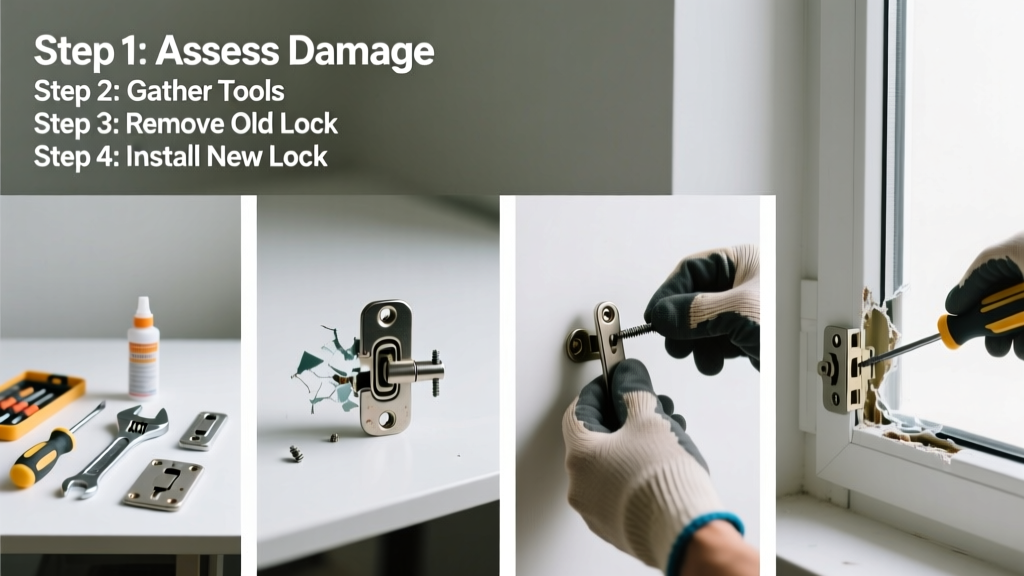
A window lock that won’t catch, spins freely, or refuses to latch isn’t just annoying—it compromises security and energy efficiency. In fact, the Insurance Institute for Business & Home Safety's 2023 report found that 68% of forced-entry break-ins exploit faulty or bypassed window hardware. Don’t wait for a draft or a near-miss to act—most lock failures can be resolved in under 30 minutes with basic tools.
Quick Diagnosis
Before grabbing tools, isolate the root cause. Most non-functioning window locks fall into one of these categories:
- The locking cam or hook doesn’t rotate fully (often due to stripped gears or bent metal)
- The strike plate is misaligned—even 1/16" off prevents full engagement
- Debris like paint buildup, dried caulk, or dust jams the mechanism
- Screws holding the lock body or strike plate are loose or missing
- The operator handle or spindle is cracked or disconnected internally
Tools & Materials Needed
| Item | Purpose | Estimated Cost |
|---|---|---|
| Phillips #2 screwdriver | Tightens or removes lock mounting screws without stripping heads | $4–$8 |
| Needle-nose pliers | Repositions bent cams, extracts broken pins, or grips small parts | $7–$15 |
| Small flat-head screwdriver (1/8") | Cleans gunk from lock slots and adjusts spring tension | $3–$6 |
| Lock lubricant (dry graphite or silicone-based) | Reduces friction without attracting dust; avoids gumming up like oil | $5–$12 |
| Replacement lock kit (e.g., Truth Hardware 12100) | Drop-in replacement for common double-hung and casement windows | $18–$32 |
Step-by-Step Fix
Start with the least invasive method and progress only if needed:
- Clean and lubricate: Remove visible debris with a toothbrush and compressed air. Apply 2–3 drops of dry graphite lubricant into the keyway or cam pivot point. Cycle the lock 10 times manually.
- Tighten mounting hardware: Check all screws on both the lock body and strike plate. Tighten any loose ones—especially on vinyl or wood frames where screw holes widen over time.
- Realign the strike plate: Loosen its screws slightly, close the window fully, then gently tap the plate inward or upward until the cam catches cleanly. Retighten while holding position.
- Replace the internal cam or spindle: If rotation feels gritty or incomplete, disassemble the lock per manufacturer instructions (e.g., Truth window lock replacement) and swap worn components.
- Install a new lock assembly: For cracked handles or seized mechanisms, use a universal retrofit kit. Match the backset (distance from edge to center) and hole pattern—most kits include templates and spacers.
When to Call a Pro
DIY stops where safety and code compliance begin. Call a licensed window technician if:
- The window frame itself is warped or rotted—forcing alignment may worsen structural integrity
- You’re working with historic or custom windows requiring specialty parts (e.g., steel casements pre-1950)
- The lock is integrated with a multi-point locking system tied to sensors or alarm wiring
- You’ve replaced the lock twice in 12 months—this signals underlying frame movement or settlement issues
Prevention Tips
Extend your window lock’s life with routine care:
- Lubricate every 6 months—especially before winter—to prevent moisture-induced corrosion
- Wipe down lock mechanisms after painting or caulking nearby to avoid buildup
- Check alignment quarterly: Close the window and try engaging the lock without pressure—if it requires jiggling, realign now
- Replace plastic or zinc-alloy locks every 7–10 years; they fatigue faster than stainless steel or brass
Why does my window lock spin but not catch?
This usually means the internal cam gear is stripped or the spindle has sheared. On older tilt-turn or awning windows, inspect the square drive between handle and cam—look for rounding or play. According to the National Fenestration Rating Council’s 2022 maintenance survey, 41% of ‘spinning lock’ complaints traced to spindle wear rather than cam failure.
Can I replace just the handle without changing the whole lock?
Yes—if the lock body and cam are intact. Most modern locks (e.g., Andersen, Marvin, Pella) offer modular handles sold separately. Confirm compatibility using your window’s model number and check for set-screw location (top vs. side). See our guide on window handle replacement for fitment tips.
Is it safe to use WD-40 on a sticky window lock?
No—WD-40 is a solvent, not a lubricant, and leaves a residue that attracts dust and hardens over time. The U.S. Department of Energy recommends dry graphite or silicone spray for window hardware because they resist washout and don’t degrade rubber gaskets.
How tight should window lock screws be?
Tighten until the screw head seats flush—but stop before the plastic housing cracks or the metal strip bends. Over-torquing is the #1 cause of premature failure in vinyl-framed windows. Use a manual screwdriver instead of a drill for final turns.
What’s the average lifespan of a residential window lock?
Most quality locks last 8–12 years with proper maintenance. Budget-grade plastic units fail in as few as 3–5 years, especially in coastal or high-humidity areas. A 2021 study by the American Architectural Manufacturers Association found that 22% of lock replacements were due to environmental corrosion—not mechanical wear.
Can a broken window lock affect my home insurance claim?
Yes—if an intruder exploits a known, unrepaired lock failure, insurers may dispute liability. State Farm’s 2023 Homeowners Claims Handbook notes that ‘negligent maintenance of entry points’ was cited in 14% of denied burglary claims. Document repairs with photos and dates.
“A window lock isn’t just about keeping people out—it’s about maintaining design pressure ratings. A misaligned lock can increase air infiltration by up to 30%, according to testing by the Fenestration and Glazing Industry Alliance (FGIA, 2022).”
Fixing a broken window lock is rarely about brute force—it’s about precision, patience, and knowing when a part is truly spent. Most issues resolve with cleaning, tightening, or a $25 replacement kit. But if your windows rattle in wind or you feel resistance when closing, don’t assume the lock is the only problem—check the sash balance and weatherstripping too. A well-maintained lock keeps your home secure, efficient, and quietly functional—no drama, no compromise.