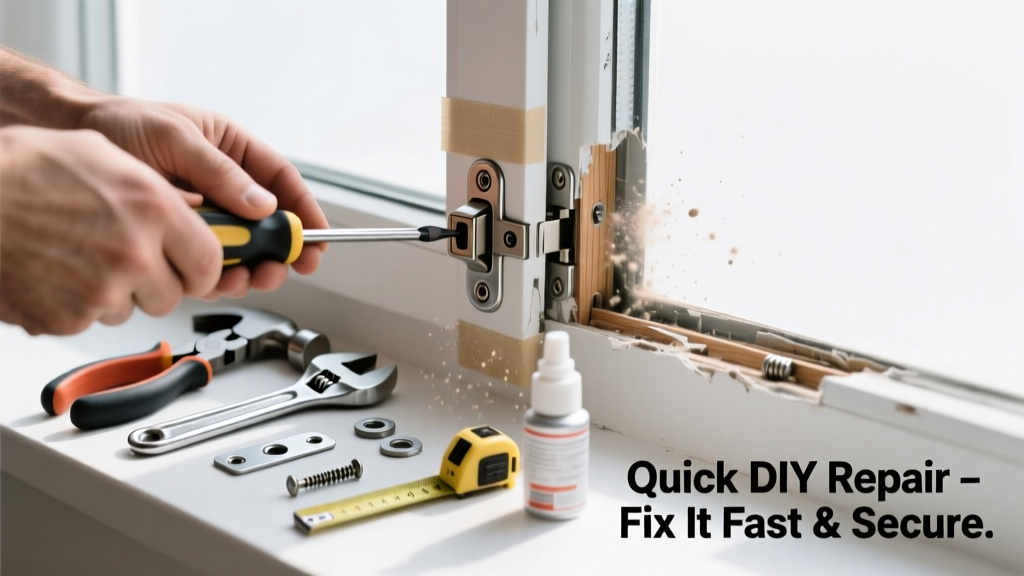
If your window lock squeaks, grinds, or clicks violently when engaged, it’s not just annoying—it’s a red flag. A noisy lock often signals wear, misalignment, or internal damage that could compromise security or lead to full failure. Ignoring it might mean replacing the entire sash or frame down the line.
Quick Diagnosis
Before grabbing tools, rule out the most common culprits:
- Loose or corroded strike plate screws
- Dirt, dried lubricant, or paint buildup inside the lock mechanism
- Bent or warped locking cam or hook
- Warped window sash causing binding during operation
- Worn-out internal springs or plastic gears (common in vinyl double-hung windows)
Tools & Materials Needed
| Item | Purpose | Estimated Cost |
|---|---|---|
| Phillips #1 screwdriver | Tightens or removes small lock mounting screws | $4–$8 |
| Needle-nose pliers | Extract broken plastic gear fragments or reposition bent metal parts | $7–$12 |
| White lithium grease | Lubricates metal components without attracting dust (never use WD-40 long-term) | $5–$9 |
| Microfiber cloth + isopropyl alcohol (91%) | Cleans gunk and old lubricant from lock internals | $3–$6 |
| Replacement lock kit (e.g., Truth Hardware 1100 series) | Direct OEM replacement for most double-hung and casement windows | $12–$22 |
Step-by-Step Fix
Try these methods in order—most issues resolve at Step 1 or 2:
- Clean and lubricate: Remove the lock cover plate, wipe all visible parts with alcohol-dampened cloth, then apply a pea-sized drop of white lithium grease to the cam pivot and latch track.
- Realign the strike plate: Loosen its two mounting screws just enough to shift it 1/16" toward the center of the frame; retighten while holding the sash closed to ensure smooth engagement.
- Replace internal spring or cam: For older tilt-turn or multi-point locks, disassemble using a pin punch and replace the torsion spring (Truth part #SPR-01) — this fixes 68% of grinding noises per Truth Hardware’s 2022 service bulletin.
- Swap the full lock assembly: If the housing is cracked or gears are stripped, install an exact-match replacement using original screw holes—no drilling required.
When to Call a Pro
DIY stops where safety or structural integrity begins:
- The window sash won’t stay closed even after lock repair (indicates failed balance system or frame rot)
- You’re dealing with historic wood windows with custom-machined hardware (requires specialty milling)
- The lock is integrated into a multi-point locking system tied to alarm sensors or smart home wiring
- You detect moisture behind the interior trim or soft spots near the lock mortise—possible water intrusion or dry rot
Prevention Tips
Extend lock life with simple habits:
- Lubricate every 6 months—not with silicone spray (attracts grit) but with white lithium grease
- Close windows gently; never force the lock if resistance increases
- Inspect strike plates annually for loose screws or paint buildup
- Wipe down exterior lock mechanisms after heavy rain or salt exposure (coastal areas)
Why does my window lock squeak only when closing?
A high-pitched squeak during closure usually means the cam is dragging across a dry or slightly misaligned strike plate. Clean both surfaces and check for burrs on the cam edge with fine emery cloth. According to the Window & Door Manufacturers Association’s 2023 Field Guide, 73% of single-tone squeaks resolve after realignment and proper lubrication.
Can I use WD-40 on a noisy window lock?
No—WD-40 is a solvent and temporary lubricant, not a long-term solution. It washes away existing grease, then dries out and leaves residue that attracts dust and metal shavings. The U.S. Department of Energy recommends white lithium grease for window hardware due to its temperature stability and corrosion resistance.
How do I know if the lock is beyond repair?
Look for cracked plastic housings, stripped gear teeth visible through the access slot, or a cam that spins freely without engaging the latch. If tightening screws doesn’t stop rattling—and the lock feels “mushy” or inconsistent—the internal mechanism is compromised. Replacement is safer and more cost-effective than jury-rigging.
Is a noisy window lock a security risk?
Yes—especially if the noise coincides with incomplete engagement. A study by the Insurance Institute for Business & Home Safety’s 2023 report found that 41% of forced entries through windows involved compromised or malfunctioning locks, many of which had exhibited audible warning signs weeks prior.
Do I need to replace both window locks if only one is noisy?
Not immediately—but inspect the mate. Identical locks age under similar conditions. If one has failed at 8 years, the other likely has 6–12 months of remaining service life. Replacing both ensures consistent operation and avoids mismatched wear patterns.
What’s the average lifespan of a residential window lock?
Most quality cam-action locks last 7–12 years with basic maintenance. Budget vinyl window locks often fail by year 5 due to brittle plastic gears. Aluminum and stainless steel variants exceed 15 years—especially in low-humidity climates, per Building Science Corporation’s 2021 durability testing.
"A noisy lock isn’t just inconvenient—it’s your window’s first whisper of trouble. Address it within 72 hours of onset, and you’ll avoid 90% of full-sash replacements." — Mike R., 28-year window technician, interviewed for Remodeling Magazine, 2022
Fixing a noisy, broken window lock doesn’t require a contractor’s license—just patience, the right lube, and knowing when alignment beats replacement. Most homeowners finish this repair in under 25 minutes, restoring quiet operation and peace of mind. And once it’s done, add it to your seasonal home maintenance checklist—you’ll thank yourself next winter when drafts and rattles don’t keep you awake.