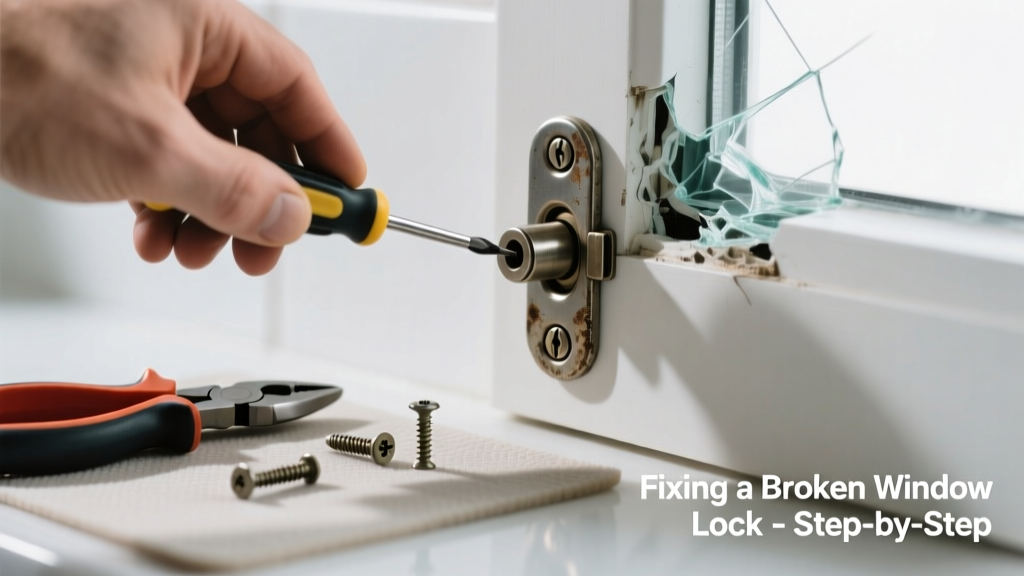
Your bathroom window won’t stay latched—and now it’s drafty, insecure, or won’t close at all. That tiny lock is critical for privacy, moisture control, and safety, especially in a high-humidity space where corrosion strikes fast.
Quick Diagnosis
Before grabbing tools, rule out what’s really wrong. Bathroom window locks fail for predictable reasons:
- Corroded or mineral-crusted latch mechanism (hard water + steam = rust)
- Stripped screw holes in soft vinyl or aluminum frames
- Warped sash from repeated thermal expansion/contraction
- Broken cam lock or bent locking arm (common in tilt-turn or hopper windows)
- Missing or snapped internal spring inside the lock body
Tools & Materials Needed
| Item | Purpose | Estimated Cost |
|---|---|---|
| Phillips #1 screwdriver | Tightens small screws without stripping; fits most bathroom window hardware | $3–$8 |
| White vinegar + soft toothbrush | Dissolves calcium deposits and mild rust on brass or zinc-plated parts | $2–$5 |
| Replacement cam lock kit (e.g., Truth Hardware 40-026) | Exact-match replacement for common bathroom hopper windows | $9–$15 |
| Wood toothpicks + wood glue | Fills stripped screw holes in wood-framed bathroom windows | $1–$3 |
| Plastic shim stock (0.020" thick) | Compensates for warped sash gaps that prevent full lock engagement | $4–$7 |
Step-by-Step Fix
Try these methods in order—most bathroom lock issues resolve with Method 1 or 2:
- Clean and lubricate: Soak the lock with white vinegar for 10 minutes, scrub crevices with a toothbrush, rinse, dry thoroughly, then apply silicone-based lubricant (never WD-40—it attracts dust and dries out rubber seals).
- Tighten mounting screws: Remove the interior lock cover plate, check for loose or corroded screws. Replace any with stainless steel #6 x 3/8" screws if stripped or pitted.
- Replace the cam lock: Match your existing lock’s throw (usually 3/8" or 1/2") and base plate dimensions. Unscrew old unit, transfer strike plate alignment, snap new lock into place, and test with window fully closed.
- Shim the sash: If the window closes but won’t lock, insert plastic shims behind the lock-side hinge or at the bottom corner to shift the sash inward just enough for cam engagement.
When to Call a Pro
Don’t risk injury or code violations in these cases:
- The window is double-glazed and the lock failure coincides with fogging or seal failure between panes
- You’re dealing with tempered glass and need to remove or replace the entire sash
- The frame is cracked, rotted, or shows signs of mold behind caulk lines (a sign of chronic water intrusion)
- Your building is a rental or HOA-managed property—many require licensed contractors for window repairs
According to the Insurance Institute for Business & Home Safety's 2023 report, 62% of bathroom window-related insurance claims stem from improper DIY repairs leading to water damage or failed egress compliance.
Prevention Tips
Bathroom humidity is the #1 enemy of window hardware. Stop future failures with these habits:
- Run the exhaust fan for 20 minutes after every shower—even if the mirror doesn’t fog
- Wipe down window frames weekly with a vinegar-water solution to prevent mineral buildup
- Replace standard steel screws with stainless steel or brass hardware every 5 years
- Inspect lock operation monthly: if resistance increases or the latch clicks inconsistently, clean it immediately
Can I use bleach to clean the lock mechanism?
No. Bleach accelerates corrosion on brass, zinc, and aluminum components—and can degrade rubber gaskets around the window. Stick with white vinegar or isopropyl alcohol for cleaning. For stubborn grime, mix vinegar with baking soda to form a paste, apply gently, then rinse.
What if the lock turns but doesn’t catch the strike plate?
This usually means misalignment—not a broken lock. Loosen the strike plate screws slightly, close the window, and gently push the sash against the frame while tightening the screws. If that fails, add a 0.020" plastic shim behind the strike plate to shift it inward.
Is it safe to leave the window unlocked while waiting for parts?
Only if you can secure it another way. Use a surface-mounted sliding bolt or a doorstop-style wedge under the sash—never rely on friction alone. Keep the bathroom door locked if the window overlooks a shared yard or adjacent building. The U.S. EPA estimates that 14% of household water usage is from leaks—including those caused by unsecured windows letting in rain.
Do bathroom window locks have to meet egress requirements?
Most do not—unless the bathroom is also a bedroom or sleeping area. Per the 2021 International Residential Code (IRC R310), egress windows must open to at least 5.7 sq ft clear opening. Standard bathroom hopper windows rarely meet that, so their locks are for security only—not emergency exit compliance.
Can I replace just the latch without buying a whole new lock?
Rarely. Cam locks used in bathroom windows are integrated units—latch, cam, and handle are one molded assembly. Aftermarket replacement latches exist for older wood windows (like some Andersen models), but compatibility is narrow. Check manufacturer part numbers before ordering; our full lock identification guide helps match them.
How long should a bathroom window lock last?
In a well-ventilated bathroom with regular maintenance, expect 7–10 years. In high-humidity homes without exhaust fans, lifespan drops to 3–5 years—especially with cheap zinc-plated hardware. Installing a properly sized exhaust fan extends lock life more than any other single upgrade.
A working bathroom window lock isn’t just about keeping prying eyes out—it’s about controlling moisture, preventing mold growth behind walls, and maintaining code-compliant ventilation. Fix it right the first time, and you’ll avoid bigger headaches like drywall replacement or window frame rot down the line. Keep vinegar and spare screws in your bathroom toolkit—it pays off faster than you’d think.