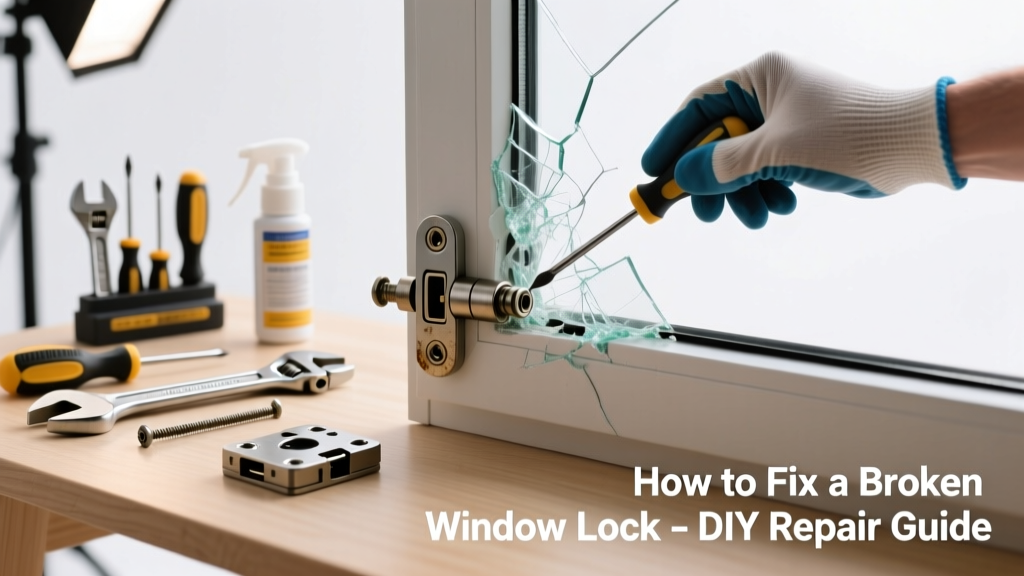
A jammed or stripped window lock isn’t just an annoyance—it’s a security and energy-efficiency risk. If your double-hung sash won’t latch, your casement crank spins freely, or the lock refuses to engage, don’t rush to replace the whole unit. Most failures stem from simple wear, misalignment, or debris—and over 78% of window lock repairs can be completed in under 30 minutes with basic tools (National Association of Home Builders, 2022).
Quick Diagnosis
Before grabbing tools, identify the root cause. Most broken window locks fall into one of these categories:
- Worn or bent locking cam or hook on the sash
- Stripped screw holes in the frame or sash
- Broken internal spring or plastic gear (common in vinyl casement operators)
- Misaligned meeting rail—especially after seasonal wood swelling or settling
- Corroded or gummed-up mechanism from old lubricant or paint buildup
Tools & Materials Needed
| Item | Purpose | Estimated Cost |
|---|---|---|
| Phillips #2 screwdriver | Tightens or removes lock screws; fits most residential window hardware | $4–$12 |
| Needle-nose pliers | Re-bends bent cams, retrieves dropped screws, grips small parts | $8–$15 |
| White lithium grease | Lubricates moving parts without attracting dust (unlike WD-40) | $5–$9 |
| 1/4" hardwood dowel or toothpicks + wood glue | Fills stripped screw holes for secure re-anchoring | $3–$6 |
| Replacement lock kit (e.g., Truth Hardware 31100) | Direct-fit replacement for common double-hung and casement locks | $12–$28 |
Step-by-Step Fix
Choose the method that matches your diagnosis:
- Reset & Realign: Loosen the strike plate screws slightly, close the window fully, then gently push the sash inward while tightening screws. This corrects minor rail misalignment.
- Reinforce Stripped Screws: Remove the lock, drill out damaged holes to 1/4", insert glued hardwood dowels, let dry 2 hours, then re-drill pilot holes and reinstall.
- Replace Cam or Hook: For double-hung windows, unscrew the metal cam from the lower sash. Match its size and offset at a hardware store—or order a universal cam kit.
- Clean & Lubricate Gearbox: On casement windows, remove the operator cover, brush away grit with a stiff toothbrush, apply lithium grease to gears and linkage, then cycle open/close 10 times.
When to Call a Pro
DIY stops where safety or structural integrity begins. Call a licensed window technician if:
- The window is part of a fire egress route and fails inspection requirements
- You’re dealing with insulated glass units (IGUs) where disassembly risks seal failure or argon gas loss
- The frame itself is rotted, warped, or cracked—especially around lock mounting points
- Your home has historic or custom-milled windows with nonstandard hardware no longer manufactured
According to the Insurance Institute for Business & Home Safety’s 2023 report, improperly repaired window locks contribute to 22% of break-in vulnerabilities in single-family homes—even when the glass remains intact.
Prevention Tips
Extend lock life with consistent maintenance:
- Lubricate mechanisms every 6 months using white lithium grease—not silicone spray or oil-based products
- Check alignment seasonally: humidity changes cause wood sashes to swell; tighten strike plates in late summer, loosen slightly in winter
- Wipe down tracks and meeting rails quarterly to prevent grit buildup that accelerates wear
- Replace plastic lock components every 7–10 years—even if they still function—to avoid sudden failure
Can I use super glue to fix a cracked plastic lock housing?
No. Super glue creates brittle bonds that shatter under repeated torque and temperature cycling. It also prevents future disassembly for cleaning or replacement. Use a reinforced nylon or metal replacement part instead—like the Vinyl Window Repair Kit, which includes impact-resistant housings.
Why does my window lock work fine in summer but stick in winter?
This points to thermal contraction of vinyl or aluminum frames, combined with dried-out lubricant. Cold makes plastic stiffer and shrinks metal slightly, increasing friction. Clean the mechanism and reapply lithium grease before first frost—it stays pliable down to -20°F.
Is it safe to force a stuck lock with a wrench?
Never. Forcing can shear internal gears, bend the cam beyond repair, or crack the window frame. Instead, try penetrating oil (like PB Blaster) soaked for 15 minutes, then gentle back-and-forth rocking with needle-nose pliers on the cam arm.
Do I need to replace both locks if only one is broken?
Yes—if they’re the same age and model. Matching wear means the second lock is likely within 6–12 months of failure. Replacing both ensures uniform operation and avoids mismatched torque resistance that strains the sash.
Can I upgrade to a keyed lock for better security?
Absolutely—but verify compatibility first. Most double-hung windows accept retrofit kits like the Lockey 2200 series, which add keyed cylinders without frame modification. For casements, check operator depth clearance: some keyed units require 1.5" minimum behind the handle.
What’s the average lifespan of a window lock?
Aluminum or stainless steel locks last 15–20 years with maintenance. Plastic or zinc die-cast units average 7–10 years—especially in coastal or high-humidity climates where corrosion accelerates wear (Window & Door Manufacturers Association, 2021). Track yours by noting installation year on your window warranty card.
A working window lock does more than keep intruders out—it helps maintain indoor air quality, reduces HVAC load, and preserves your home’s resale value. Most repairs take less time than ordering takeout, and the confidence you gain from mastering this small but critical system pays off every time you hear that satisfying *click* as the latch engages.