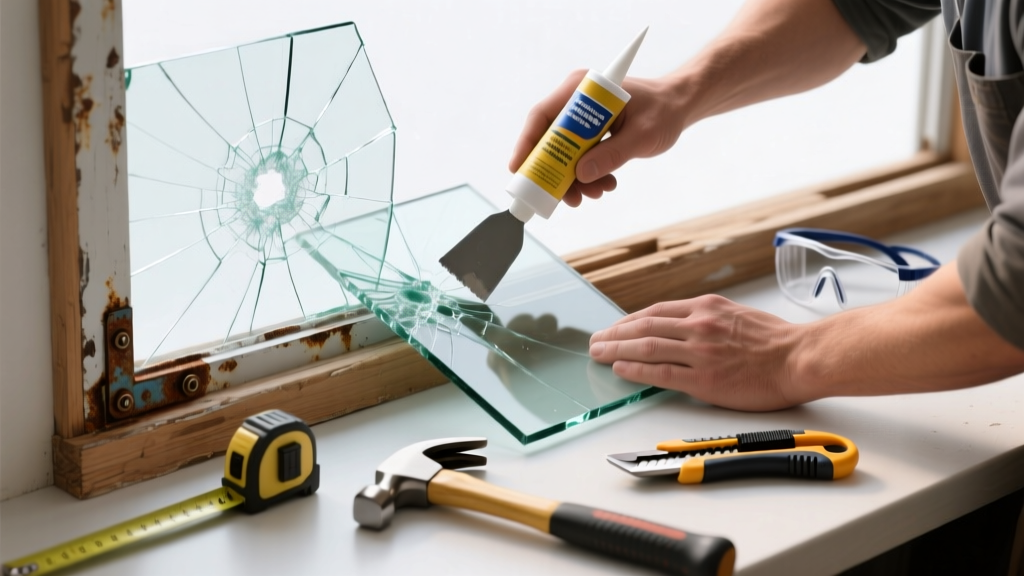
A cracked window pane isn’t just an eyesore—it can throw off the entire sash mechanism, making windows stick, rattle, or fail to lock. Even a hairline fracture in tempered or laminated glass can compromise structural integrity and weather sealing. If your window won’t open, close, or latch smoothly after impact or thermal stress, the crack is likely distorting the frame or interfering with hardware alignment.
Quick Diagnosis
Before grabbing tools, rule out what’s really causing the malfunction:
- The crack is near the locking mechanism, preventing full engagement
- Glass has shifted inward or outward, binding the sash against the jamb
- Broken glass shards are lodged in the track or pivot points
- Frame warping occurred alongside the crack—especially in vinyl or wood windows exposed to sun or moisture
- Sealant failure around the perimeter lets air pressure build, resisting smooth operation
Tools & Materials Needed
| Item | Purpose | Estimated Cost |
|---|---|---|
| Safety goggles & cut-resistant gloves | Protect against glass shards during removal and handling | $12–$25 |
| Painter’s tape (3M Blue Tape) | Stabilizes cracks temporarily and prevents splintering during disassembly | $6–$10 |
| Glazing points & glazing compound | Secures replacement glass and creates a weather-tight seal | $8–$15 |
| Window glass cutter & straightedge | Cuts custom float glass to exact dimensions if ordering isn’t feasible | $22–$45 |
| Replacement glass (tempered or laminated) | Required by code for operable windows below 60" from floor (IRC R308.4) | $35–$90 |
Step-by-Step Fix
Choose the method based on crack size, location, and window type (single-hung, casement, or double-glazed):
- Temporary stabilization: Apply painter’s tape across both sides of the crack in an "X" pattern. This reduces vibration-induced spreading and holds shards in place while you plan next steps.
- Remove damaged glass safely: For single-pane windows: loosen glazing points with a putty knife, gently lift glass out, and vacuum all debris from the frame. For double-pane units: do NOT attempt removal—call a pro; broken seals require full unit replacement.
- Measure and order replacement: Measure the glass opening—not the old pane. Subtract 1/8" from height and width to allow for expansion and bedding. Specify thickness (⅛", 3/16", or ¼") and safety-rated glass if within 18" of a door or below 36" from floor (per IRC 2021).
- Install new glass: Bed the pane in fresh glazing compound, press in evenly, secure with new glazing points every 6", then tool the compound smooth. Let cure 72 hours before operating.
When to Call a Pro
DIY becomes unsafe or ineffective in these cases:
- The crack extends into the insulated glass unit’s spacer bar—moisture has likely entered, fogging the interior
- Window is part of a fire-rated assembly or egress window (minimum 5.7 sq ft clear opening required per IRC R310.1)
- You’re dealing with historic or custom-shaped glass (arched, beveled, or stained)
- The frame itself is rotted, warped, or missing structural fasteners—glass replacement won’t restore function
- Crack occurred without impact (e.g., spontaneous breakage in tempered glass), indicating possible nickel sulfide inclusion—a known defect requiring certified replacement
"Spontaneous breakage in tempered glass accounts for roughly 5% of all field failures—and nearly all occur within 7 years of installation," says the National Glass Association’s Technical Bulletin #12 (2022).
Prevention Tips
Extend your window’s service life and avoid repeat issues:
- Install exterior storm windows in high-wind zones to absorb impact and reduce thermal stress
- Keep window tracks clean and lubricated annually with silicone-based spray—not WD-40, which attracts dust
- Trim overhanging branches within 3 feet of windows to prevent wind-driven debris strikes
- Replace aging glazing compound every 10–15 years—even if glass looks intact—to maintain compression seal integrity
Can I use duct tape instead of painter’s tape to hold the crack?
No. Duct tape leaves aggressive adhesive residue that bonds permanently to glass and frame finishes, and its thick backing doesn’t conform well to curved or uneven surfaces. Painter’s tape provides controlled adhesion and clean removal—critical when prepping for glazing. For emergency patching only, use clear packing tape as a last resort, but replace within 48 hours.
How long can I wait before replacing cracked glass?
Don’t delay more than 72 hours if the crack is longer than 2 inches or near hardware. According to the U.S. EPA, even small gaps in window seals increase heating/cooling energy use by up to 10–20%—and moisture infiltration can begin within hours, risking rot or mold in wood frames (Home Energy Saver Guide, 2023).
Is it safe to operate a cracked window while waiting for repair?
Only if the crack is hairline (<1/16" wide), fully contained within the pane (not touching edges), and the sash moves freely without grinding or popping sounds. Any resistance or visible glass movement means stop using it immediately—further operation risks sudden shattering or misalignment that compromises the entire balance system.
Do I need building permits for glass replacement?
Generally no for like-for-like glass replacement in existing openings. But if you’re upgrading to thicker, safety-rated, or low-e coated glass—or altering the frame—you may need approval, especially in coastal or wildfire-prone zones. Check with your local building department; many now require documentation for egress and impact-resistance compliance.
Can I replace just one pane in a double-glazed window?
No. Double-glazed (insulated) units are sealed, factory-assembled systems. Breaking the seal destroys the inert gas fill and desiccant, guaranteeing condensation and thermal failure. Replacement requires the full IGU—not just the broken lite. Attempting partial repair voids warranties and violates ASTM E2190 standards.
What’s the difference between glazing compound and caulk?
Glazing compound is oil-based, flexible, and designed to adhere to both glass and wood/metal frames while allowing for seasonal expansion. Caulk (even silicone) lacks UV resistance and long-term adhesion to glass edges—it shrinks, pulls away, and fails to bed the glass properly. Using caulk leads to rattling, water intrusion, and premature seal failure.
Replacing cracked glass isn’t just about aesthetics—it restores security, energy efficiency, and daily usability. A properly seated pane eliminates drafts, reduces outside noise by up to 30%, and ensures your window operates smoothly for another decade. If you’ve stabilized the crack and confirmed frame integrity, most single-pane replacements take under two hours. For deeper issues—like failed balances or rotted sills—pair this fix with our guide on repairing stuck double-hung windows or replacing rotted window sills.