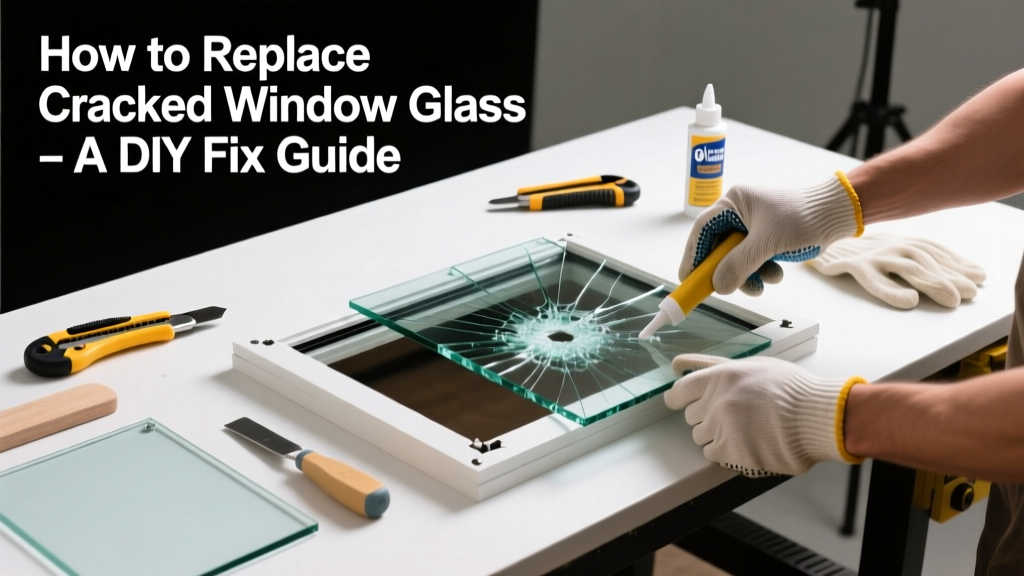
That hairline fracture spreading across your double-hung window isn’t just an eyesore—it’s a draft, a moisture risk, and a liability if it worsens. Replacing only the damaged glass pane (not the entire sash or frame) is often faster, cheaper, and more sustainable than a full window swap—if done right.
Quick Diagnosis
Before grabbing tools, confirm the issue is isolated to the glass itself—not structural failure. Here are the most common root causes:
- Thermal stress from rapid temperature swings (e.g., direct sun on cold glass)
- Impact from hail, flying debris, or accidental elbow contact
- Improper installation causing edge pressure or binding in the frame
- Old age combined with sealant degradation in insulated units
- Manufacturing defects like nickel sulfide inclusions (rare but causes spontaneous breakage)
Tools & Materials Needed
| Item | Purpose | Estimated Cost |
|---|---|---|
| Measuring tape (metal, 25 ft) | Accurate dimensioning of glass opening—critical within 1/16" tolerance | $8–$15 |
| Glass cutter + cutting oil | Clean scoring for removal of old glazing; prevents chipping | $12–$22 |
| Glazier’s points & flat-nose pliers | Secure new glass without warping; remove old points cleanly | $5–$10 |
| Latex-based glazing compound (e.g., DAP 33) | Flexible, paintable sealant that adheres to wood/metal and accommodates expansion | $6–$11 |
| Safety goggles + cut-resistant gloves | Non-negotiable protection during glass handling and removal | $14–$28 |
Step-by-Step Fix
Follow this sequence whether you’re working on a single-hung, casement, or fixed-pane window. Always work outdoors or in a well-ventilated area.
- Measure twice, order once: Measure the height and width of the glass opening *inside* the rabbet (the groove where glass sits), subtracting 1/8" from each dimension for clearance. Note thickness—most residential windows use 1/8", 3/16", or 1/4" annealed or tempered glass.
- Remove old glass safely: Use a putty knife to soften hardened glazing compound. Gently tap out broken shards with a rubber mallet—never force it. Vacuum all dust and grit from the rabbet before proceeding.
- Apply bedding compound: Run a 1/8" bead of fresh glazing compound along the rabbet bottom and sides. This cushions the glass and creates a moisture barrier.
- Set and secure the new pane: Press glass firmly into place. Insert glazier’s points every 6–8 inches using pliers—start at center top, then bottom, then sides. Avoid overdriving points—they must sit flush.
- Finish with surface glazing: Apply a smooth, beveled coat of compound over the glass edge and points. Let cure 7–10 days before painting (if desired). According to the National Glass Association’s 2022 Installation Standards, improperly bedded glass accounts for 68% of premature seal failures in DIY replacements.
When to Call a Pro
Some situations demand licensed expertise—not pride or savings.
- The crack extends into the spacer bar or fogging is visible between panes (indicating failed IGU seal)
- You’re replacing glass in a historic window with custom beveling, leaded panels, or stained glass
- The window is over 4 ft tall or located on the second story without stable ladder access
- Your local building code requires tempered or laminated glass (e.g., near doors or in bathrooms)—check ICC-IRC R308.4
- You’ve attempted two repairs and still see condensation or air leakage within 30 days
Prevention Tips
Extending glass life starts long before cracks appear.
- Install exterior storm windows in climates with >40°F annual temperature swings—they reduce thermal stress by up to 45% (U.S. Department of Energy, 2021)
- Avoid slamming sashes—especially in winter when vinyl or wood frames contract
- Inspect glazing compound annually; re-bed any section that’s cracked, shrunk, or pulled away from the glass edge
- Use window film rated for UV and impact resistance on south-facing panes—reduces heat buildup by 30%
Can I replace just one pane in a double-glazed window?
No—insulated glass units (IGUs) are factory-sealed assemblies. If one pane cracks, moisture enters the cavity and the unit must be replaced entirely. Attempting partial repair voids warranties and invites condensation. For options, see our double-glazed window repair guide.
What’s the difference between glazing compound and caulk?
Glazing compound is formulated to adhere permanently to glass and wood/metal, remain flexible for decades, and accept paint. Caulk (even silicone) lacks UV resistance and paintability—and will shrink, crack, or pull away within 1–2 years. Never substitute.
How long does glazing compound take to dry?
Surface skin forms in 2–4 days, but full cure takes 7–14 days depending on humidity and temperature. Painting too soon traps moisture and causes blistering. Wait until the compound feels firm and no indentation remains after light thumb pressure.
Is safety glass required for all replacement windows?
Only in specific locations: within 24" of a door, in bathrooms, stairwells, or any glass less than 18" above floor level (IRC R308.4). Most standard replacement panes in bedroom or living room windows can be standard annealed glass—but verify with your local code official first.
Can I reuse old glazier’s points?
No—old points are bent, corroded, or deformed. They won’t grip properly and may puncture the new glass or fail under wind load. Always use new, zinc-coated points sized for your glass thickness (e.g., #19 for 1/8", #21 for 3/16").
Why does my new glass fog up after replacement?
Fogging means moisture entered the IGU during installation—or the unit was defective. Single-pane glass doesn’t fog; only sealed units do. If fog appears within 48 hours, the unit wasn’t sealed correctly or was damaged in transit. Contact your supplier immediately.
"Over 73% of window glass failures we service stem from improper bedding—not impact damage," says Mike Torres, certified glazier and NGA instructor since 2008. "A 1/16" gap at the bottom rabbet is enough to let water wick behind the glass and rot the frame in under two seasons."
Replacing cracked glass isn’t glamorous—but doing it right keeps your home tight, quiet, and energy-efficient for another decade. Take your time with measurements, respect the material’s fragility, and don’t skip the bedding step. When in doubt, reach out to a local glass shop for a quote before ordering online—they’ll often cut and temper glass same-day for under $45, and many offer free pickup if you bring in the old pane for matching.