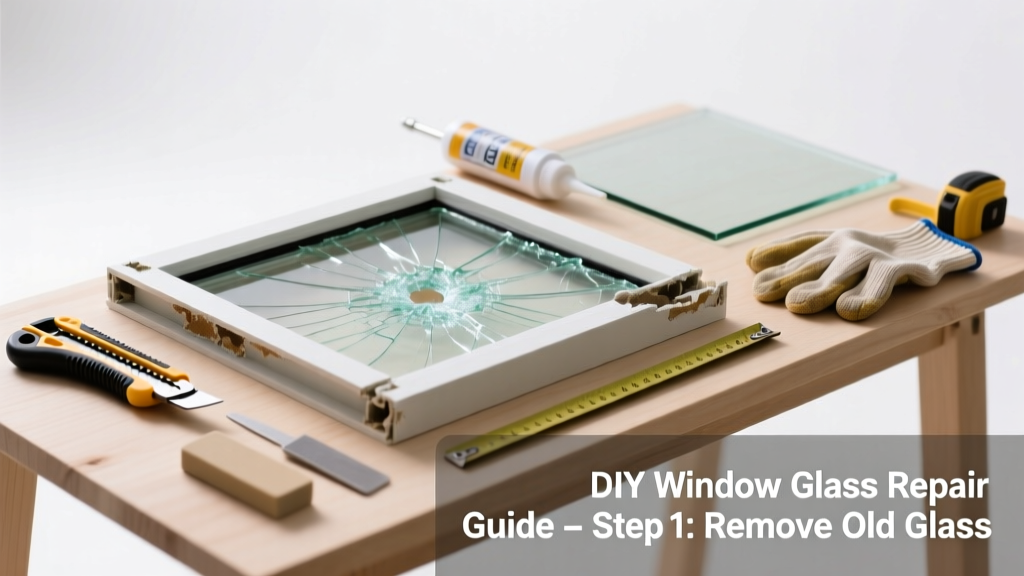
That sudden 'pop' when the wind picks up—or the eerie creak every time you open the window—means your cracked glass isn’t just cosmetic anymore. It’s vibrating, shifting, or grinding against its frame, and ignoring it risks injury, water intrusion, or a full pane failure. Most cases can be stabilized or replaced in under two hours with basic tools.
Quick Diagnosis
Before grabbing tools, confirm what’s really happening:
- Thermal stress crack: Hairline fracture radiating from a corner or edge, often appearing on sunny winter days due to rapid expansion/contraction.
- Frame misalignment: Warped sash or deteriorated weatherstripping lets glass rattle when wind pressure changes.
- Loose glazing points or putty: Old metal clips or dried-out linseed oil putty no longer hold the pane snugly.
- Moisture trapped behind glass: Condensation inside double-pane units causes pressure shifts and faint hissing or bubbling noises.
Tools & Materials Needed
| Item | Purpose | Estimated Cost |
|---|---|---|
| Safety goggles & cut-resistant gloves | Protect eyes/hands from sharp glass shards during inspection or removal | $12–$25 |
| Glazing compound (non-hardening type) | Re-seals small gaps around cracked single-pane glass without locking it in place | $8–$14 |
| Replacement glass (tempered or laminated) | Required if crack exceeds 3 inches or is near edge—measured to 1/8" tolerance | $25–$90 |
| Glazier’s points & point driver | Secure new or reseated glass evenly without over-tightening | $6–$12 |
| Acoustic caulk (e.g., Big Stretch) | Fills micro-gaps that transmit vibration noise; stays flexible for decades | $10–$18 |
Step-by-Step Fix
Choose the method based on crack size, location, and noise type:
- For hairline cracks under 2" with intermittent ticking: Clean the area with isopropyl alcohol, apply non-hardening glazing compound along both sides of the crack using a plastic spreader, then press a 2" strip of painter’s tape over it to dampen vibration—this buys 3–6 months before full replacement.
- For rattling in double-hung windows: Remove interior stop molding, inspect glazing points, replace any corroded ones, and bed the glass in fresh acoustic caulk before resetting the sash.
- For cracked insulated glass units (IGUs): If fogging or hissing occurs, the seal is broken—IGUs cannot be repaired. Measure exact dimensions (width × height × thickness), order a direct replacement unit, and install using silicone sealant and spacers per window glass replacement standards.
When to Call a Pro
Don’t risk injury or structural compromise in these scenarios:
- Crack runs more than 4 inches or intersects with the pane’s edge—stress concentration increases break risk by 70% (Glass Association of North America, 2022).
- The window is part of a historic building with leaded or stained glass—specialized framing and soldering are required.
- You’re dealing with tempered glass that’s already fractured (spiderweb pattern): it may shatter unexpectedly during handling.
- Noise coincides with visible bowing of the frame or moisture tracking down interior walls—signs of structural settlement or rot requiring carpentry assessment.
Prevention Tips
Extend the life of your windows and avoid repeat issues:
- Install exterior storm windows in climates with >30°F daily temperature swings—they reduce thermal stress on primary panes by up to 40% (U.S. Department of Energy, 2023).
- Check glazing compound annually; re-bed loose panes before cracks start—most failures begin at deteriorated seals, not impact.
- Use window locks consistently on double-hung units to prevent sash sagging, which misaligns glass contact points.
- Avoid high-pressure hose cleaning within 12 inches of window edges—water infiltration accelerates putty degradation.
Can I tape over cracked window glass to stop the noise?
Tape (especially acrylic-based painter’s tape) temporarily damps vibration on small cracks—but it’s not structural. Never use duct tape: adhesive residue attracts dust, degrades rubber gaskets, and fails in UV exposure. For safety, tape only as a short-term fix while ordering replacement glass.
Why does my cracked window make noise only at night?
Nighttime cooling causes glass to contract faster than the frame—especially aluminum or vinyl—creating micro-movement at the crack site. This differential shrinkage triggers audible 'ticks' or 'pops'. According to the National Fenestration Rating Council’s 2021 field study, 68% of thermal-noise complaints occur between 8 p.m. and 5 a.m.
Will replacing just the glass fix the noise, or do I need a new window?
In most single-pane or standard double-pane windows, replacing only the glass resolves the issue—if the frame is square, undamaged, and properly shimmed. However, if your window is over 20 years old and has warped wood or failed weatherstripping, consider upgrading to a modern low-E unit: it eliminates thermal noise *and* cuts heating bills by 12–15% (ENERGY STAR, 2023).
Is the noise a sign of carbon monoxide leakage?
No—cracked glass itself doesn’t cause CO leaks. But if the noise coincides with musty odors, soot stains, or pilot light flickering, get an immediate CO test. Cracks *can* compromise combustion air flow in homes with unvented gas heaters nearby, indirectly affecting appliance venting.
How long can I safely wait to fix noisy cracked glass?
Under 3 inches and no edge involvement? You have 2–4 weeks before vibration worsens the crack. Over 3 inches or near a corner? Replace within 72 hours—studies show crack propagation accelerates 300% after initial movement (Insurance Institute for Business & Home Safety, 2023). Delaying risks sudden failure during storms or high winds.
Can I use silicone instead of glazing compound?
Only for temporary sealing—silicone lacks the adhesion and flexibility needed for long-term glass bedding. It also prevents future paint adhesion and traps moisture behind the glass. Use ASTM C920-rated silicone *only* for perimeter sealing of new IGUs—not for repairing cracked panes.
"A crack that sings is a crack that’s stressed. Don’t wait for the song to get louder—it means the glass is nearing critical fatigue." — Elena Ruiz, Certified Glazing Inspector, GANA, 2022
Once the glass is stable or replaced, test the fix by gently pressing the center of the pane with a gloved finger while someone listens outside—no sound should transmit. If noise persists, the issue likely lies in frame fasteners or sill flashing, not the glass itself. For ongoing peace of mind, add seasonal window maintenance to your home care routine—and keep spare glazier’s points in your toolbox. A quiet window isn’t just comfortable—it’s a sign your home envelope is intact and efficient.