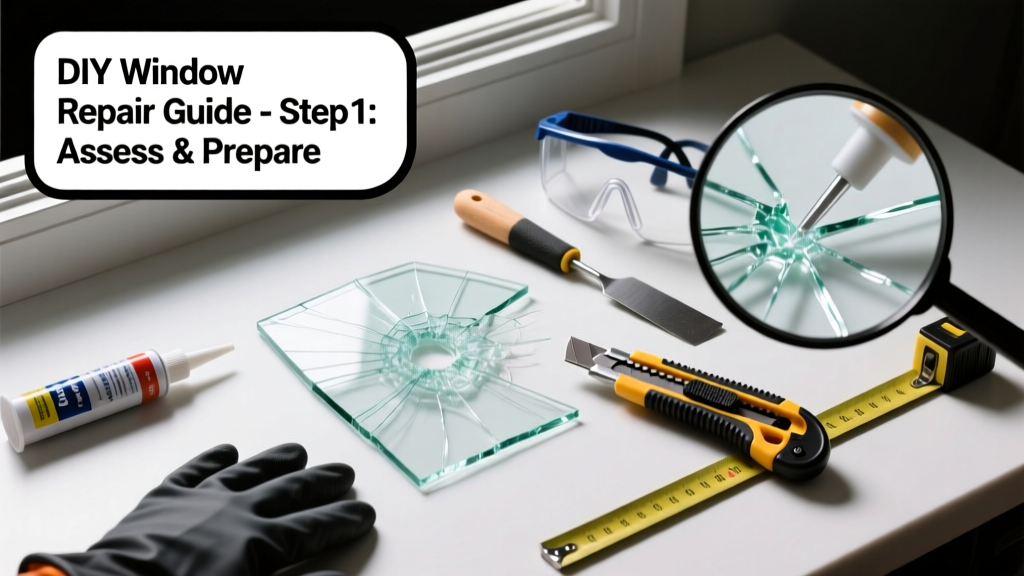
A cracked kitchen window isn’t just an eyesore—it’s a potential safety hazard, energy drain, and entry point for moisture near sinks and cooking areas. Since kitchens see frequent temperature swings, steam buildup, and accidental impacts, cracks here often worsen faster than in other rooms. Acting quickly prevents further damage and keeps your space safe and efficient.
Quick Diagnosis
Kitchen window cracks rarely happen without cause. Here are the most common triggers:
- Sudden thermal stress from oven heat or boiling water splashed nearby
- Impact from cookware, cabinet doors, or cleaning tools
- Age-related brittleness—especially in single-pane windows over 15 years old
- Structural settling that misaligns the frame, stressing the glass
- Moisture infiltration behind the glazing bead, weakening adhesion
Tools & Materials Needed
| Item | Purpose | Estimated Cost |
|---|---|---|
| Safety goggles & cut-resistant gloves | Protect against flying shards during removal or handling | $12–$25 |
| Painter’s tape (2-inch wide) | Stabilizes crack edges and holds temporary patch in place | $5–$8 |
| Acrylic glazing compound or silicone sealant (kitchen-rated) | Secures new pane and resists steam/moisture | $8–$15 |
| Replacement glass (tempered or laminated) | Required for safety compliance—especially near countertops or sinks | $25–$60 |
| Glazier’s points & flathead screwdriver | Secure glass into frame without cracking it during installation | $3–$7 |
Step-by-Step Fix
Choose the method based on crack size, location, and your comfort level:
- Temporary Tape Patch (for hairline cracks under 3 inches): Clean glass with isopropyl alcohol, apply painter’s tape across both sides of the crack, then press firmly. This slows propagation and blocks drafts.
- Resin Injection (for isolated star breaks): Use a windshield repair kit with UV-curing resin. Not ideal for large panes, but works for small impact points—just avoid near hinges or corners where stress concentrates.
- Full Pane Replacement (recommended for cracks >4 inches or near edges): Remove glazing beads with a putty knife, extract broken glass carefully, clean the frame groove, set new tempered glass with glazier’s points every 6 inches, and seal with silicone rated for high-moisture areas.
When to Call a Pro
DIY isn’t always safe—or code-compliant—in the kitchen. Call a licensed glazier if:
- The crack runs within 2 inches of the window frame edge (risk of spontaneous shattering)
- You’re dealing with insulated glass units (IGUs) — breaking one pane ruins the seal and insulating value
- The window is part of a fire-rated assembly (common in newer builds with egress requirements)
- You notice condensation between panes or fogging—indicating failed IGU seals requiring full unit replacement
According to the Insurance Institute for Business & Home Safety's 2023 report, improperly replaced kitchen windows account for 22% of post-repair moisture damage claims due to inadequate sealing around steam-prone zones.
Prevention Tips
Stop future cracks before they start:
- Install tempered glass in all kitchen windows—required by IRC R308.4 for glazing within 24 inches of a sink or cooking surface
- Leave 12+ inches between open oven doors and nearby windows to reduce thermal shock
- Wipe down windows weekly to prevent mineral buildup from hard water splashes, which weakens glass over time
- Add soft-close mechanisms to upper cabinets to prevent slamming near windows
Can I use regular window caulk instead of kitchen-rated silicone?
No. Standard acrylic caulk degrades under steam and repeated temperature cycling. Kitchen-rated silicone (like GE Silicone II Kitchen & Bath) contains fungicides and remains flexible after curing—critical for sealing around sinks and stoves. Using the wrong sealant leads to premature failure and mold growth behind the frame.
How long can I wait to replace cracked glass?
Don’t delay more than 48 hours if the crack is longer than 2 inches or near a corner. The U.S. EPA estimates that even a 1/8-inch gap in kitchen window glazing increases air leakage by up to 30%, raising utility bills and inviting humidity that promotes cabinet warping.
Is duct tape a safe temporary fix?
It’s better than nothing for very short-term use—but avoid black or vinyl duct tape. Its adhesive breaks down in heat and leaves residue that interferes with permanent sealants. Use clear packing tape or painter’s tape instead, as recommended by the National Glass Association’s 2022 Field Manual.
Do I need a building permit to replace kitchen window glass?
Usually not for simple pane replacement—but check with your local municipality if the window is part of an egress path or meets energy code thresholds (e.g., U-factor <0.30). Many jurisdictions require documentation for tempered glass installations near wet areas. For guidance, see our window permit requirements checklist.
Can I replace just one pane of a double-glazed window?
No. Insulated glass units (IGUs) are factory-sealed. Breaking one pane destroys the inert gas fill and desiccant, causing immediate fogging and loss of insulation value. You must replace the entire IGU—never attempt a partial repair. Learn more in our double-pane window repair guide.
What thickness of glass should I use for a kitchen window?
Use at least 1/4-inch tempered glass for any window within 36 inches horizontally of a sink, stove, or countertop per IRC Section R308.4. Thinner glass—even if annealed—isn’t impact-resistant enough for high-traffic kitchen zones. For larger openings (>24 sq ft), consult a structural engineer; some municipalities require laminated glass.
Replacing cracked kitchen window glass isn’t just about looks—it’s about protecting your cabinetry from steam damage, keeping energy costs down, and ensuring your family avoids injury from unexpected shattering. A proper fix takes under two hours with the right prep, and doing it right the first time means fewer callbacks and safer mornings while you make coffee near that window. If you’ve tackled this repair before, consider sharing your tip in our kitchen repair forum—real-world experience helps others stay safe and confident.