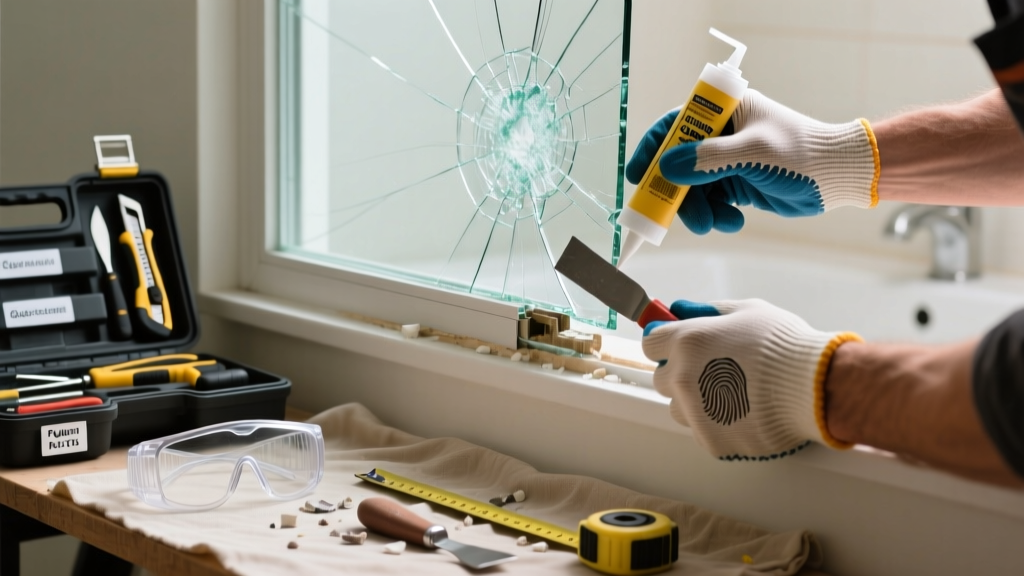
A cracked bathroom window isn’t just an eyesore—it’s a moisture trap, a safety hazard, and a potential energy leak. Unlike cracks in living room windows, bathroom glass faces constant steam, temperature swings, and humidity that accelerate deterioration. Acting quickly prevents mold growth behind the frame and keeps your shower zone safe.
Quick Diagnosis
Before grabbing tools, identify the cause—this tells you whether it’s a one-time fix or a symptom of deeper issues:
- Thermal stress from rapid heating/cooling (e.g., hot shower followed by cold draft)
- Impact from dropped toiletries, cleaning tools, or accidental elbow contact
- Frame warping due to prolonged moisture exposure weakening the glazing compound
- Manufacturing defect in tempered or laminated glass (less common but possible in low-cost replacements)
- Improper installation—gaps or overtightened screws causing pressure points
Tools & Materials Needed
| Item | Purpose | Estimated Cost |
|---|---|---|
| Safety goggles & cut-resistant gloves | Protect against sharp shards during removal or handling | $12–$25 |
| Painter’s tape (2-inch wide) | Stabilizes crack edges and holds temporary patch in place | $5–$8 |
| Acrylic glazing compound or silicone caulk (100% silicone, mildew-resistant) | Seals gaps and bonds new glass; bathroom-rated formula resists mold | $7–$14 |
| Glass cutter & straightedge (for custom cuts) | Score and break replacement glass to exact size if ordering raw stock | $18–$32 |
| Replacement glass: 1/8" annealed or tempered (measured precisely) | Tempered required for windows under 60" from floor per IRC 2021 Section R308.4 | $25–$65 |
Step-by-Step Fix
Choose the method based on crack size, location, and your comfort level:
- Temporary Patch (crack < 2 inches, no spiderwebbing): Clean glass with isopropyl alcohol, apply painter’s tape over both sides of the crack, then smooth a thin layer of clear silicone caulk over the tape bridge. Let cure 24 hours before showering.
- Full Glass Replacement (most reliable for bathroom use): Remove old glazing points or clips, scrape out old compound with a stiff putty knife, measure opening twice (width × height at top/middle/bottom), order tempered glass (required if bottom edge is ≤60" above floor), set in fresh silicone bead, press in, and secure with new glazing points every 6 inches.
- Glazing Compound Repair (small chips or hairline cracks near edge): Use acrylic glazing compound applied with a flexible putty knife, feathered smoothly over crack, then sanded lightly after 48 hours. Not suitable for center-of-glass cracks over 1/2 inch.
When to Call a Pro
Don’t risk injury or code violations in these scenarios:
- The crack extends into the frame or shows signs of wood rot or rusted metal framing
- It’s a double-pane insulated unit with fogging or condensation inside—seal failure means full unit replacement
- The window is part of a skylight, transom, or non-rectangular shape requiring specialty cutting
- You’re unsure whether the glass is tempered or laminated—testing improperly can cause explosive shattering
"Over 60% of bathroom window glass failures occur within 3 years of improper sealing—especially when standard caulk replaces mildew-resistant silicone." — National Association of Home Builders Remodeling Impact Report, 2022
Prevention Tips
Bathroom windows face unique stressors—here’s how to extend their life:
- Install an exhaust fan rated for at least 50 CFM and run it for 20 minutes post-shower to reduce condensation buildup
- Leave a 1/8" gap between glass edge and frame—never force-fit glass; use rubber glazing beads instead of hard-set compound
- Wipe down window frames weekly with vinegar-water solution to prevent mineral deposits that weaken seals
- Replace single-pane glass with tempered, low-e coated glass—it resists thermal stress and improves insulation
Can I use regular caulk instead of bathroom-grade silicone?
No. Standard acrylic or latex caulk breaks down under constant humidity and encourages mold growth behind the glass. The U.S. EPA estimates that 14% of household water usage is from leaks—including those caused by failed seals—so using the right sealant matters for both safety and efficiency. Always choose 100% silicone labeled “mildew-resistant” and ASTM C920 compliant.
How long can I wait before replacing cracked bathroom glass?
Don’t delay beyond 72 hours if the crack is longer than 3 inches or shows branching. Moisture intrusion accelerates corrosion of metal frames and rot in wood sills. According to the Insurance Institute for Business & Home Safety’s 2023 report, unaddressed bathroom window cracks increase mold remediation costs by up to 40% within two weeks.
Is duct tape a safe temporary fix?
Only as a last-resort stopgap for under 12 hours—and never inside the shower stall. Duct tape leaves sticky residue that interferes with proper adhesion of silicone or glazing compound later. Use painter’s tape instead: it’s low-adhesion, removable, and won’t compromise future repairs.
Do I need a building permit to replace bathroom window glass?
Generally no—for like-for-like glass replacement—but check local codes if upgrading to tempered or changing size. Many municipalities require permits for any glazing in wet areas below 60 inches, especially in rental properties. Visit your city’s building permits guide for specifics.
Can I replace just one pane in a double-glazed bathroom window?
No—double-pane units are sealed, gas-filled systems. If one pane cracks, the insulating gas escapes and moisture enters. You must replace the entire IGU (insulated glass unit). Trying to separate panes risks injury and voids energy-efficiency ratings. See our double-pane window replacement guide for step-by-step IGU sourcing tips.
What’s the safest way to remove broken glass from a bathroom window frame?
First, shut off bathroom ventilation to avoid airborne particles. Wear cut-resistant gloves and safety goggles. Use a putty knife to gently lift glazing points, then slide a stiff credit card between glass and frame to loosen adhesive. Never pry with screwdrivers—this stresses the frame. Sweep shards onto damp paper towels, seal in a rigid box labeled “Broken Glass,” and dispose per local hazardous waste rules. For larger jobs, refer to our safe glass removal checklist.
Replacing cracked bathroom window glass isn’t glamorous—but doing it right protects your walls, your air quality, and your family’s safety. A properly sealed, code-compliant pane lasts 15+ years even in high-humidity zones. Take the time to measure twice, choose tempered glass where required, and seal with the right silicone. Your future self will thank you when there’s no surprise fogging, no mysterious musty smell, and no emergency call at 7 a.m. on a Sunday.