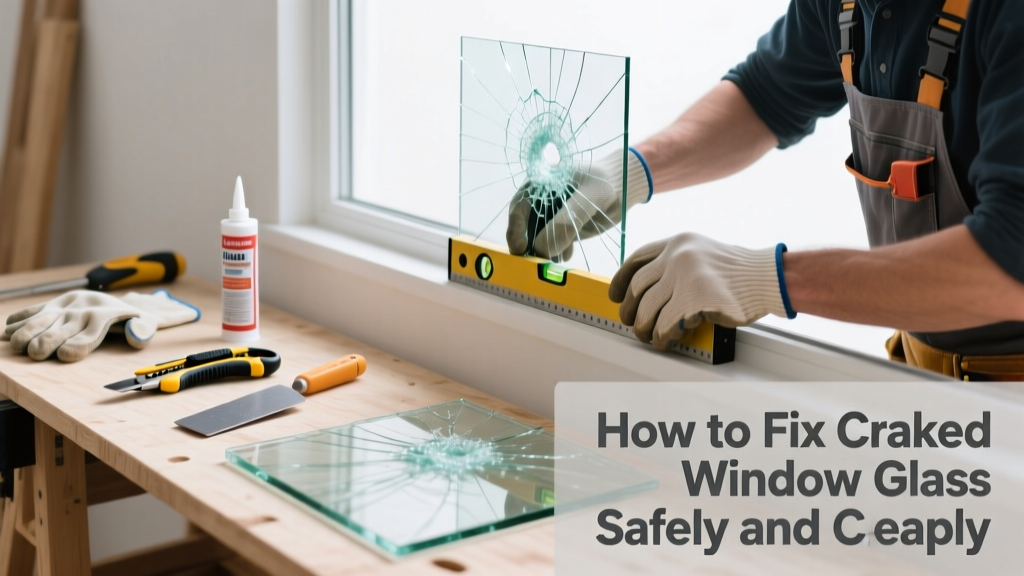
A cracked window pane isn’t just an eyesore—it’s a potential energy leak, security risk, and safety hazard. Small hairline cracks might seem harmless, but temperature swings or vibration can turn them into full breaks overnight. Acting fast gives you control over cost, timing, and safety.
Quick Diagnosis
Before grabbing tools, identify the cause—this helps prevent repeat damage:
- Impact from hail, rocks, or accidental strikes (most common in ground-floor or garage windows)
- Thermal stress from rapid temperature shifts—e.g., direct sunlight on cold glass in winter
- Structural settling that strains the frame, transferring pressure to the glass
- Manufacturing flaws like nickel sulfide inclusions (rare but causes spontaneous breakage years later)
- Poor installation—tight glazing beads or insufficient clearance causing expansion bind
Tools & Materials Needed
| Item | Purpose | Estimated Cost |
|---|---|---|
| Safety goggles & cut-resistant gloves | Protect eyes and hands from sharp shards during removal | $12–$28 |
| Painter’s tape (2-inch wide) | Stabilizes cracks temporarily and holds broken pieces during removal | $5–$9 |
| Glass cutter & cutting oil | Cuts replacement float glass to size; oil prevents overheating and chipping | $14–$32 |
| Glazier’s points & glazing compound | Secures new glass and seals against moisture and air infiltration | $8–$16 |
| Replacement glass (¼" annealed or tempered) | Must match thickness, size, and performance needs—tempered required for doors or low windows | $20–$75 (per pane) |
Step-by-Step Fix
Choose your method based on crack size, location, and window type. Always wear PPE—even small chips can slice skin.
- Temporary stabilization: Apply painter’s tape across both sides of the crack. This slows propagation and holds fragments if the glass fails mid-repair.
- Safe removal: Remove interior stops or glazing beads with a stiff putty knife. Gently pry out broken glass using pliers—never force it. Vacuum all debris, then wipe frame with denatured alcohol to prep surface.
- Cut and install replacement: Measure the opening (not the old glass)—subtract 1/8" for expansion clearance. Cut new glass with a straightedge and cutter, then smooth edges with fine sandpaper. Press into place with glazier’s points every 6 inches, then bed in linseed-oil-based glazing compound.
- Alternative for minor cracks only: Use a UV-cured resin kit (like Loctite Glass Bond) for hairline fractures under 6 inches—not for thermal stress cracks or near corners where stress concentrates.
When to Call a Pro
DIY is unsafe or ineffective in these scenarios:
- The crack is longer than 12 inches or branches into multiple fissures
- It’s in insulated glass (IGU) — sealing failure means moisture between panes; replacement requires full unit swap
- The window is double-hung, casement, or tilt-turn with integrated locking mechanisms—removing glass risks damaging hardware
- You’re dealing with laminated, low-e, or hurricane-rated glass—these require certified handling and specific adhesives
- The frame is rotted, warped, or aluminum-clad wood—structural repair must precede glazing
According to the Insurance Institute for Business & Home Safety's 2023 report, improperly repaired windows contribute to 22% of post-storm insurance claim denials due to secondary water intrusion.
Prevention Tips
Extend your window’s life with proactive habits:
- Install storm windows in climates with >30°F daily temperature swings—reduces thermal stress by up to 60%
- Keep exterior shrubbery trimmed at least 18 inches from windows to prevent wind-driven branch strikes
- Use window film rated for impact resistance (e.g., 4-mil 3M Safety & Security Film) on vulnerable first-floor panes
- Inspect glazing compound annually—cracked or missing sealant allows moisture in, accelerating frame decay
Can I use super glue to fix a cracked window?
No. Super glue (cyanoacrylate) becomes brittle under UV exposure and temperature cycling, and lacks flexibility to absorb glass movement. It also clouds under sunlight and won’t bond reliably to oily or dusty glass surfaces. UV-cured resins are formulated specifically for silica substrates and remain optically clear.
How long does temporary tape last on cracked glass?
Premium acrylic-based painter’s tape (e.g., FrogTape Delicate Surface) holds up to 7–10 days indoors before losing adhesion. In direct sun or high humidity, replace it every 3–4 days. Never rely on tape beyond two weeks—it masks worsening stress and delays proper repair.
Is cracked window glass dangerous even if it’s not broken yet?
Yes. A cracked pane loses up to 40% of its structural integrity, per ASTM E1300 standards. Even a small crack compromises resistance to wind load, making it more likely to shatter during storms or sudden pressure changes. Tempered glass with a crack is especially hazardous—it may explode spontaneously.
Do I need to replace the entire sash if the glass is cracked?
Not usually—but inspect the sash closely. If the crack originated from a twisted or swollen frame, or if glazing rabbets are damaged, replacing just the glass invites future failure. For wood sashes older than 25 years, check for rot behind paint with an awl—soft spots mean full sash replacement is smarter than patching.
Can I install double-pane glass myself?
Technically yes, but strongly discouraged. Factory-sealed IGUs require precise desiccant loading, edge sealing, and argon fill verification. DIY attempts often result in fogging within 6–12 months. Instead, order custom IGUs from a local glass shop—they’ll deliver ready-to-install units with 10-year warranties. See average window glass replacement costs to budget accordingly.
What’s the difference between annealed and tempered glass for repairs?
Annealed glass is standard float glass—easier to cut and shape, but breaks into large, sharp shards. Tempered glass is heat-treated for 4x strength and shatters into dull pebbles. Building codes require tempered glass in doors, sidelights, and any pane within 18 inches of a door or floor. Learn which glass type your home needs based on location and egress requirements.
Fixing cracked window glass yourself saves money and builds confidence—but never sacrifice safety for speed. A properly sealed, correctly sized replacement restores insulation value, cuts drafts by up to 30%, and keeps your home secure. If the crack’s spreading while you read this, pause and tape it down now. Then decide: five minutes of prep, or a pro’s 48-hour turnaround? Either way, don’t wait until rain finds its way through.