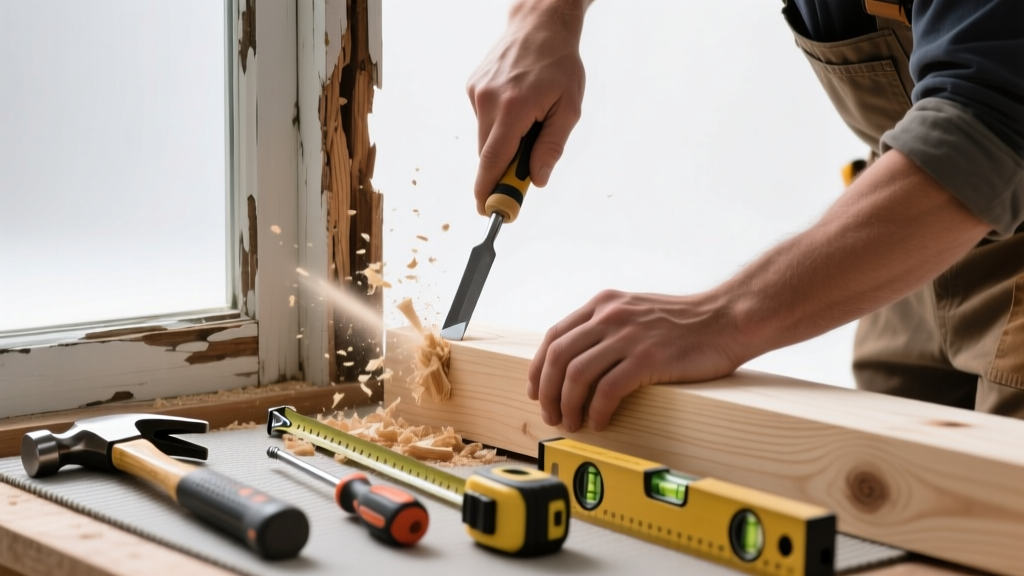
That soft, spongy spot near your window’s bottom corner isn’t just ugly—it’s a moisture breach waiting to worsen. Left unaddressed, localized rot can compromise structural integrity, invite pests, and drive up heating bills by 10–15% due to air infiltration (U.S. Department of Energy, 2022). The good news? You often don’t need to replace the entire window—just the damaged part.
Quick Diagnosis
Rotten frame sections rarely appear out of nowhere. Here are the most common root causes:
- Failed or missing caulk at the sill-to-brickmold junction
- Clogged or absent drip caps above the window head
- Paint failure on end grain (especially at mitered corners)
- Downspout overspray hitting the frame during rain
- Wood species with low natural rot resistance (e.g., poplar or SPF without preservative treatment)
Tools & Materials Needed
| Item | Purpose | Estimated Cost |
|---|---|---|
| Sharp chisel (3/8" and 1/2") | Removes decayed wood cleanly without damaging sound substrate | $12–$24 |
| Epoxy wood consolidant (e.g., Abatron WoodEpox) | Hardens remaining soft wood fibers and bonds new patch material | $28–$36 |
| Pressure-treated or kiln-dried cedar replacement stock (1×3 or 1×4) | Matches original profile; resists future moisture intrusion | $8–$15 per 8-ft board |
| Butt hinges + screws (stainless steel) | Secures new sill or jamb section without rust-induced failure | $6–$11 |
| Backer rod + silicone sealant (ASTM C920, Class 25) | Creates flexible, waterproof barrier at joints exposed to weather | $7–$13 |
Step-by-Step Fix
These methods assume rot is confined to one component—sill, side jamb, or head casing—and hasn’t compromised the window’s operational hardware or anchoring points.
- Remove decayed wood: Use a sharp chisel and mallet to cut back to solid, dry wood—minimum 1/2" beyond visible discoloration. Tap test frequently: solid wood rings; rotten wood thuds.
- Apply consolidant: Brush Abatron LiquidWood into all exposed pores and end grain. Let cure 2–4 hours (per manufacturer specs) before proceeding.
- Cut and fit replacement: Measure cavity precisely. Cut new cedar or pressure-treated pine to size—leave 1/16" gap at top/bottom for seasonal expansion. Test-fit before gluing.
- Secure and seal: Pre-drill holes, then fasten with stainless screws. Fill gaps with backer rod, then top with ASTM C920 silicone. Allow full 72-hour cure before painting.
When to Call a Pro
DIY replacement becomes unsafe or ineffective in these scenarios:
- Rotted area extends more than 6 inches into the rough opening framing (indicates potential structural wall damage)
- Window is double-hung with integrated balance systems—removing jambs may disengage springs or cords
- You discover active termite galleries or fungal hyphae spreading behind plaster or drywall
- The rot affects load-bearing header connections or has compromised anchor bolts in masonry walls
If you’re unsure, consult a window leak repair specialist before cutting further.
Prevention Tips
Prevent recurrence with these proven strategies:
- Re-caulk annually at the sill-to-brickmold seam using paintable silicone—not acrylic latex
- Install aluminum or copper drip caps over all horizontal frame members (head and sill)
- Keep shrubs and mulch at least 12 inches from window bases to reduce splashback and humidity
- Apply a water-repellent preservative (e.g., Thompson’s WaterSeal Advanced) every 2 years to bare end grain
- Inspect interior window jambs quarterly for condensation trails or darkening—early signs of hidden rot
Can I use bleach on this?
No. Bleach kills surface mold but doesn’t stop wood decay fungi or restore structural strength. It also degrades lignin—the glue holding wood fibers together—making the wood more brittle. According to the Forest Products Laboratory (USDA FPL, 2021), sodium hypochlorite accelerates deterioration in already compromised timber.
Do I need to remove the whole sash to fix the sill?
Usually not. Most modern and historic double-hung windows allow sill replacement with the sash removed only from its tracks—not fully detached. Remove the parting stops first, then tilt and lift the lower sash out. Leave upper sash in place unless it interferes with access.
What if the rot is inside the wall cavity?
That’s a red flag. Drill a small exploratory hole (1/8") at the base of the jamb. If sawdust is wet or smells sour—or if the bit meets no resistance past 1 inch—you likely have concealed rot behind drywall or plaster. Stop work and contact a certified mold inspector.
Is epoxy filler strong enough for a load-bearing sill?
Not alone. Epoxy consolidant strengthens marginal wood but shouldn’t bear weight. For sill replacements, always use solid dimensional lumber anchored into framing—not just epoxied patches. As contractor and restoration expert Mark Hirsch notes in Old House Journal (2023): “Epoxy is a bridge—not a foundation. It buys time, not structural authority.”
How long does the repair last?
A properly executed repair with cedar replacement, stainless fasteners, and ASTM-grade sealant lasts 15–20 years in most climates—if maintained. Skip the annual caulk check, and that drops to under 7 years, per data from the National Association of Home Builders’ 2022 Remodeling Impact Report.
Can I paint over the epoxy before sealing?
Yes—but only after full cure (24+ hours) and only with oil-based or high-build acrylic primers. Latex paints often delaminate from cured epoxy surfaces. Always test adhesion on a scrap piece first.
A well-executed partial frame replacement restores weather-tightness, preserves historic character, and saves hundreds over full-window replacement. Keep your eye on those corners and seams—they’re the first line of defense against moisture. And if you notice recurring rot in multiple windows, it’s time to audit your home’s drainage and roof overhangs—not just the frames themselves. For deeper issues like persistent condensation, see our guide on window condensation solutions.