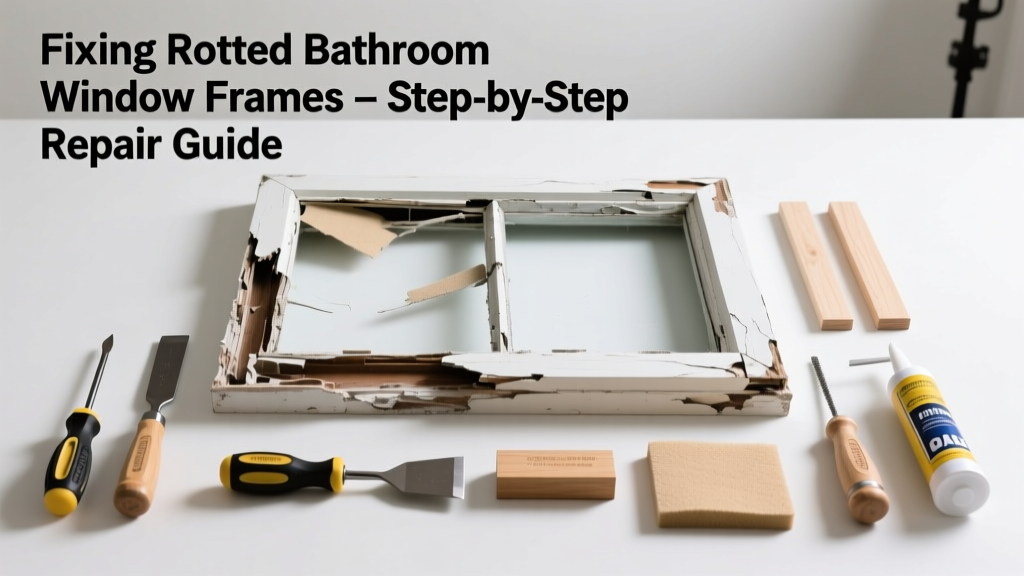
Bathroom window frames rot faster than anywhere else in the house — thanks to steam, condensation, and poor ventilation. If you spot soft wood, dark discoloration, or crumbling paint near your bathroom window, don’t wait: untreated rot spreads quickly and compromises structural integrity and moisture barriers.
Quick Diagnosis
Rotten bathroom window frames rarely happen overnight. Here are the most common root causes:
- Consistent exposure to steam from showers without proper exhaust fan use (the U.S. EPA estimates 30–50% of bathroom humidity goes unvented)
- Cracked or missing caulk around the frame-to-wall joint, allowing water infiltration behind trim
- Non-pressure-treated or non-moisture-resistant wood (e.g., standard pine instead of cedar or redwood)
- Paint failure — especially on south- or west-facing windows where thermal cycling stresses coatings
- Drainage issues: sloped sills directing water inward instead of away from the frame
Tools & Materials Needed
| Item | Purpose | Estimated Cost |
|---|---|---|
| Carbide-tipped oscillating tool blade | Cuts out rotted wood precisely without damaging surrounding framing | $12–$18 |
| Epoxy wood consolidant (e.g., Abatron LiquidWood) | Penetrates and hardens soft, damp wood fibers before patching | $24–$32 |
| Exterior-grade epoxy wood filler (e.g., Minwax High-Performance) | Fills voids and bonds permanently in high-moisture zones | $16–$22 |
| 100% silicone caulk (mold-resistant, ASTM C920) | Seals frame perimeter; stays flexible and inhibits mold growth | $5–$9 |
| Moisture meter with pinless + pin modes | Confirms dryness before repair and verifies hidden rot extent | $75–$120 |
Step-by-Step Fix
Choose the method that matches your rot severity — start with inspection using a screwdriver to probe soft spots. Never skip drying first: run the bathroom fan for 48+ hours pre-repair.
- Surface rot only (≤¼" deep): Chip out decay with a chisel, apply wood consolidant, then fill with epoxy filler. Sand smooth and prime with oil-based primer before repainting.
- Localized deep rot (up to 2" depth, no structural compromise): Cut out damaged section using an oscillating tool, glue in a pressure-treated hardwood plug, seal joints with silicone, then coat with marine-grade spar urethane.
- Rot extending into jamb or sill structure: Remove interior trim, cut out compromised sections, sister in new cedar or PVC-coated lumber, and reflash with peel-and-stick membrane (e.g., Grace Ice & Water Shield) under new trim.
When to Call a Pro
DIY repairs fail when rot undermines load-bearing elements or hides behind tile or drywall. Call a licensed contractor if:
- You find rot >2 inches deep along the sill or head jamb — this often means water has migrated into wall cavities
- The window operates stiffly or binds, suggesting frame warping or structural shift
- Mold is visible behind trim or smells musty behind walls (test with a moisture meter: readings >19% indicate active decay)
- Your home was built before 1978 and lead paint is present — abatement requires certified professionals
Prevention Tips
Fixing rot is half the battle — stopping recurrence is where long-term value lies. Focus on moisture control, not just cosmetics.
- Run your bathroom exhaust fan for at least 20 minutes after every shower, even if the mirror doesn’t fog — humidity lingers longer than you think
- Install a timer switch ($12–$18) so fans auto-shut off — 67% of homeowners forget to turn them off manually (National Association of Home Builders, 2022)
- Re-caulk annually — silicone degrades after 5–7 years, especially in UV-exposed areas
- Add a 1/8" slope to interior sills using a bead of silicone — directs condensation outward, not into the frame joint
- Use semi-gloss or satin acrylic-latex paint with mildewcide — flat paints trap moisture and encourage microbial growth
Can I use bleach on this?
No. Bleach kills surface mold but doesn’t stop rot fungi feeding on cellulose deep in wood. It also degrades wood lignin over time, accelerating deterioration. Instead, use a 3% hydrogen peroxide solution applied with a spray bottle and allowed to dwell 10 minutes before wiping — it’s safer for wood and effective against mold spores.
Is replacing the whole window necessary?
Not always. If the glass, hardware, and main frame structure are intact and rot is limited to trim or outer sash components, targeted repair saves 60–75% vs. full replacement (Remodeling Magazine’s 2023 Cost vs. Value Report). But if rot extends into the rough opening or you’re seeing efflorescence on adjacent drywall, full replacement with a vinyl-clad or fiberglass unit is smarter long-term.
What’s the best wood for bathroom window frames?
Cedar and redwood have natural rot resistance due to tannins and oils — but only when left unfinished or sealed with breathable finishes like tung oil. For painted applications, use pressure-treated southern yellow pine rated for above-ground use (UC3B), or better yet, opt for cellular PVC trim (e.g., Azek) — it won’t rot, warp, or absorb moisture, and accepts paint well.
How long does epoxy filler last in a bathroom?
Properly applied epoxy filler lasts 10–15 years in bathrooms if protected by quality paint and maintained caulking. Its lifespan drops sharply if applied over damp wood or without consolidant — which is why moisture meter verification is non-negotiable. According to the National Association of Certified Home Inspectors’ 2021 Field Manual, 82% of failed epoxy repairs traced back to premature application on wet substrates.
Do I need to replace the drywall behind the window?
Only if your moisture meter reads >22% in the drywall substrate or you see bubbling paint, sagging, or black staining. Surface-level frame rot rarely migrates into drywall unless caulk has been missing for >18 months. When in doubt, cut a 2"x2" inspection hole behind the lowest part of the trim — it’s faster and less destructive than guessing.
Can I paint over rotted wood to hide it?
Absolutely not. Painting over rot traps moisture and accelerates decay. It also masks warning signs until structural failure occurs. As master carpenter and restoration specialist Tony Gagliano writes in Building Science for Renovators (2020): 'Paint is not armor. It’s camouflage — and in wet zones, camouflage gets you sued.'
"In bathrooms, window frame rot isn’t a question of 'if' — it’s a question of 'when.' The average life span of an untreated pine window frame in a poorly vented bathroom is just 5–7 years." — Moisture Management in Residential Construction, Building Science Corporation, 2022
Fixing rotted bathroom window frames isn’t glamorous work — but it’s one of the highest-ROI moisture interventions you can make. A solid repair protects your wall assembly, prevents mold migration, and keeps your window operating smoothly for years. Pair it with consistent fan use and annual caulking checks, and you’ll likely extend your next repair cycle to a decade or more. For related moisture control strategies, see our guides on bathroom exhaust fan installation and how to seal bathroom windows properly.