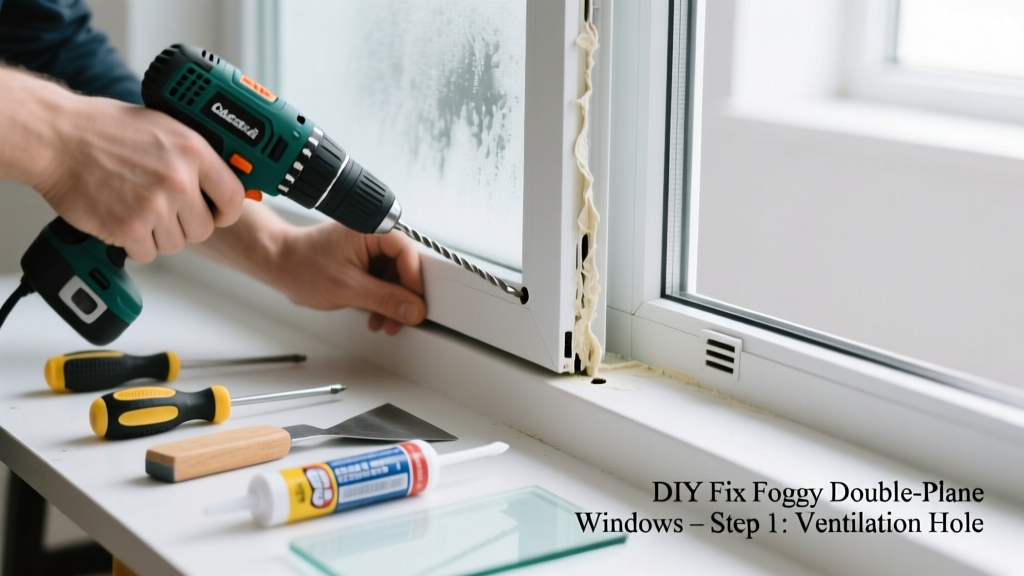
Foggy double-pane windows aren’t just an eyesore—they’re a red flag that your window’s insulating seal has failed, letting moisture in and slashing energy efficiency. You’ll notice condensation trapped between the glass layers, especially on cold mornings or humid days. Left unaddressed, it can lead to mold growth, reduced visibility, and up to 30% higher heating costs (U.S. Department of Energy, 2022).
Quick Diagnosis
Before grabbing tools, confirm the issue isn’t surface condensation or dirty glass. Fog *between* the panes means the sealed unit has failed. Here are the most common root causes:
- Failed edge seal due to age, UV exposure, or poor manufacturing
- Broken or missing desiccant beads inside the spacer bar
- Micro-cracks in the glass or spacer channel
- Improper installation causing thermal stress or water intrusion
- Drainage holes clogged or absent in vinyl or aluminum frames
Tools & Materials Needed
| Item | Purpose | Estimated Cost |
|---|---|---|
| Drill with 1/8" carbide-tipped bit | Creates precise vent holes without cracking glass | $12–$25 |
| Silica gel desiccant packets (rechargeable) | Re-absorbs trapped moisture; must be food-grade and non-dusting | $8–$15 |
| Clear silicone sealant (100% RTV, low-VOC) | Re-seals vent holes after drying cycle | $5–$9 |
| Small vacuum pump or hair dryer (low-heat setting) | Draws out moisture or gently heats desiccant to reactivate | $0–$45 |
| Isopropyl alcohol & lint-free cloths | Cleans glass surfaces before resealing to prevent adhesion failure | $4–$7 |
Step-by-Step Fix
These methods range from temporary mitigation to semi-permanent repair—none restore full R-value, but they extend service life and improve clarity.
- Vent-and-Dry Method: Drill two 1/8" holes—one near the bottom corner, one near the top—on the outside pane only. Use a small vacuum (or gentle suction bulb) to pull air/moisture out for 15 minutes, then insert silica gel packets behind the lower hole using tweezers. Seal both holes with clear silicone after 48 hours.
- Desiccant Reactivation: If your window has accessible spacer channels (common in older wood or aluminum units), remove interior trim and carefully inject 2–3 grams of fresh silica gel into the cavity using a syringe. Let sit 72 hours before resealing.
- Professional Defogging Service: Local contractors use specialized equipment to evacuate moisture, inject argon gas, and reseal with UV-cured resin. Costs $75–$180 per window—but only works if glass isn’t etched or stained.
When to Call a Pro
DIY fixes won’t cut it when safety or structural integrity is at stake. Call a licensed window contractor immediately if:
- The fog is accompanied by visible mold streaking or black residue inside the unit
- You see warped, bowed, or cracked glass—even hairline fractures
- The window is in a second-story or egress location (e.g., basement bedroom)
- Your home was built before 1990 and uses single-strength glass (¼" thick), which lacks impact resistance
- You’ve attempted venting twice and fog returns within 3 weeks
"Over 60% of fogged insulated glass units installed before 2005 fail by year 12—most due to spacer corrosion or desiccant saturation." — National Fenestration Rating Council (NFRC) Field Study, 2021
Prevention Tips
Extend the life of new or repaired windows with these practical habits:
- Clean weep holes (small drainage slots at the bottom rail) every spring with a pipe cleaner and compressed air
- Avoid high-pressure washing within 12 inches of window frames—it forces water past seals
- Install exterior overhangs or awnings to reduce direct UV exposure on south/west-facing units
- Use indoor humidity control: keep winter RH between 30–40% (U.S. EPA recommends this to prevent condensation buildup)
Can I use bleach to clean the foggy area?
No—bleach cannot reach moisture trapped between panes, and if it contacts vinyl or rubber gaskets, it accelerates degradation. It also leaves residues that attract dust and worsen haze. Stick to isopropyl alcohol for exposed surfaces only.
Will defogging restore my window’s energy efficiency?
No. Even professional defogging restores only ~65–75% of original insulating value because the original argon/krypton fill is lost and replaced with ambient air. For ENERGY STAR compliance, replacement is required after seal failure.
How long does a DIY vent-and-dry fix last?
Typically 1–3 years, depending on climate and seal quality. In coastal or high-humidity zones (e.g., Florida, Louisiana), expect under 18 months. In dry climates like Arizona, some users report up to 5 years with annual desiccant refresh.
Can I replace just the glass unit instead of the whole window?
Yes—if the frame is intact and undamaged. Most vinyl and aluminum windows support IGU (insulated glass unit) replacement. Labor runs $120–$220 per unit, versus $350–$800 for full-window replacement. Check window glass replacement cost for regional averages.
Why does fog appear more in winter than summer?
Cold outdoor temps cause interior moisture to condense on the cooler inner pane surface—but when the seal fails, that moisture migrates *into* the airspace. The temperature differential drives vapor diffusion through micro-leaks, making fog most visible during heating season.
Is foggy glass a sign of asbestos or lead hazard?
No—fog itself poses no toxic risk. However, if your home was built before 1980 and you’re removing old wood window sashes or glazing compound, test for lead paint first. Asbestos is not used in modern IGUs or spacers.
Foggy windows are rarely urgent, but they’re a slow leak in your home’s thermal envelope—costing real money and comfort over time. A well-executed DIY fix buys you months or years before replacement, and sharp diagnosis helps you avoid overspending on unnecessary services. If your windows are over 15 years old and multiple units are failing, it may be smarter to budget for phased energy-efficient window replacement rather than patching each one individually.