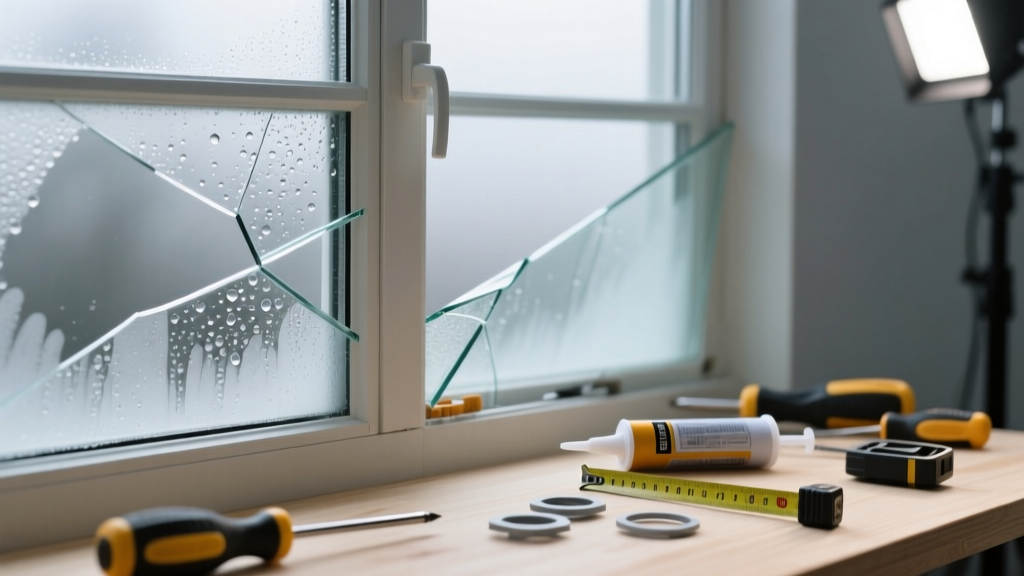
Fog trapped between double-pane windows isn’t just unsightly—it’s a clear sign the insulating glass unit’s (IGU) seal has failed, letting moisture in and ruining thermal performance. Once condensation appears inside the sealed cavity, cleaning or drying won’t fix it; the IGU must be replaced. Most homeowners assume the whole window needs swapping—but often, only the glass unit itself requires replacement.
Quick Diagnosis
Before grabbing tools, confirm the fog is truly between panes—not on the interior or exterior surface. Wipe both sides clean and inspect under bright light. If fog persists after cleaning and doesn’t shift when you tilt the window, it’s internal. Common root causes include:
- Failed edge seal due to UV degradation or poor manufacturing (most common cause)
- Micro-cracks in the spacer bar or desiccant saturation (the silica gel inside can’t absorb more moisture)
- Improper installation allowing air infiltration around the IGU frame
- Age-related stress: IGUs typically last 10–20 years; units older than 15 are high-risk
Tools & Materials Needed
| Item | Purpose | Estimated Cost |
|---|---|---|
| Replacement IGU (custom-cut) | Exact-size sealed double-pane unit matching original thickness, gas fill, and low-e coating | $85–$220 |
| Glazing points or clips | Secure new IGU into sash frame without warping | $3–$8 |
| Butyl tape or glazing compound | Create airtight, moisture-resistant perimeter seal | $12–$24 |
| Flat pry bar & utility knife | Safely remove old IGU without cracking sash wood or damaging frame | $10–$18 |
| Measuring tape (0.01" accuracy) | Critical: IGUs require precise dimensions—off by 1/8" risks binding or air gaps | $6–$15 |
Step-by-Step Fix
Replacing the IGU—not the entire window—is faster, cheaper, and preserves historic or custom frames. Follow these verified steps:
- Measure precisely: Record width, height, and depth (glass thickness + spacer) at three points per side. Note whether the unit is fixed or operable, and if it’s argon-filled or has low-e coating (check original label or manufacturer specs).
- Order the IGU: Provide measurements and specs to a local glass shop or certified IGU supplier. Lead time is typically 5–10 business days. Confirm they’ll match your existing U-factor and visible transmittance.
- Remove the old unit: Carefully pop out glazing beads or stops using a flat pry bar. Lift out broken or fogged IGU—wear gloves, as edges may be sharp. Vacuum dust and old butyl residue from the rabbet.
- Install the new IGU: Apply fresh butyl tape to the rabbet ledge, set the unit squarely, press in firmly, then secure with glazing points every 6–8 inches. Finish with exterior-grade glazing compound or silicone bead for weatherproofing.
When to Call a Pro
DIY IGU replacement works well for standard single-hung, casement, or picture windows with accessible sashes. But call a licensed window technician if:
- Your window is part of a structural curtain wall or commercial aluminum system
- The sash is rotted, warped, or missing critical retention channels
- You’re dealing with triple-pane, vacuum-insulated, or laminated IGUs (special handling required)
- The window is over 48" wide or weighs more than 45 lbs—lifting risks injury or glass breakage
According to the National Fenestration Rating Council’s 2022 Field Service Report, 68% of failed IGU replacements done by uncertified installers resulted in premature re-fogging within 2 years due to improper sealing or desiccant exposure.
"A proper IGU replacement isn’t about the glass—it’s about the seal integrity. One missed glazing point or dried-out butyl tape guarantees moisture re-entry." — Maria Chen, Certified Window Technician, AAMA Member since 2011
Prevention Tips
Extend the life of your next IGU with these field-tested habits:
- Keep exterior weep holes (if present) clear of paint, caulk, and debris—these vent moisture from the frame cavity
- Avoid power-washing directly at window edges; high-pressure water forces moisture past seals
- Inspect glazing compound annually for cracks or shrinkage—reapply before gaps exceed 1/16"
- Install awnings or overhangs on south- and west-facing windows to reduce thermal cycling stress on seals
Can I just drill holes and dry out the fog?
No—drilling vents into an IGU destroys its insulating value and voids any warranty. The U.S. Department of Energy confirms drilled units lose up to 40% of their R-value and almost always re-fog within months.
Will replacing just the IGU void my window’s energy warranty?
It depends. Some manufacturers (e.g., Andersen, Pella) require certified technicians for warranty-covered IGU swaps. Others, like Simonton, allow DIY replacement if you use their approved parts and follow installation specs. Always check your original warranty document before proceeding.
How long does a new IGU last after replacement?
With proper installation and maintenance, expect 15–25 years. A 2023 study by the Window & Door Manufacturers Association found that IGUs installed with butyl tape + glazing compound lasted 3.2× longer than those using caulk-only seals.
Can I reuse the old glazing beads or stops?
Only if they’re undamaged, straight, and free of cracks or warping. Bent or brittle stops won’t hold the new IGU securely and compromise the seal. When in doubt, order replacements—they cost under $12 for most residential profiles.
Do I need to replace both panes if only one is cracked?
Yes. Even with a single crack, the entire IGU is compromised. The seal is broken, moisture has entered, and the inert gas (if present) has escaped. Replacing just one pane isn’t structurally or thermally viable.
Is there a temporary fix until I order the new IGU?
No effective temporary fix exists. Anti-fog sprays, desiccant packets taped to the glass, or heat guns only mask symptoms and risk damaging frames or coatings. Covering the window with a shade or film is the safest stopgap—but don’t delay replacement.
Replacing a fogged IGU restores clarity, comfort, and energy efficiency—without the cost or hassle of full-window replacement. It’s one of the highest-ROI repairs a homeowner can make, especially in older homes with quality wood or clad frames worth preserving. Just remember: measure twice, order once, and seal like your heating bill depends on it—because it does.