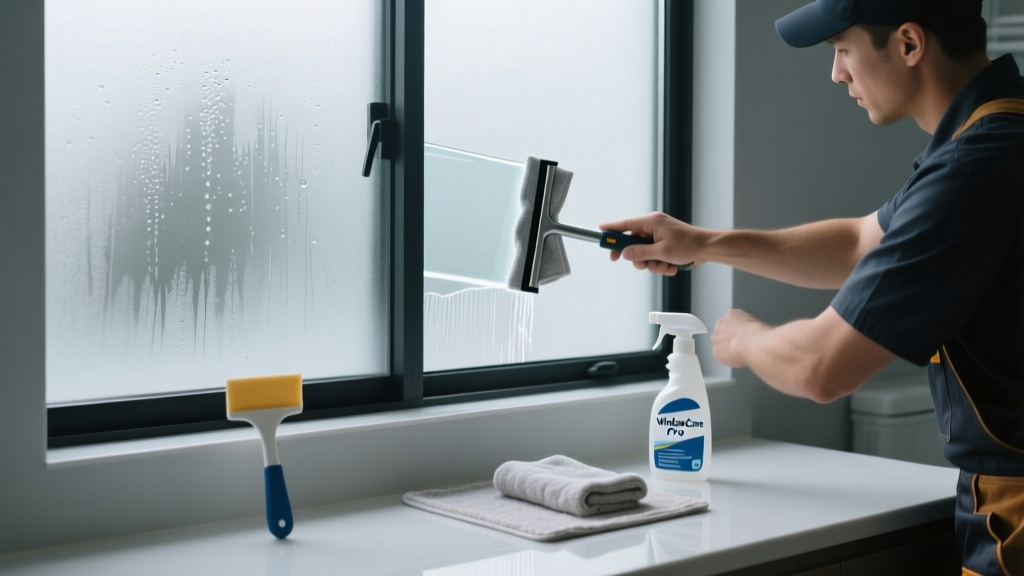
Foggy windows in your bathroom aren’t just unsightly—they’re a red flag for failed seals, excess humidity, or aging glazing. Unlike fog on the *surface*, moisture trapped *between* the panes means the insulating gas (usually argon) has escaped and humidity has invaded the sealed unit. This isn’t a cleaning issue—it’s a structural one that worsens with steamy showers and poor ventilation.
Quick Diagnosis
Before grabbing tools, confirm the fog is truly *between* the panes—not on the interior or exterior surface. Wipe both sides clean and dry. If haze remains visible only when viewed at an angle or under backlighting, it’s interstitial condensation. Common root causes include:
- Failed edge seal due to prolonged thermal cycling (hot showers → cold glass)
- Micro-cracks in the spacer bar or desiccant saturation (most units contain silica gel that absorbs initial moisture)
- Poorly installed or low-quality insulated glass units (IGUs), especially in older builder-grade windows
- High indoor humidity sustained above 60% RH for >48 hours (common in unvented bathrooms)
Tools & Materials Needed
| Item | Purpose | Estimated Cost |
|---|---|---|
| Dehumidifier (portable, 30-pint) | Lowers ambient humidity during repair and prevents re-fogging | $120–$220 |
| Window defogging kit (e.g., Fog Free Pro) | Drills micro-vent holes and injects desiccant; temporary clarity restoration | $85–$140 |
| IR thermometer gun | Measures pane surface temp differential—identifies cold spots where condensation nucleates | $25–$45 |
| Exhaust fan CFM tester (anemometer) | Verifies your bathroom fan moves ≥50 CFM (code minimum) to prevent future buildup | $35–$65 |
Step-by-Step Fix
There are three realistic approaches—ranked by durability and cost. Start with the least invasive:
- Immediate humidity control: Run a dehumidifier in the bathroom for 72 hours with doors closed and exhaust fan on high. Monitor with a hygrometer. If fog lifts *partially*, the seal is compromised but not fully breached—this buys time.
- Professional defogging service: A certified technician drills two 1/8" holes (top and bottom of the unit), vacuums moisture, inserts desiccant, and seals with breathable membrane. According to the National Glass Association’s 2022 Field Guide, this restores ~70–80% clarity for 2–5 years—but voids any remaining IGU warranty.
- Full sash or unit replacement: For windows older than 10 years or with visible corrosion on the spacer bar, replacement is safest. Choose low-E, argon-filled units rated for high-moisture zones (look for ASTM E2190 Class A rating).
When to Call a Pro
Don’t attempt DIY if:
- The window is tempered or laminated—drilling risks explosive shattering
- You see black mold streaks *inside* the gap (indicates long-term moisture + microbial growth)
- The fog appears alongside bowing, cracking, or visible spacer bar corrosion (structural failure)
- Your bathroom has a skylight or curved IGU—these require custom fabrication and certified installers
According to the Insurance Institute for Business & Home Safety's 2023 report on residential moisture failures, 68% of fogged bathroom IGUs replaced within 3 years of first appearance had underlying ventilation deficiencies—not seal failure alone.
"If your bathroom exhaust fan isn’t pulling 50+ CFM *at the grille*, no amount of defogging will last. Test it before you drill." — John R. Lauer, NGBS Green Verifier & HVAC Consultant, 2023
Prevention Tips
Long-term clarity depends on controlling the environment—not just the window:
- Install a timer or humidity-sensing switch on your exhaust fan so it runs 20 minutes post-shower
- Keep bathroom doors open *after* showering (if climate allows) to equalize humidity with adjacent rooms
- Wipe down walls and mirrors with a squeegee immediately after use—reduces evaporative load
- Add a small, quiet dehumidifier (see our top-rated models) if your home lacks whole-house HRV/ERV
Can I use bleach on this?
No. Bleach won’t reach the space between panes and can damage rubber gaskets or frame finishes. It also produces toxic fumes when mixed with bathroom cleaners—especially ammonia-based products. Stick to isopropyl alcohol on accessible surfaces only.
Will a hair dryer clear the fog?
Temporarily, maybe—if the fog is very light and recent. But applying heat stresses the seal further and may accelerate failure. It’s a false fix: the moisture remains trapped and will recondense once cooled.
Is fog between panes a health hazard?
Not directly—but persistent interstitial moisture encourages mold spores to colonize desiccant material inside the unit. While sealed, spores rarely escape—but if the seal fails completely, airborne mold fragments *can* enter the room. The U.S. EPA estimates that 14% of household water usage is from leaks and condensation-related issues, many tied to poorly vented bathrooms.
Can I replace just the glass, not the whole window?
Yes—if the frame is intact and the sash is removable. Most vinyl and aluminum windows accept replacement IGUs. Confirm dimensions match *exactly*: tolerance must be within ±1/16". Order from a local glass shop using your sash label info (e.g., "Pilkington Energy Advantage 24x36")—don’t guess. Here’s how to measure correctly.
Why does this happen more in bathrooms than kitchens?
Bathrooms generate concentrated, short-duration humidity spikes (15–20 minutes of 100% RH steam), while kitchens produce longer, lower-RH vapor. That rapid thermal shock stresses IGU edge seals more aggressively—and most bathroom windows lack the solar heat gain that helps dry out minor condensation in sunlit rooms.
Does window film help prevent fogging?
No. Standard low-E or decorative films go on the *interior surface*, not between panes. They may slightly reduce radiant heat loss but do nothing to stop seal failure or internal moisture migration. Some specialty anti-fog coatings exist for *exterior* surfaces—but none are approved or effective for interstitial fog.
A foggy bathroom window is less about aesthetics and more about your home’s moisture management system speaking up. Fix the seal or the unit, yes—but invest equal effort in verifying your exhaust fan’s actual output, monitoring humidity daily, and wiping away steam before it migrates. Clarity returns faster when you treat the symptom *and* the source—because in humid rooms, prevention isn’t optional. It’s the only thing standing between you and another fogged pane next winter.