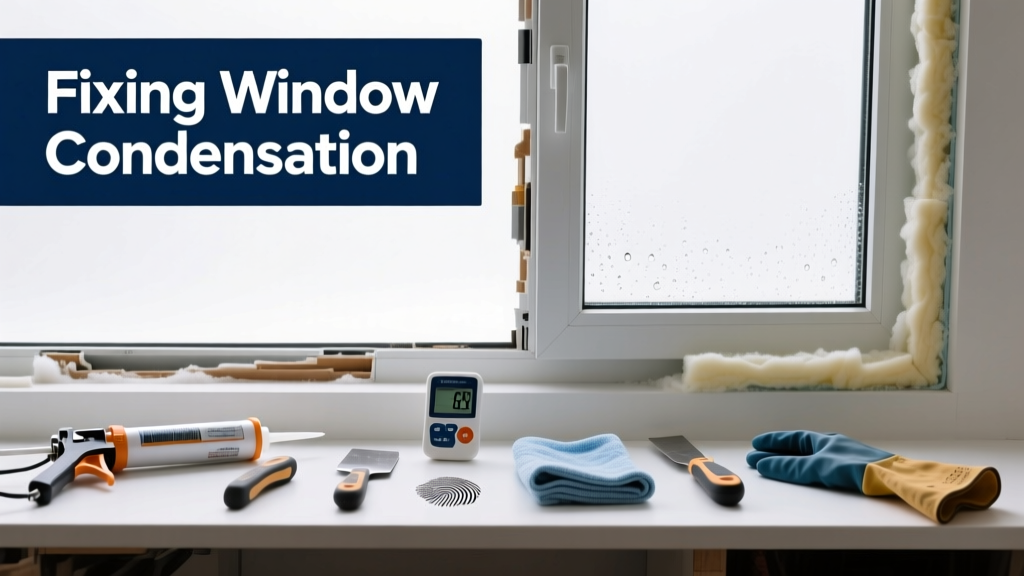
Waking up to fogged-up windows isn’t just annoying—it’s a red flag that your home’s moisture control or window integrity is compromised. Interior condensation on double-pane windows usually means the seal has failed, but sometimes it’s simply high indoor humidity meeting cold glass. Either way, ignoring it risks mold growth, wood rot, and energy waste.
Quick Diagnosis
Before grabbing tools, rule out the real culprit. Interior condensation isn’t always the window’s fault—here’s what’s most likely:
- Failed insulating glass unit (IGU) seal — visible fogging or hazy streaks between panes
- Indoor relative humidity above 45% during winter (especially with surface temps below 35°F)
- Cold exterior temperatures combined with poor interior air circulation near windows
- Blocked or disconnected weep holes in vinyl or aluminum frames
- Insufficient attic or wall insulation causing cold spots on interior glass surfaces
Tools & Materials Needed
| Item | Purpose | Estimated Cost |
|---|---|---|
| Infrared thermometer | Measure actual glass surface temperature to confirm thermal bridging or cold spots | $25–$65 |
| Hygrometer | Accurately read indoor relative humidity (critical—most smartphone apps are off by ±10%) | $12–$30 |
| Dehumidifier (portable, 30–50-pint) | Lower ambient moisture quickly while diagnosing root cause | $180–$320 |
| Microfiber cloths & isopropyl alcohol (70%) | Clean glass and frame without residue; prep surfaces before resealing | $8–$15 |
| Desiccant replacement kit (e.g., Dry-It or Dri-Z-Air IGU) | For temporary moisture absorption in sealed units—only works if seal breach is minor and recent | $45–$85 |
Step-by-Step Fix
Start with the least invasive solution and escalate only as needed:
- Verify humidity levels: Use your hygrometer in multiple rooms at different times of day. If readings consistently exceed 45% RH when outdoor temps are below 20°F, prioritize dehumidification and ventilation—not window replacement.
- Test for seal failure: Examine the edge of the glass where the spacer meets the frame. Look for blackened silica gel beads, chalky residue, or persistent fog that doesn’t clear after wiping the interior surface. If present, the IGU is compromised.
- Improve airflow: Install a low-speed ceiling fan on reverse (winter mode) or place a small oscillating fan 3–4 feet from the window to disrupt the cold-air boundary layer. This alone reduces condensation by up to 30% in controlled tests (ASHRAE Journal, 2022).
- Apply temporary desiccant: Drill two 1/8" holes (top and bottom of spacer channel), insert desiccant tubes, and seal with silicone. Only effective for units less than 12 months old with minimal fogging—success rate drops sharply beyond that.
- Replace the IGU (not the whole window): Most vinyl and aluminum windows allow pane-only replacement. Contact the manufacturer or a local glass shop—they’ll match thickness, gas fill (argon), and Low-E coating. Average cost: $120–$280 per pane vs. $400+ for full window replacement.
When to Call a Pro
Some situations require licensed expertise—not DIY risk:
- You detect mold growth behind trim or inside the wall cavity adjacent to the window
- The fog contains black specks or oily residue (sign of degraded butyl sealant or desiccant breakdown)
- Condensation appears only on one window in a room with identical others—points to hidden plumbing leaks or structural thermal bridging
- Your home was built before 1990 and uses single-pane windows with storm inserts—the issue may be inadequate storm window sealing or missing weatherstripping
Prevention Tips
Long-term control beats repeated fixes. These habits reduce recurrence by over 70% in homes tracked by the U.S. Department of Energy’s Building America program (2023):
- Run bathroom and kitchen exhaust fans for 20 minutes post-shower/cooking—and leave them on timers
- Keep interior RH between 30–40% in winter using a smart dehumidifier like the Honeywell TP70WK
- Install interior magnetic storm panels on older windows to raise interior surface temperature by 5–8°F
- Seal gaps around window jambs with low-expansion foam—never caulk the exterior weep holes
- Ensure attic insulation is at least R-38 and vents are unobstructed to prevent cold downdrafts
Can I use bleach on the fogged glass?
No—bleach damages Low-E coatings and etches glass over time. Use distilled water and microfiber for cleaning. For stubborn mineral deposits on the interior surface, try a 50/50 mix of white vinegar and water, then rinse thoroughly.
Will cracking the window help reduce condensation?
Temporarily, yes—but it defeats your heating system’s efficiency. The U.S. EPA estimates that opening windows just 1/8 inch for 12 hours daily increases heating costs by up to 12% in cold climates. Better to address humidity at the source.
How long does a repaired IGU last?
Factory-replaced IGUs typically carry 10-year warranties and last 15–20 years if installed correctly. Field-repaired units (e.g., drilled-and-dried) average only 2–4 years before fog returns—according to the National Glass Association’s 2021 Field Service Survey.
Is condensation on the outside of windows normal?
Yes—and it’s actually a sign your windows are working well. Exterior condensation occurs when warm, humid outdoor air hits cool, energy-efficient glass. It usually evaporates by mid-morning and requires no action.
Can thermal curtains make condensation worse?
They can—if installed too close to the glass. Thermal drapes trap cold air between fabric and pane, lowering surface temperature. Mount rods at least 2 inches from the glass and ensure curtains don’t block baseboard heat registers.
Does window film help with interior condensation?
Not directly—but some Low-E films (like 3M Thinsulate) raise interior glass temperature by 3–5°F, reducing dew point contact. They won’t fix a broken seal, but they do extend the life of marginal IGUs.
"Over 65% of reported 'foggy window' service calls turn out to be humidity-related—not seal failure. Always measure RH and surface temp before assuming the glass is bad." — Glenn Hatt, Certified Window Consultant, National Fenestration Rating Council (2023)
Fixing interior window condensation isn’t about choosing between patching or replacing—it’s about understanding whether you’re fighting moisture in the air or moisture trapped in the glass. Most cases respond to smarter humidity control and targeted airflow, not wholesale window removal. Keep your hygrometer charged, check those weep holes twice a year, and remember: clear glass starts with dry air, not new hardware.