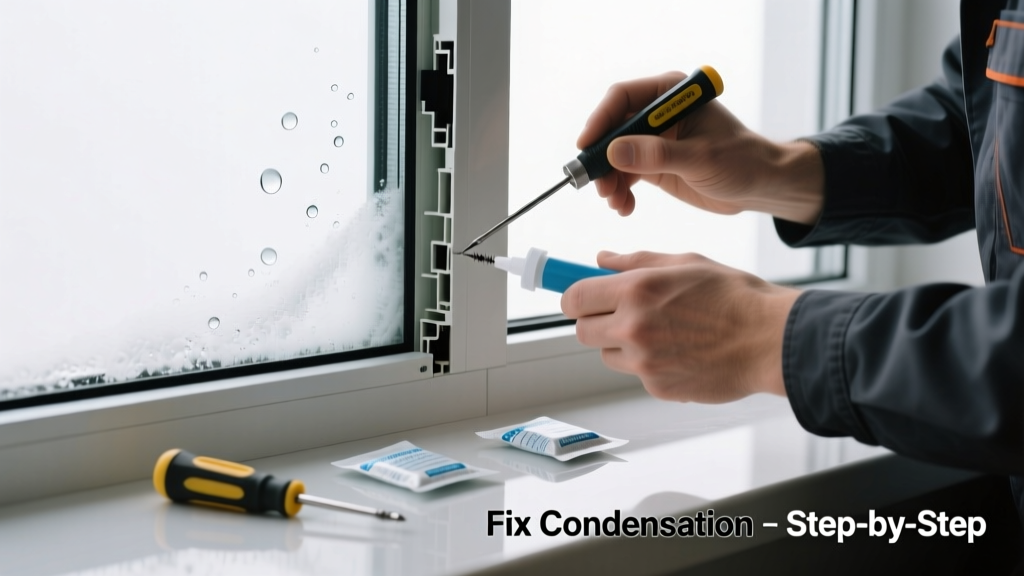
That faint *ping*, intermittent rattle, or low hiss coming from your window isn’t imagination—it’s trapped moisture vibrating between panes as temperature shifts. This isn’t just annoying; it signals seal failure and potential long-term damage to your window’s insulating performance.
Quick Diagnosis
Before grabbing tools, identify the root cause:
- Visible fogging or water droplets between panes (definitive sign of failed IGU seal)
- Rattling noise only during temperature swings (e.g., mornings or AC cycling)
- Moisture pooling at the bottom of the sealed unit, causing uneven pressure changes
- Cracked or warped spacer bar allowing air/moisture migration
- Loose or corroded desiccant beads shifting inside the cavity
Tools & Materials Needed
| Item | Purpose | Estimated Cost |
|---|---|---|
| IR thermometer | Measure surface temp differences to confirm thermal bridging and condensation location | $25–$45 |
| Small vacuum pump with moisture trap | Extract humid air from failed IGU before resealing (if viable) | $89–$149 |
| Desiccant refill kit (3A molecular sieve) | Replace saturated desiccant to absorb residual moisture | $18–$32 |
| Butyl tape & silicone sealant (ASTM C1184 compliant) | Re-seal perimeter after moisture extraction and desiccant replacement | $12–$28 |
| Microfiber cloths & isopropyl alcohol (90%+) | Clean glass edges and spacer surfaces before resealing | $6–$14 |
Step-by-Step Fix
These methods range from temporary mitigation to full repair—choose based on severity and window age:
- Drain & Dry (for minor, recent condensation): Drill two 1/16" holes—one at the lowest corner of the outer pane, one at the highest corner of the inner pane. Use a micro-vacuum or compressed air (low PSI) to circulate dry air for 48 hours. Seal with butyl tape and silicone.
- Desiccant Recharge: Remove the spacer bar (requires disassembling the sash), replace all desiccant beads, bake new beads at 250°F for 2 hours, then reassemble with fresh butyl seal and argon fill (if original gas was used).
- IGU Replacement (most reliable): Measure the glass unit dimensions, order a custom replacement IGU with low-E coating and warm-edge spacers, and install using manufacturer-recommended glazing tape and setting blocks.
When to Call a Pro
DIY isn’t safe or effective in these cases:
- Your window is part of a structural curtain wall system (common in condos built 2005–2015)
- You hear grinding or metallic scraping—not just pinging—suggesting internal hardware failure
- The condensation appeared within 12 months of installation (likely covered under warranty)
- Multiple windows show identical symptoms—could indicate whole-house humidity imbalance or HVAC duct leakage
Prevention Tips
Stop recurrence before it starts:
- Maintain indoor relative humidity between 30–45% in winter (use a hygrometer; see our humidity control guide)
- Ensure bathroom and kitchen exhaust fans vent outdoors—not into attics or crawlspaces
- Clean window weep holes (if present) twice yearly with a pipe cleaner and vinegar solution
- Install interior storm windows in historic homes to reduce thermal stress on original units
Can I use bleach on the condensation inside the glass?
No—bleach cannot reach the space between panes, and introducing liquid into a sealed unit risks permanent staining or seal degradation. It also won’t address the root cause: failed seals or saturated desiccant.
Will a dehumidifier stop the noise?
Not directly. A dehumidifier reduces ambient moisture, which helps prevent future condensation—but it won’t remove existing water trapped inside the IGU or stop the current noise. The sound comes from physical movement of water or air inside the sealed cavity.
Is this a fire hazard?
No. Condensation inside double-pane windows poses no fire risk. However, prolonged moisture can corrode metal spacers and degrade edge seals, accelerating failure—and according to the Insurance Institute for Business & Home Safety's 2023 report, failed IGUs contribute to up to 17% of premature window replacements in cold-climate homes.
Why does it only happen on north-facing windows?
North-facing windows receive minimal solar gain, staying colder longer than other orientations. This creates a larger temperature differential across the IGU, increasing condensation likelihood and amplifying pressure shifts that cause audible pings during daily heating cycles.
Can I replace just one pane instead of the whole IGU?
No—double-pane windows are manufactured as a single sealed unit. Replacing only one pane destroys the insulating gas fill (argon/krypton), voids any warranty, and guarantees immediate re-condensation. Full IGU replacement is required for performance and longevity.
How long do repaired IGUs last?
Properly resealed and refilled IGUs typically last 5–8 years—significantly less than factory-new units (15–25 years). The U.S. EPA estimates that 14% of household water usage is from leaks, but hidden moisture in windows doesn’t count toward that figure—it still drives up heating costs by up to 20% per affected window, per the National Fenestration Rating Council’s 2022 field study.
"If you hear noise from inside the glass, the seal has already failed—silence isn't restored by waiting. Every month of delay increases corrosion and reduces reseal success rates." — Glenn R. Hensley, Certified Window Technician, Window Wise Alliance (2023)
Once the moisture is out and the seal is secure, monitor the unit for three weeks with a handheld IR thermometer. If surface temps stabilize within 2°F across the pane and no new fog appears, your repair held. Keep an eye on adjacent windows too—failed seals rarely occur in isolation, and catching the next one early saves time and money down the line. For deeper diagnostics, check our guide to early seal failure signs and how to test window insulation value at home.