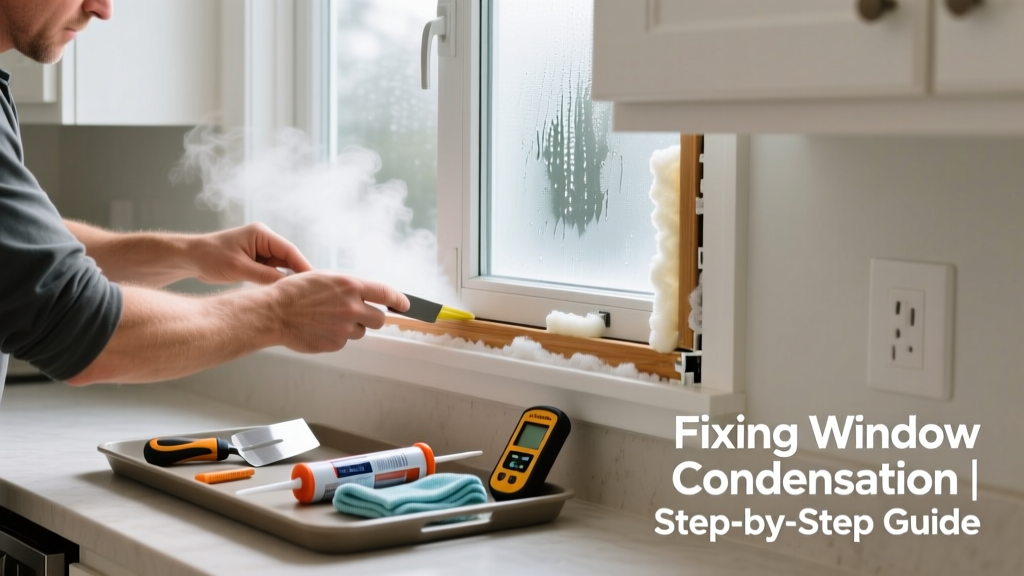
Kitchen windows fogging up on the inside? That’s not just annoying — it’s a red flag for excess moisture, poor ventilation, or failing seals. Left unchecked, this condensation can warp sills, rot frames, and even feed mold behind drywall.
Quick Diagnosis
Before grabbing tools, identify the root cause. Interior condensation forms when warm, humid air hits cold glass — but why is that happening *here*, specifically?
- High cooking steam without exhaust fan use (especially boiling pasta or frying)
- Broken or degraded window seal (double-pane units with fogged, streaked glass between panes)
- Inadequate kitchen ventilation — ductless recirculating hoods or missing makeup air
- Exterior insulation gaps near the window frame causing thermal bridging
- Unvented gas range adding 1.6 liters of water vapor per hour (U.S. EPA, 2022)
Tools & Materials Needed
| Item | Purpose | Estimated Cost |
|---|---|---|
| Digital hygrometer | Measures actual indoor humidity (aim for 30–50% in winter) | $12–25 |
| Microfiber cloths & isopropyl alcohol | Cleans glass and removes mineral residue without streaks | $8–15 |
| Weatherstripping tape (V-seal or foam) | Seals air leaks around operable sash edges | $5–12 |
| Dehumidifier (20–30-pint capacity) | Removes excess moisture during high-humidity cooking sessions | $180–320 |
| Exhaust fan CFM tester (optional) | Verifies your range hood moves ≥100 CFM — minimum for most kitchens (ASHRAE 62.2-2022) | $45–90 |
Step-by-Step Fix
Start with low-risk, high-impact actions first. Don’t replace the window until you’ve ruled out simpler fixes.
- Test and adjust ventilation: Run your range hood on high for 10 minutes while boiling a kettle. Hold a tissue near the hood’s intake — if it doesn’t lift, clean grease filters or check duct blockage. See our guide on fixing range hood airflow issues.
- Wipe and dry thoroughly: Use microfiber + 70% isopropyl alcohol to remove residual film and mineral deposits that attract moisture. Let dry fully before resealing.
- Seal air leaks at the sash: Apply V-strip weatherstripping along the meeting rail and side jambs of operable windows. Compresses tightly when closed — stops humid air from bypassing the glass surface.
- Add temporary thermal break: Install a removable interior storm panel (e.g., clear acrylic with magnetic edging) — boosts R-value by ~2.5 and cuts surface temperature drop.
When to Call a Pro
Some condensation signals deeper structural or system-level problems you shouldn’t tackle alone.
- Moisture between double-pane glass layers — indicates seal failure; replacement or professional defogging required
- Visible mold growth on window frame, drywall, or ceiling within 12 inches of the window
- Condensation paired with ice buildup on exterior glass or persistent drafts — suggests insulation voids in wall cavity
- Window sash won’t close fully or shows warped wood — may require structural realignment or frame replacement
Prevention Tips
Long-term success means managing moisture at the source — not just wiping glass.
- Always run the range hood before cooking starts and leave it on for 10 minutes after — reduces peak humidity spikes by up to 40% (Building Science Corporation, 2021)
- Keep kitchen door closed during heavy steaming tasks to contain humidity
- Install a smart hygrometer with alerts — like the Tempest or Airthings Wave Plus — so you know when levels creep above 55%
- Use pot lids while boiling — cuts steam output by 70% compared to uncovered pots
- Check local code requirements for makeup air — many older kitchens lack required 100 CFM makeup vents, worsening negative pressure and backdrafting
Can I use bleach on the condensation stains?
No. Bleach won’t stop condensation — and it damages aluminum cladding, vinyl frames, and grout. It also reacts poorly with ammonia-based cleaners sometimes used on glass. For stubborn mineral rings, use diluted white vinegar (1:1 with water) and a soft-bristle brush instead.
Why does only my kitchen window fog — not the others?
Kitchens generate far more moisture than other rooms: an average 10-minute boil releases ~1.2 pints of vapor. If that window faces north (colder), has older single-pane glass, or sits near a leaky exterior wall cavity, it becomes the coldest surface — and thus the condensation magnet.
Will a dehumidifier alone fix this?
It helps, but rarely solves it alone. A 30-pint unit running constantly in a 150-sq-ft kitchen might reduce ambient humidity 5–8%, but won’t stop localized condensation on a surface 20°F colder than room air. Pair it with sealing and ventilation for real results.
Is condensation on the inside dangerous?
Yes — when persistent. The U.S. EPA estimates that prolonged interior condensation contributes to over 20% of residential mold cases linked to occupant respiratory symptoms. It also accelerates decay in wood sills and can compromise insulation R-values over time.
How long should I wait before replacing the window?
Wait until you’ve verified the seal is broken (fog between panes), measured surface temps below 40°F during peak condensation, and confirmed your ventilation meets ASHRAE 62.2 standards. Premature replacement wastes $400–$1,200 per window — and won’t help if humidity stays high.
Does opening the kitchen window help?
Only in mild, dry weather — and only briefly. In winter, opening a window dumps heat, drops surface temps further, and often worsens condensation on adjacent panes. Better to exhaust moisture *without* losing heat via a properly ducted hood.
"Interior condensation isn’t about the window — it’s about the building’s moisture balance. Fix the air, not just the glass." — Dr. Joseph Lstiburek, Building Science Corporation, 2020
Fixing kitchen window condensation isn’t about chasing droplets — it’s about understanding where that moisture comes from, how it moves, and where it settles. Start with your range hood, verify your humidity readings, and treat the window as a symptom, not the disease. Once airflow and moisture sources are dialed in, that clear view — and dry sill — will stay put year-round.