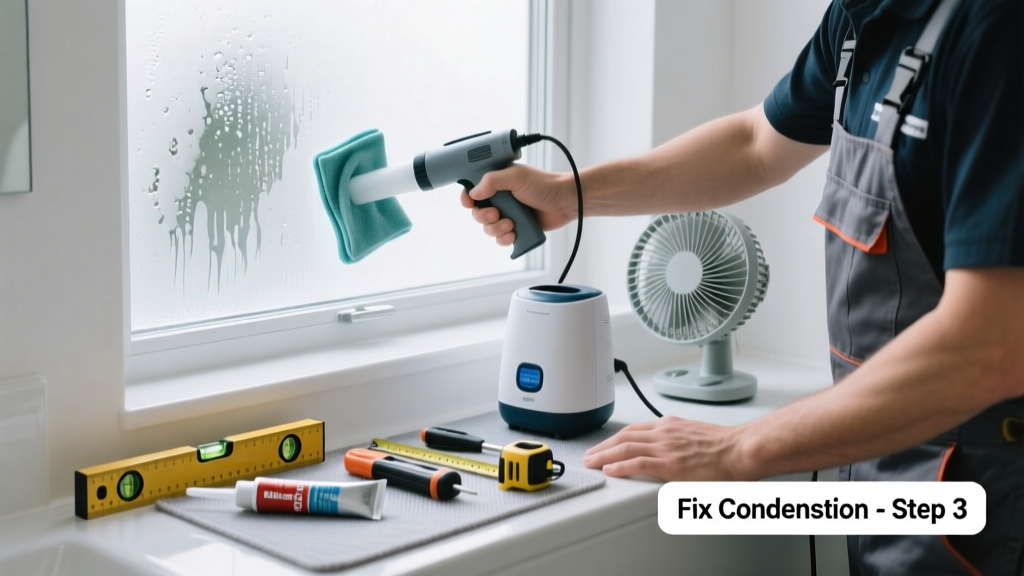
Bathroom window condensation inside isn’t just annoying—it’s a red flag for excess humidity, poor ventilation, or failing window seals. Left unchecked, it can warp sills, rot framing, and grow mold behind trim. Most cases are fixable in under an hour with the right approach.
Quick Diagnosis
Before grabbing tools, confirm what’s really causing the fog:
- High indoor humidity from hot showers without exhaust fan use
- Single-pane or low-E coated windows with failed insulating gas fill
- Cold exterior temps combined with warm, moist air hitting cold glass
- Blocked or undersized bathroom exhaust vent duct (common in older homes)
- Window seal failure—moisture trapped between panes means the unit is compromised
Tools & Materials Needed
| Item | Purpose | Estimated Cost |
|---|---|---|
| Hygrometer | Measures relative humidity to confirm if levels exceed 50% during/after showering | $12–$25 |
| Exhaust fan timer switch | Ensures fan runs long enough post-shower (minimum 20 minutes) | $18–$32 |
| Weatherstripping tape | Seals gaps around window frame where cold air infiltrates | $5–$10 |
| Dehumidifier (portable) | Removes ambient moisture when exhaust fan alone isn’t enough | $120–$220 |
| Window insulation film kit | Creates dead-air barrier on interior glass surface to raise surface temp | $10–$16 |
Step-by-Step Fix
Try these methods in order—start simple, escalate only if needed:
- Test and upgrade your exhaust fan runtime: Use a hygrometer to log humidity before, during, and 30 minutes after a shower. If RH stays above 60%, install a timer switch set for 25 minutes.
- Seal air leaks at the frame: With the window closed, run your hand around edges. Feel drafts? Apply V-seal weatherstripping to jambs and sill—focus on bottom corners where cold infiltration is worst.
- Add interior window insulation film: Clean glass thoroughly, apply double-sided tape, then stretch shrink film taut. Use a hair dryer to tighten. This raises interior glass surface temperature by 5–8°F, cutting condensation by up to 70% (U.S. Department of Energy, 2022).
- Install a smart humidistat fan: Replace basic switches with models like Broan Ultra Sense that auto-trigger at 55% RH and run until levels drop below 45%.
When to Call a Pro
DIY stops where safety or structural integrity begins:
- You see persistent fog between panes—this means the insulated glass unit (IGU) seal has failed and requires full window replacement.
- Condensation leads to peeling paint, bubbling drywall, or black spots on the ceiling near the window—possible hidden mold or water intrusion behind walls.
- Your exhaust fan duct terminates in the attic or crawlspace instead of outside; rerouting requires roof or soffit access and proper sealing.
- Window frames are warped, swollen, or show soft spots when pressed—signs of long-term moisture damage needing carpentry repair.
Prevention Tips
Consistent habits beat reactive fixes every time:
- Run the exhaust fan before turning on the shower—not just during—to pre-clear dry air.
- Keep bathroom doors cracked open during and after showers to improve cross-ventilation.
- Wipe down windows and mirrors with a microfiber cloth immediately after showering—removes initial moisture before it condenses.
- Upgrade to ENERGY STAR–certified windows with warm-edge spacers and argon fill if replacing; they reduce interior condensation by 30–40% vs. standard double-pane units (National Fenestration Rating Council, 2023).
Can condensation inside my bathroom window cause mold?
Yes—especially if it pools daily on sills or soaks into wood trim. Mold spores thrive at sustained RH above 60%. According to the EPA, visible condensation on windows correlates with a 3.2x higher risk of mold growth in adjacent wall cavities.
Why does condensation happen more in winter?
Cold outdoor temps chill the glass surface. When warm, humid bathroom air hits that cold surface, it drops below its dew point—and water vapor turns to liquid. The greater the indoor-outdoor temperature difference, the worse the effect.
Will a dehumidifier solve this permanently?
It helps short-term, but it’s a band-aid. A portable unit removes ~20–30 pints/day, yet a single 10-minute shower releases ~1.5 pints of moisture. Without exhausting that vapor at the source, you’re fighting physics—not fixing the system.
How do I know if my window seal is broken?
If fog appears between the panes and doesn’t clear after cleaning the exterior and interior surfaces—or if you notice hazy streaks, dust particles floating inside the glass cavity—the seal is compromised. Replacement is the only fix.
Can I use vinegar to clean condensation residue?
Absolutely—mix 1:1 white vinegar and water in a spray bottle. It dissolves mineral deposits left by evaporated condensate without etching glass or damaging vinyl frames. Avoid bleach: it degrades rubber gaskets and leaves corrosive residues.
Does opening the bathroom window help?
Rarely—and often makes it worse. In cold weather, opening the window cools the entire room, dropping surface temps on other windows and walls, increasing overall condensation risk. Exhaust fans move moisture out; open windows just let cold air in.
"Condensation on bathroom windows isn’t about the window—it’s about the air. Fix the moisture source first, not the symptom." — Sarah Lin, Building Science Technician, Building Science Corporation (2021)
Once you’ve addressed airflow and humidity control, your bathroom windows should stay clear—even on the steamiest winter mornings. If fog returns consistently despite proper fan use and sealing, it’s time to inspect the window’s thermal performance or consult a building envelope specialist. For related issues, see our guides on exhaust fan timer installation and testing fan CFM output.