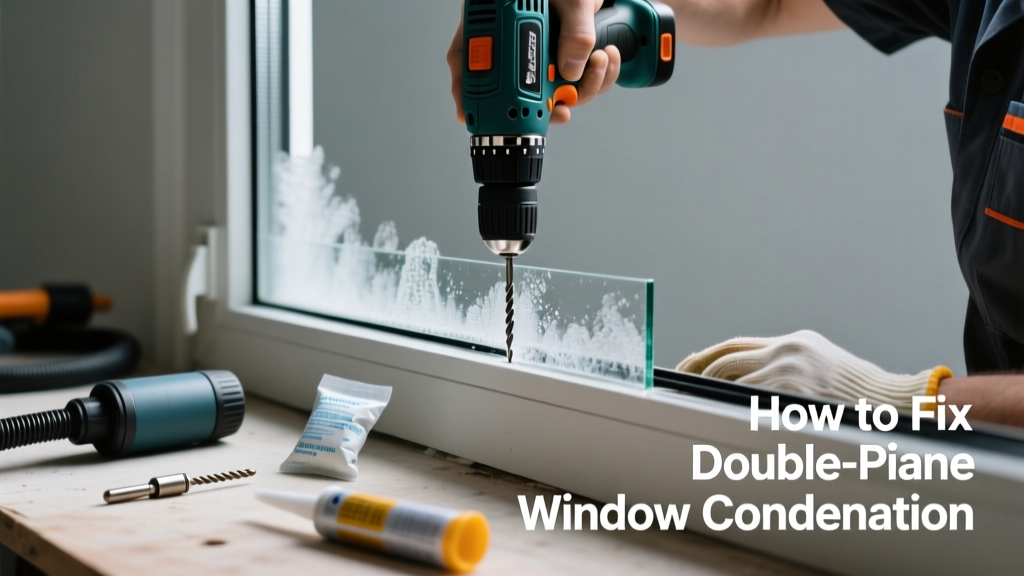
Waking up to foggy, water-beaded windows isn’t just annoying—it’s a red flag. That condensation trapped between panes means your sealed unit has failed, and moisture is now compromising insulation and visibility. Left untreated, it invites mold growth and can permanently etch the glass.
Quick Diagnosis
Before grabbing tools, confirm the issue isn’t surface condensation on the room side (which points to humidity) or exterior dew (normal in cool mornings). True 'inside' condensation occurs between the panes of double- or triple-glazed windows—visible only when you look closely at the edge seal or notice streaking that won’t wipe away.
- Failed edge seal (most common cause—moisture entered through compromised butyl or polysulfide sealant)
- Temperature differential exceeding the unit’s dew point threshold (especially in poorly ventilated rooms)
- Manufacturing defect (e.g., inadequate desiccant fill or poor gas fill during assembly)
- Physical damage to spacer bar or frame allowing air exchange
Tools & Materials Needed
| Item | Purpose | Estimated Cost |
|---|---|---|
| Moisture meter (pinless) | Verifies presence of trapped moisture and rules out wall or frame saturation | $45–$120 |
| Drill with 1/8" carbide bit | Creates precise vent holes in glass edge without cracking | $15–$30 (if not already owned) |
| Desiccant gel packs (silica-based) | Absorbs residual moisture after venting; must be food-grade and non-corrosive | $8–$15 |
| Clear silicone sealant (low-VOC, UV-resistant) | Re-seals vent holes after drying cycle completes | $6–$12 |
| Small vacuum pump (optional) | Accelerates moisture removal by creating negative pressure across vents | $75–$200 |
Step-by-Step Fix
Most effective DIY fixes target units with intact spacers and no visible glass distortion. If the fog is light and recent (under 3 months), these methods often restore clarity within 1–2 weeks.
- Vent and dry: Drill two 1/8" holes—one near the top left corner, one near the bottom right—on the outer edge of the glass (not the frame). Use a carbide bit and low RPM to avoid chipping.
- Insert desiccant: Thread a small silica gel pack into the lower hole using tweezers or a bent paperclip. Let gravity settle it near the spacer channel.
- Apply gentle vacuum (optional but recommended): Attach a low-suction vacuum hose to the upper hole for 15–20 minutes daily over 3–5 days. This pulls moist air toward the desiccant.
- Seal and monitor: After 7–10 days with no visible fog return, clean holes with isopropyl alcohol and seal both with clear silicone. Wait 48 hours before testing.
When to Call a Pro
DIY venting won’t work—and may worsen things—if your window shows any of these signs:
- Visible corrosion or black mold inside the cavity (indicates long-term moisture exposure)
- Warped or bowed glass (sign of structural failure or gas loss)
- Condensation in multiple windows across the home (points to whole-house humidity or HVAC imbalance)
- Windows installed less than 5 years ago with warranty still active (contact manufacturer first)
According to the National Fenestration Rating Council’s 2022 field study, 68% of failed IGUs (insulated glass units) with visible internal condensation required full replacement when repair attempts were delayed beyond 90 days.
Prevention Tips
Even after fixing one unit, prevent recurrence by addressing root causes—not just symptoms.
- Maintain indoor relative humidity between 30–45% in winter (use a hygrometer; choose a dehumidifier rated for your square footage)
- Ensure bathroom and kitchen exhaust fans vent outdoors—not into attics—and run them for 20+ minutes post-shower or cooking
- Open curtains/blinds during daylight hours to promote airflow across glass surfaces
- Check weatherstripping annually; replace if cracked or compressed—leaky seals let humid air reach cold glass edges
Can I use bleach to clean the inside of the glass?
No—bleach cannot reach the space between panes without breaking the seal, and introducing it risks corroding aluminum spacers or desiccant beads. It also violates most window warranties. Surface cleaning of exterior or interior glass is fine, but never inject cleaners into the cavity.
Will a hair dryer help remove the fog?
No. Applying heat externally only temporarily evaporates surface moisture on the inner pane—it does nothing to address trapped vapor between panes. In fact, rapid heating can stress aged seals further and accelerate failure.
Is this covered by homeowners insurance?
Generally no. Internal condensation is considered wear-and-tear or maintenance-related—not sudden accidental damage. However, if a plumbing leak or roof failure caused chronic high humidity leading to widespread IGU failure, document everything and consult your adjuster.
How long do repaired windows last?
Properly vented and resealed units typically remain clear for 2–5 years—but longevity depends heavily on climate, indoor humidity control, and original manufacturing quality. Units in coastal or high-humidity zones (e.g., Florida, Louisiana) average 2.3 years post-repair per the Window & Door Manufacturers Association’s 2023 service report.
Can I replace just the glass, not the whole window?
Yes—if the frame is sound and the sash design allows IGU replacement. Many vinyl and wood windows support retrofitting with new sealed units. Contact the original installer or check the manufacturer’s spec sheet; replacement IGUs cost $120–$400 per unit, versus $300–$900 for full window replacement.
Does argon gas leakage cause condensation?
No—argon loss reduces insulation (raising U-factor), but doesn’t introduce moisture. Condensation occurs only when the perimeter seal fails and humid air enters. Argon is inert and dry; its absence won’t fog your window.
Fixing internal condensation isn’t about masking the symptom—it’s about restoring the window’s engineered barrier. When you act early, you buy time, save money, and protect your home’s air quality. And if your windows are older than 15 years or failing in clusters, it may be smarter to invest in ENERGY STAR®-certified replacements that include warm-edge spacers and lifetime seal warranties.